Showing posts with label Armenia. Show all posts

10.1.17

Mount Arakatz

Anna Mailian
Sharakan


Tracks:

01 - Sirt im sasani - Mghitar Ayrivanetsi ( XIII c)
02 - Ov, zarmanali-Aysor dzaynn Hairakan - Grigor Pahlavouni-Hovanes Yerznkatsi (XII-XIII c)
03 - Havoun,Havoun - Grigor Narekatsi ( X c )
04 - Our es, mayr im - Composer & period un know
05 - Daskn Hreakan - Arakel Siunetsi ( XIV-XV cc)
06 - Khorhurd khorin - Khacatur Taronetsi ( XIII c)
07 - Ter Voghormya - Shnorhali-Komitas ( XII, XIX-XX cc)
08 - Havik - Grigor Narekatsi ( X c)
09 - Varanim i meghats - Composer & period un know
10 - Voghormya ints Astvadz - Mestrop Mashtots ( V c )
11 - I nnjmaned arkaiakan ... - Paghtasar Dpir ( XVII-XVIII cc)
12 - Sailn ain ijaner - Grigor Narekatsi ( X c)

♫☆`*♥¸¸.•*¨*•♫☆`*♥¸¸.•*¨*•☆♫

·.ღ•:*´♥`*:•ღ.·

♫☆`*♥¸¸.•*¨*•☆♫`*♥¸¸.•*¨*•☆♫

 
Աննա Մայիլյան, հայ երգչուհի (սոպրանո), ազգային և միջազգային բազմաթիվ մրցույթների դափնեկիր։

Ծնվել է Երևանում, 23.10.1970թ.։ Ավարտել է Երևանի Ռոմանոս Մելիքյանի անվան երաժշտական ուսումնարանը (1992),Երևանի Կոմիտասի անվան պետական կոնսերվատորիան (1996)։ Կատարելագործվել է «Մոցարտ» ակադեմիայում (1997-98,Լեհաստան), «Վիլլեքրոզ» ակադեմիայում (Ֆրանսիա), «Հարիկլեա Դարկլե» ակադեմիայում (Ռումինիա)։ Վարպետաց դասեր է ստացել Արաքս Դավթյանի, Քերսթին Մայերի (Շվեդիա), Աննա Դեյնոլդսի (Գերմանիա), Էլլա Բլահովայի (Չեխիա), Մարիաննա Նիկոլեսկույի (Ռումինիա), Քերոլ Սմիթի (Շվեյցարիա) մոտ։

1995-ից մեներգել է Ջրվեժի Սբ. Կաթողիկե եկեղեցում։ 1998թ-ից դասավանդում է Երևանի Կոմիտասի անվան պետական կոնսերվատորիայի դասական երգի ամբիոնում, 2010թ.-ից դոցենտ է։ Երևանում 2000թ. հիմնել է «Սաղմոս» մշակութային կենտրոնը և «Վարպետներ» վոկալ անսամբլը։ 2006-ին հիմնել և ղեկավարում է «Էթնո» վոկալ եռյակը։ Մասնակցել է համերգային փառատոնների, մրցույթների (Ֆրանսիա, Գերմանիա, Բելգիա, Կանադա և այլն)։

1994թ-ին Երևանում «Կոմիտաս-125» վոկալ մրցույթում արժանացել է 1-ին մրցանակի, 1996-ին Ավստրոգերմանական և հայ երգի հանրապետական մրցույթում՝ 1-ին մրցանակի, 2000-ին Ռումինիայում Հարիկլեա Դարկլեի անվան միջազգային մրցույթում՝ ոսկե մեդալի և դափնեկրի կոչման։ 2001-ին Իտալիայում «Իբլա-Գրանդ Պրայզ» միջազգային մրցույթում արժանացել է դափնեկրի կոչման՝ հայ և արևմտագերմանական երգի յուրահատուկ մատուցման համար։

Երգացանկում են հոգևոր և ժողովրդական երգեր, դասական և ժամանակակից հայ և արևմտյան կոմպոզիտորների ստեղծագործություններ։

Պարգևները
2003թ. արժանացել է ՀՀ մշակույթի նախարարության ոսկե մեդալի։
2008թ. արժանացել է ՀՀ վաստակավոր արտիստի կոչմանը։

source


 Armenian Music

In friezes from the walls of ancient pagan buildings we see depicted singers with musical instruments of various kinds, entertaining royal audiences or singing in a group. From these it is evident that music had a place in the earliest civilization of Armenia. Of course, Armenia, like the countries that surrounded her in pagan times, had her strolling minstrels and troubadours, who used musical instruments and their own melodies to accompany the stories they told. From these, no doubt, developed the folk music of the Armenians, which has been described as "lively and distinctly peculiar to the Armenian people, although showing sometimes foreign influences, either Persian or Turkish."

The beginnings of liturgical music came in the fifth century, when so much of the work on an Armenian liturgy was undertaken:

"Christianity introduced a new kind of poetry, namely Church hymns and chants. These were called, in Armenian, sharkans. They were not only written in meter, but were composed with a view to being sung. The word sharakan means "row of gems" Historians of the Middle Ages say that the sharakans were written mainly by the "translators," i.e. by the writers of the fourth and fifth centuries. As a matter of fact, very few sharakans were written after the thirteenth century. Since then, no prayers or hymns have been introduced into the Armenian Church.

It is said by writers of the Middle Ages that St. Sahag arranged the sharakans for ten voices and St. Stephanos for twenty-six voices, corresponding to created things - elements, plants, birds, and animals. There were also women sharakan writers. One of these was Sahakadukht, who lived in the eight century. She not only wrote, but also composed music, and taught singing. Out of modesty, she used to hide behind a curtain, whence she gave instruction to both sexes. Singing was considered a great art in Armenia, and musicians were called "philosophers" Several such "philosophers" were canonized and had the word "philosopher" prefixed to their names… When Catholicos Petros Getarardz went to Constantinople, he took with him a company of musicians, whom he presented, as a gift, for the service of the Byzantine court."

By the end of the fifth century, the musical canons were set. But it was not until the ninth century that a system of notation, called the Khaz system, was used. In liturgical music books today, the marks used for this system are still included, but their meanings have not been deciphered because while they indicated the pitch, rhythm, and nuance, which the singer was supposed to use, they assumed that he already knew the basic melody. Today at the Armenian Academy of Sciences in Yerevan, musicologists are attempting to decipher this system with the aid of computers.

Under the influence of Nerses the Grace-filled, the Armenian hymnary was expanded in the twelfth century, for besides his poetic abilities he had much musical talent, and wrote some of the most beautiful liturgical music to be found in the church. It is said that when, as Catholicos, he was distressed to hear his guards singing Turkish ditties, he composed some of his music to give them something better to sing. In any case, his music is beautiful. One example is Norasdeghdzyal a hymn sung in three parts during the morning service, which speaks of the newly-created life God has offered us and conveys, by the purity of its melody, a sense of the new beginning that the Resurrection, the "morning" of the Church, brings to us.

Nerses was the greatest Armenian liturgical composer to come for many centuries, but closer to our own time stands another great figure. Komitas Vartabed. This sensitive young man received some of his early training under Makar Ekmalian, whose compositions of the Divine Liturgy are sung in many Armenian churches today. Later, he received further instruction in Berlin, and began writing some of the more than three thousand songs and compositions which are attributed to him. He took hundreds of old folk songs, arranging them in the way they were meant to be sung, with a pure national flavor. His work attracted the attention of many Europeans; "Debussy's opinion, in which he called Komitas a great composer on the basis of only one of his songs ("Homeless"), is well-known."

Komitas' greatest achievement is his arrangement of parts of the Divine Liturgy, which he wrote down and restored to their original style. The beauty of the Komitas Liturgy, performed today in churches throughout the world is matchless. After he died in Paris his remains were moved to Armenia to be buried there with other beloved artists. Through the work of Komitas, many people in Europe were for the first time exposed to Armenian music in its original form, unchanged by the influence of the Turkish and other Eastern, but foreign influences which had imposed themselves on the culture of the country.

Armenian folk music was arranged symphonically for the first time by Spendiarian, early in the twentieth century. His symphonic piece, Yerevanina sketches, was based on popular folk melodies, including one written by the eighteenth-century bard, Sayat Nova. With this work, and with others like it, Spendiarian became the greatest influence on Armenian symphonic music.

Spendiarian also took a poem by a classic Armenian writer, Hovhannes Toumanian, and based on it the opera Almast, which depicts the Armenians trying to defend their homeland. This lovely piece, which also contains many of the folk melodies, which Spendarian grew to love, has been performed in Moscow, Tbilisi, Odessa, Tashkent, and other places in the Soviet Union. In 1933, the Yerevan opera house which was later to be named after Spendiarian had its grand opening with a performance of Almast.

The operas of Armen Tigranian, whose Anush is not only beautiful but exacts incredible vocal feats from its singers; the ballets and symphonies of Aram Khachaturian; the haunting quality of Alan Hovhaness' music - all are based on the music which the Armenian church and people handed down to their children.

source

 It is impossible to perceive Armenia without Sharakans. Wherever you are in the wild nature of Armenian land, Sharakans seems to fill the forgotten colours of the canvas called "Armenia". They astonish us with their variety of colour and image, with the unity of man and nature, with the harmonic and marvellous explication of spirit and flesh.

*·* 
 

16.8.15

It takes two...

  
Sohrab PourNazeri
Nocturnal Gypsy Wind

2010

Tracks:

01 - Shabgard
02 - Kooliye Baad
03 - Saharkhani
04 - Rakhse Baad

Sohrab PourNazeri: Tanbour
Roubik Aroutzian: Duduk

♫☆`*♥¸¸.•*¨*•♫☆`*♥¸¸.•*¨*•☆♫

.ღ•:*´♥`*:•ღ. 

♫☆`*♥¸¸.•*¨*•☆♫`*♥¸¸.•*¨*•☆♫

  
 'Gypsy Wind's Nightwatch', ... by internationally acclaimed Iranian musician Sohrab Pournazeri was released ...

It was recorded in 2010 in Los Angeles, the US, Musicema reported.

The album features 'tanbur' player, Pournazeri, in duet with accomplished Armenian duduk player Roubik Aroutzian.

Pournazeri was born in 1983 in Kermanshah. His father, Keykhosro Pournazeri was a well-known musician who played 'tanbur' and tar. Keykhosro was the founder of the first ensemble of 'tanbur'. He introduced this instrument to the urban musical culture of Iran. His ensemble also introduced several musicians who later became noted artists of Persian music.

Sohrab began studying 'tanbur' and 'daf' from a very early age and later went on to 'tar' and 'setar' before finding his true interest by taking up 'kamancheh'.

His first choice was the folk instrument 'tanbur' due to his orientation, but he added 'kamancheh' to improve his career as Iranian classical musician. At the age of 15, he teamed up with 'Shamss' ensemble in performing before audiences.

Sohrab learned 'tanbur' from his father, Keykhosro, 'kamancheh' from Ardeshir Kamkar, vocalization from Hamid Reza Nourbakhsh.
  
  
Sohrab Pournazeri, virtuoso of the tanbour and the kamancheh, is a phenomenon in modern Iranian music. He is a singer and instrumentalist whose music has transcended the borders of Iran, fusing with cultures and artists as far and wide as China and the United States. His talent and courage have been acknowledged as extraordinary by no less than Mohammad Reza Shajarian, the great master of Iranian music.

Sohrab was born in 1982 to the musical Pournazeri family. His father Kaykhosro Pournazeri is one of Iran’s most influential musicians and musicologists, and his brother Tahmoures has sparked a new movement in Iranian music through his performances and compositions.

Music was Sohrab’s mother tongue; he learned it as other children learn to speak. At age 2 he would play his father’s tanbour (whose body was larger than his) and sing the poetry of Rumi and Hafez. At age 13 he was introduced to the stage as part of the Shams Ensemble, and today he is one of the core members of the group. Also at age 13, Sohrab began studying kamancheh with Ardeshir Kamkar, and because of his musical talent was able to begin performing as a soloist with the Shams Ensemble after just two years of study.

While following in the footsteps of his musical family, Sohrab has developed distinct and idiosyncratic instrumental, vocal and compositional techniques that have enabled him to steer the distinct Pournazeri musical form–with its emphasis on passion, emotion and inventiveness–toward new horizons.

Sohrab is well versed in the regional music of his native Iran, as well as in Western classical music, and he holds a degree in music performance. As an instrumental soloist and vocalist, Sohrab has collaborated with artists and ensembles worldwide, including Ostad Shajarian, Shujaat Hussain Khan, the Beyond Borders Project and the Pacific Symphony Orchestra.


Does anyone have any info about Roubik Aroutzian?!


8.11.13

On Bulls, Art & Life

A Bull
Bulls
Bull at night, Egypt
Mountains
Mountains, Ararat
Old Tblisi
Seller of greens
October in Yerevan
Fruits on the blue plate

Martiros Saryan

Martiros Saryan (1880-1972) was an Armenian painter regarded for his masterful selection and use of color.

Inspired by the likes of Henri-Émile-Benoît Matisse and Eugène Henri Paul Gauguin, Saryan captured a sentimental slice of Armenian life in his minimal landscapes, meticulous still lifes, and bold, honest portraiture.

Saryan studied at the Moscow School of Arts and traveled throughout the neighboring region before returning to live in Armenia in 1921. After spending the second half of the 1920s in Paris, Saryan returned to the Soviet Union, tragically losing most of his work from that period at the fault of a fire on board his homeward bound vessel.

Among praise in the Moscow press, Saryan received the Order of Lenin on numerous occasions, as well as a role as a deputy to the USSR Supreme Soviet. 

wiki

Nature's ways are wonderful and unfathomable. The grain swells in the soil, the sprout grows and flowers when the time comes and then it bears new fruit and so does not die. We are like grain. We never die because we are One with Nature. To understand this is to comprehend Immortality—the Apotheosis of the Human Race. It is with this conviction that I have lived my Life. My Life is a store of my experience, a Life of aspirations, sorrows, joys and triumphs. 
(M. Saryan)

Life is an island. People come out of the sea, cross the island, and return to the sea. But this short life is long and beautiful. In getting to know nature man exalts the wonder and beauty of life 
(M. Saryan)


2.8.11

One in love


Ashik

From Wikipedia, the free encyclopedia

An Ashik (Azerbaijani: Aşıq,Turkish: Aşık}, Persian: عاشیق, Armenian: Աշուղ, ashugh, Georgian: აშუღი, ashughi) is a mystic troubadour or traveling bard, in Turkey, Azerbaijan, Georgia, Armenia, and Iran who sings and plays the saz, a form of lute. Ashiks' songs are semi-improvised around common bases.
The Ashik tradition in Turkic cultures of Anatolia, Azerbaijan and Iran has its origin in the Shamanistic beliefs of ancient Turkic peoples.[1] The ancient ashiks were called by various names such as bakhshi (Baxşı), dede (dədə), and uzan or ozan. Among their various roles, they played a major part in perpetuation of oral tradition, promotion of communal value system and traditional culture of their people. These wandering bards or troubadours are part of current rural and folk culture of Azerbaijan, and Iranian Azerbaijan, Turkey, the Turkmen Sahra (Iran) and Turkmenistan, where they are called bakshy.

Etymology

The word Ashik, derives from Arabic word Asheq (عاشق), and means the "one who is in love (Ishq, Turkish: Aşk),Azerbaijani: Aşiq,Eşq)".
  

6.8.10

Duduk 3

T.: Yes,:) but before Vache Hovsepyan was another great duduk player: Levon Madoyan :)

  
Levon Madoyan
Collection

Tracks:

1. Akhalkalaki (Dance Song)
2. Akhourian Bar (Dance of Akhourian)
3. Derbent
4. Eraz (A Dream)
5. Hanum bva ozhan
6. Haygagan Azkagragan Barer
7. Jan Gouloum/ Momerov Bar-Alayloukners
8. Maralik
9. Shalakho
  
♫☆`*♥¸¸.•*¨*•♫☆`*♥¸¸.•*¨*•♫
        
        
♫☆`*♥¸¸.•*¨*•♫☆`*♥¸¸.•*¨*•♫

"I've collected from various sources (2 books on CDs and 3 Soviet ottsifrovanye records from the 50-60 years) 9 tracks. Apparently, it is no exaggeration to say that this is the first solo album, ofthe great duduk player. :-)
The founder of modern Armenian style of playing the duduk, Madoyan opposed pretentious eastern melizmatike, adopted at that time, more rigorous, but no less expressive style of Armenian folk songs. He expanded the repertoire of Duduk, performing folk songs and mugham, and dance tunes. Madoyan emphasized that the duduk is perfect for the performance of dance music, not just for the music of mourning.
One of the most beautiful melodies of the Armenian "Siretsi yares ram" was written by him.  As a soloist with the orchestra of folk instruments with the Yerevan Philharmonic, he worked on radio and touring throughout the Soviet Union and abroad, many recorded Madoyan, and where ever these records are, and hopefully, we will ever hear them one day.~ hachik"

Thank you hachik :)
  
 ***

Levon Medoyan (1909-1964) was People's Artist, winner of USSR (1939) government awards and prizes, soloist of Radio Folk Instruments State Ensemble, a successful performer of the Armenian melody on the numerous stages of the USSR and Diaspora. He changed the idea of the duduk, and significantly expanded the repertoire starting to play on it dance tunes. Нe is the author of such songs as "Sireci yars taran", first track on Vatche Hovsepian record...
  

Duduk 2

...I think Gevorg Dabaghyan is the best Duduk player around...

T. says: Hello Miguel nice to hear that. Many experts believe the best duduk player was Vache Hovsepyan (1925 -1978). If you have not listened yet...
 
  
Vatche Hovsepian
Duduk

1998

Tracks:

01 - Sireci yars taran
02 - Uxt kertai
03 - Machkal
04 - Otar champeki vra
05 - Taran, taran
06 - Overn Inkan
07 - Indz mi xndri
08 - Karlosi prken
09 - Knir im balik
10 - Dun en glxen
  
♫☆`*♥¸¸.•*¨*•♫☆`*♥¸¸.•*¨*•♫
        
        
♫☆`*♥¸¸.•*¨*•♫☆`*♥¸¸.•*¨*•♫

Before Jivan Gasparyan there was Vatche Hovsepian who set the standard by which all duduk virtuoso's are judged. This album is a collection of his best pieces.

...

Vatche Hovsepian (sometimes credited as Vatche Housepian) is a duduk player. With Antranik Askarian, he performed the duduk parts on "The Feeling Begins," the first track of Peter Gabriel's Passion, the soundtrack album from Martin Scorsese's film The Last Temptation of Christ. The duduk recording is actually an excerpt from a song titled "The Wind Subsides," originally recorded for a collection of Armenian music released by Radio France's Ocora label.

...

The breeze blew. The national melody that sounded for the first time in the performance of Vache Hovsepyan, became the touchstone of presenting the master duduk playing. His recordings sounds in every part of the world as an exclusive interpretation of emotionality and. His high-class art admired everyone. Renowned dudukist was an authority not only in Armenian but also out of its borders. His compositions were very popular among everyone. Lets mention the most popular of them "Come Back Again", (Lyrics by V. Teryan), "In the Evening", (Lyrics by Silva Kaputikyan), "Clover", (lyrics by Pruyr Sevak). Hovsepyan, arguably is the best dudukist of the past fifty years, on stage.

...

The duduk accompanies popular Armenian traditional songs and dances of the various regions and is played at social events, such as weddings, festivities and funerals. It is impossible to imagine the past, the present as well as the future of the musical culture of Armenia without the admirable sonority of duduk and without its magic musical modulation. It has accompanied Armenians on the roads of relocation, in Siberian deportation camps, in cathedrals and modern concert halls.

The prototypes of the duduk are met in the national cultures of Transcaucasia, North Caucasus, Middle Asia and Iran. However, they greatly differ from the structure of the Armenian duduk which brings to the differences also in sound and technical possibilities. Armenian duduk which is also called tsiranapokh (apricot tree pipe), has a warm, soft, slightly nasal timbre. The sound peculiarities of the Armenian slang are noticeable in the sonority of the duduk.

In a course of centuries and with the development of technical means, the instrument has got better and now it has ten holes, eight of which are on the front face and two are on the opposite side.

The duduk is mainly played by two musicians. One player creates the musical environment for the lead melody by playing a continual drone that is held by circular breathing, while the other player develops complex melodies and improvisations.

In 1920-30s a new performing school founded by Margar Margaryan, Levon Madoyan, Khachik Khachatryan and Vache Hovsepyan was established in Armenia. The latter and Jivan Gasparyan, continuer of Hovsepyan’s traditions, created a new repertoire based on Armenian folklore and dance melodies which is performed mainly during festive occasions.
  

5.8.10

Duduk

  
Gevorg Dabaghyan
  
  
 Miniatures - Masterworks for Armenian Duduk
2002 
  
Tracks:

1 Anush Garun - folk inspired contemporary composition
2 Kan Voor Jan - bardic love song (improvisational)
3 Shiraki - folk dance
4 Alagyas-Khnki Tsar - folk inspired contemporary composition
5 Vardani Mor Voghb - medieval;text set in 5th century
6 Yaylavor Yar - by modern folk singer (1896-1978)
7 Akhalqalaqi - traditional dance
8 Knir im Balik - traditional lullaby
9 Hayots Aghcheekner - folk inspired contemporary composition
10 Shustar - classic Middle Eastern mode and motif
11 Krngeli - folk dance
12 Aravot Luso - 12th century religious
13 Spasum - classic Middle Eastern mode and motif
14 Havun, Havun - 10th century religious allegory (rooster and hens!)
15 Tsaghik Es - folk dance
  
♫☆`*♥¸¸.•*¨*•♫☆`*♥¸¸.•*¨*•♫
        
        
♫☆`*♥¸¸.•*¨*•♫☆`*♥¸¸.•*¨*•♫
  
Gevorg G. Dabaghyan (Armenian: Գևորգ Դաբաղյան) is a duduk player of Armenian folk music. He is a professor of the duduk at the Yerevan State Musical Conservatory, and on the advisory board of Yerzart Arts. In 1991 he founded the Shoghaken Folk Ensemble, a group of Armenian folk musicians and singers who specialize in traditional Armenian music.
 
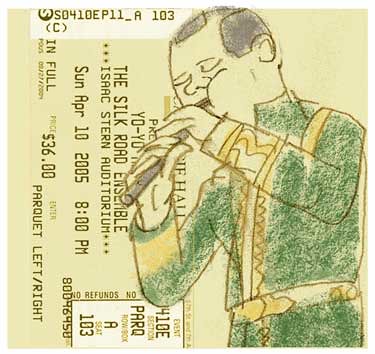
The earthy, haunted voice of the ancient Armenian wind instrument known as the duduk has dominated Armenian folk music for over a thousand years and transfixed modern listeners far beyond the Caucasus. Gevorg Dabaghyan, one of Armenia’s greatest duduk players, brings a rich delicacy and power to his interpretations of both folk and liturgical music, performing most recently on the movie soundtrack of Atom Egoyan’s Ararat, and in concerts in Europe and the USA with the world with cellist Yo-Yo Ma as part of the Silk Road Concerts.
 
The music of Armenia is steeped with ancient instruments and haunting melodies. The intriguing rhythms and melodies seem to combine the music of Turkey and the Balkans to create mellow, ambient, melancholy, meditative music ... this is exactly the kind of music I love! Gevorg Dabaghyan reveals the soul of Armenia with each and every note he plays on the duduk, a double reed pipe. Some of the music dates from as far back as the 5th century. Others are from the 10th & 13th centuries, some from the 19th century. Many of the selections are considered "Eastern classical" music, meaning they fit within prescribed modes and makams. There are folk songs from regions that in the past were Armenian territory. There are religious pieces with symbolism, for hope, resurrection and a new life ... Often the music is accompanied by a drone (produced by another duduk) and there is the beat of a dhol (large cylindrical drum). This is the music I play after a long and stressful day ... it soothes my restless spirit and restores my energy. While remaing still and concentrating on the sounds produced by the dudu,k my mind clears the tension and worries of the day. It can meander into unknown musical landscapes by following the melodies and rhythms of this fascinating and beguiling instrument. Anyone who loves Middle Eastern, Balkan, or Turkish music should expand their horizons and experience the pleasures of the duduk ~ Erika Borsos
  
As the liner notes to Miniatures: Masterworks for Armenian Duduk suggest, Dabaghyan is one of the foremost duduk players in Armenia. He has been featured on more than fifty recordings, including the soundtrack to Atom Egoyan's Ararat (an amazingly bad movie, by the way). Miniatures is his second solo release; the first was volume four of the six volume Music of Armenia set (released in 1996). Dabaghyan is also featured on several albums as part of the Shoghaken Ensemble—including the recently released Armenia Anthology.
 
The goal of Dabaghyan's Music of Armenia volume was to introduce western audiences to the mystery and the magic of the duduk—a feat that is readily accomplished. By contrast, the goal of Miniatures is to explore the role of the duduk in the myriad styles that make up Armenian music. Hence, this fifteen-song collection features duduk performances of traditional folk and dance songs, troubadour love songs, Eastern classical compositions (known as makam in Arabic and mugham in Armenian), and Armenian liturgical chants.
 
When I say "features," I mean it: the only accompanying instruments are the dhol (a round drum for rhythm) and a duduk dharm (a continuous duduk drone note played in the background). One thing that a solo recording such as this one does is render its disparate songs a rather unified sound. Hence, the medieval and liturgical songs blend seamlessly with the folk dance and lullaby numbers. At times, this can make the actual listening experience a bit redundant; in fact, I had to study the liner notes to be able to differentiate one musical style from another. It's easy to listen to all fifteen tracks here and think, "Well, there are a lot of nice melodies, but they're all the same—what's the point?" Only by listening to each track by itself and carefully discerning the overall shape and structure of the different musical styles here can one truly appreciate not only Dabaghyan's artistry but also the richness and depth of the duduk's sound. For this album is really all about the duduk. If you enjoy the instrument's sound, you'll love this disk; if not, then get something else.
 
Reviewed by: Michael Heumann
 
 
Thank you TOT for the music :)