

Gvidas Kovėra, Todar Kaškurevič,
Petras Vyšniauskas
Tylos Labanoro
2006
Tracks:
01. Apie Liudininką 7:19
02. Apie Lygiadienį 5:43
03. Apie Smaką 5:28
04. Apie Akmenį 6:05
05. Apie Žolę 4:11
06. Apie Žaizdą 7:22
07. Apie Moterį 4:12
08. Apie Vėžę 4:34
09. Apie Neturėjimą 6:34
10. Apie Dešinę Ranką 4:29
02. Apie Lygiadienį 5:43
03. Apie Smaką 5:28
04. Apie Akmenį 6:05
05. Apie Žolę 4:11
06. Apie Žaizdą 7:22
07. Apie Moterį 4:12
08. Apie Vėžę 4:34
09. Apie Neturėjimą 6:34
10. Apie Dešinę Ranką 4:29
Credits:
Bagpipes – Gvidas Kovėra, Todar Kaškurevič
Saxophone – Petras Vyšniauskas
Tabla – Rytis Kamičaitis (track 01)
Bagpipes – Gvidas Kovėra, Todar Kaškurevič
Saxophone – Petras Vyšniauskas
Tabla – Rytis Kamičaitis (track 01)
♫☆`*♥¸¸.•*¨*•♫☆`*♥¸¸.•*¨*•☆♫
.ღ•:*´♥`*:•ღ.
♫☆`*♥¸¸.•*¨*•☆♫`*♥¸¸.•*¨*•☆♫
.ღ•:*´♥`*:•ღ.
♫☆`*♥¸¸.•*¨*•☆♫`*♥¸¸.•*¨*•☆♫
Recorded in the Samogitian chimney of steading museum of Jonas & Antanas Juška in Vilkija, February-April 2005.
Samogitia (Zemaiciai, Zemaitija), western part of Lithuania bounded by the Nevezis river in east, the Baltic Sea on the west, the Nemunas river on the south, and the Latvian border on the north. The major portion of the region constitutes the Western Upland, but its name refers to the lowlands stretching along both sides of the Nevezis, which divides western and eastern Lithuania. Both the region and its inhabitants came to be called zemaiciai (lowlanders; nom. Sig. Zemaitis)...
...The wooden buildings of the farmsteads were usually arranged in the two groups: surrounding a clean yard stood the living quarters and the granary , and around the farmyard – barns for threshing and livestock, and other farm buildings. The dwelling house (troba) was a long wide structure, equality divided by a large chimney with an anteroom on each hearth...
source
...The wooden buildings of the farmsteads were usually arranged in the two groups: surrounding a clean yard stood the living quarters and the granary , and around the farmyard – barns for threshing and livestock, and other farm buildings. The dwelling house (troba) was a long wide structure, equality divided by a large chimney with an anteroom on each hearth...
source
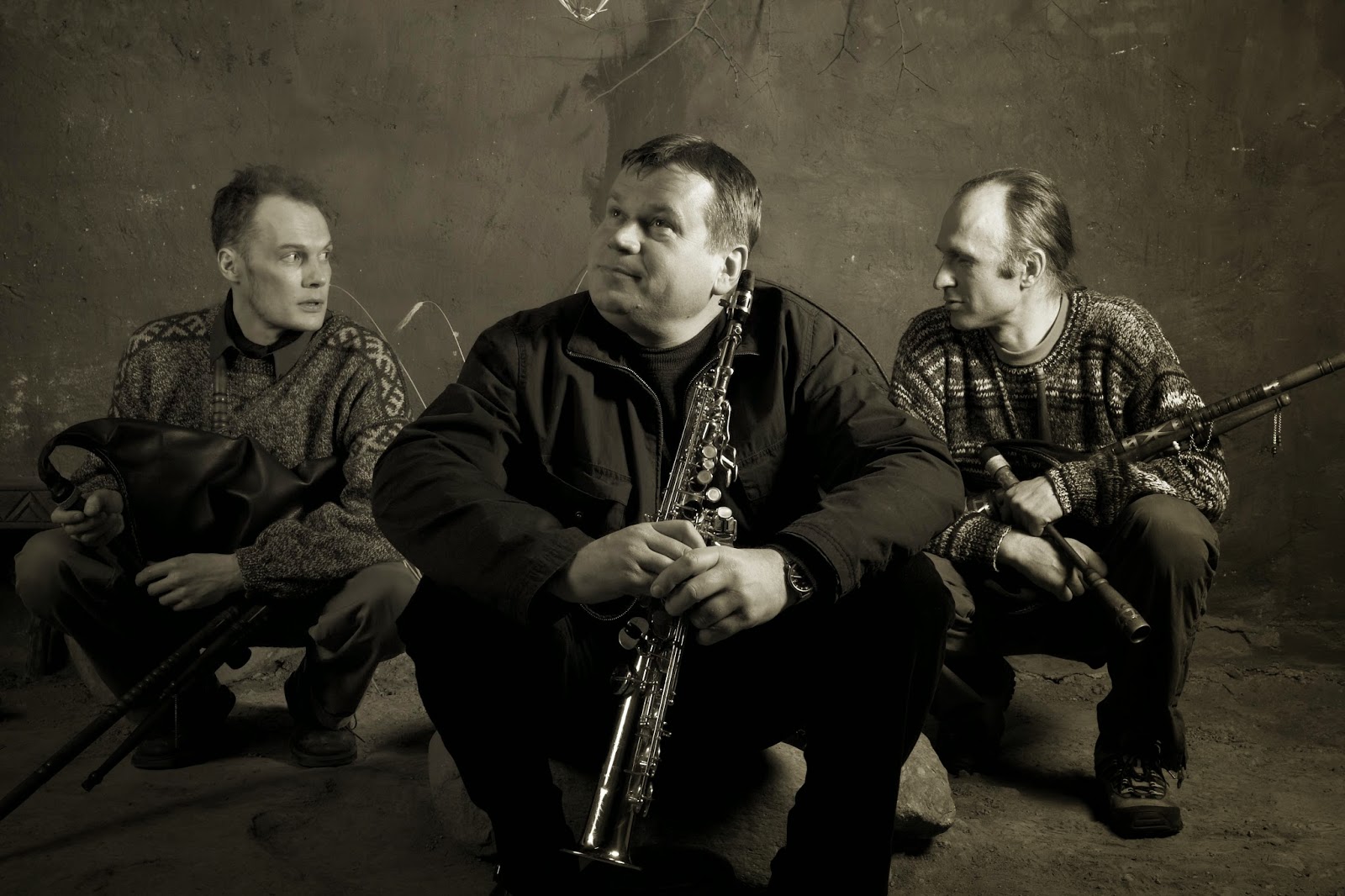
Tylos Labanoro is a project of bagpipers Gvidas Kovėra and Todaras Kaškurėvičius reviving a forgotten Baltic tradition. Labanoro Pipe (or bagpipe) is a traditional Lithuanian folk instrument, its distinctive types were widespread already in the 15th – 16th c., not only in Lithuania, but also in the present territory of western Byelorussia and Latvia. The importance of bagpipes in myths and old rites proves that they were used also during pre-Christian times.
In 2005 musicians recorded the album Tylos Labanoro, playing the instruments made according to surviving authentic examples of Baltic bagpipes. Famous jazz saxophonist Petas Vyšniauskas adds a contemporary touch to this album. The CD is part of the project Labanoro Pipe, supported by UNESCO, and in 2006 presented by several impressive concerts in various Lithuanian towns.
Both musicians are active Labanoro Pipe performers also with other ensembles. Gvidas Kovėra plays in Keisto folkloro grupė; additionally, he recorded also an album of Indian-Lithuanian music together with Veronika Povilionienė and band Lyla. Byelorussian Todoras Kaškurevičius not only plays bagpipe; he is also instrument master, making bagpipes for more than 10 years.
© Ugnius Liogė
source
In 2005 musicians recorded the album Tylos Labanoro, playing the instruments made according to surviving authentic examples of Baltic bagpipes. Famous jazz saxophonist Petas Vyšniauskas adds a contemporary touch to this album. The CD is part of the project Labanoro Pipe, supported by UNESCO, and in 2006 presented by several impressive concerts in various Lithuanian towns.
Both musicians are active Labanoro Pipe performers also with other ensembles. Gvidas Kovėra plays in Keisto folkloro grupė; additionally, he recorded also an album of Indian-Lithuanian music together with Veronika Povilionienė and band Lyla. Byelorussian Todoras Kaškurevičius not only plays bagpipe; he is also instrument master, making bagpipes for more than 10 years.
© Ugnius Liogė
source

Silences of Labanoras
Gvidas Kovėra and Teodoras Kaškurevičius have recorded the album in Vilkija, in the Samogitian chimney of Jonas and Antanas Juškos homestead-museum. The primitive space of rough texture has influenced the music, its sound and mood, has given a characteristic color to it. The exchange of states can also be seen from the creations, forming the music album “Silences of Labanoras”. About witness. About equinox. About dragon. Abut stone. About grass. About wound. Apie woman. About rut. About absence. About right hand.
Actually, the album “Silences of Labanoras” was recorded with bagpipes, which were made by Todaras Kaškurevičius according to the authentic samples of the Baltic bagpipes. Byelorussian Todaras Kaškurevičius is considered as one of the best masters of the Baltic bagpipes in the Baltic region. According to the historic sources such bagpipes already in the 15th and 16th centuries were widely prevalent in Lithuania, Belorussia and Lettigallia. The fact, that bagpipe is important both in myths and in the ancient ceremonies can be, suggests that in this region it was widely used also during the pre-Christian period.
“Silences of Labanoras” have already sounded in Kaunas, in the church of the saint George and in the great hall of the recent year music festival “Kaunas Jazz”. In Vilnius the album was represented on the 13th of May in Bernardine church. The album “Silences of Labanoras” is part of the project sponsored by UNESCO “The pipe of Labanoras”, through which it is intended to revitalize the traditions of bagpipes in Lithuania. CD publishing was sponsored by the companies “Aigipto durys”, “Silita”, BOD, newspaper “Statybų pilotas”, also by the Architecture fund, TV 1 and the Lithuanian national commission of UNESCO.
source
Gvidas Kovėra and Teodoras Kaškurevičius have recorded the album in Vilkija, in the Samogitian chimney of Jonas and Antanas Juškos homestead-museum. The primitive space of rough texture has influenced the music, its sound and mood, has given a characteristic color to it. The exchange of states can also be seen from the creations, forming the music album “Silences of Labanoras”. About witness. About equinox. About dragon. Abut stone. About grass. About wound. Apie woman. About rut. About absence. About right hand.
Actually, the album “Silences of Labanoras” was recorded with bagpipes, which were made by Todaras Kaškurevičius according to the authentic samples of the Baltic bagpipes. Byelorussian Todaras Kaškurevičius is considered as one of the best masters of the Baltic bagpipes in the Baltic region. According to the historic sources such bagpipes already in the 15th and 16th centuries were widely prevalent in Lithuania, Belorussia and Lettigallia. The fact, that bagpipe is important both in myths and in the ancient ceremonies can be, suggests that in this region it was widely used also during the pre-Christian period.
“Silences of Labanoras” have already sounded in Kaunas, in the church of the saint George and in the great hall of the recent year music festival “Kaunas Jazz”. In Vilnius the album was represented on the 13th of May in Bernardine church. The album “Silences of Labanoras” is part of the project sponsored by UNESCO “The pipe of Labanoras”, through which it is intended to revitalize the traditions of bagpipes in Lithuania. CD publishing was sponsored by the companies “Aigipto durys”, “Silita”, BOD, newspaper “Statybų pilotas”, also by the Architecture fund, TV 1 and the Lithuanian national commission of UNESCO.
source

♥+♥+♥





+Front.jpg)


