Showing posts with label Jazz. Show all posts

16.3.14

Flute & Guitar


Mie Ogura & 
Atanas Ourkouzounov
False Classic
2011

Tracks:

01 - Rada
02 - No Mystery
03 - Bul-Bop
04 - "Musica Ricercata" Allegro Con Spirito
05 - "Musica Ricercata" Rubato-Lamentoso
06 - "Musica Ricercata" Vivace
07 - "Musica Ricercata" Vivace-Energico
08 - "Three East Tales" N°1 the Fox's Dance
09 - "Three East Tales" N°2 the Red Elf's Lullaby
10 - "Three East Tales" N°3 Dracula's Caprice
11 - Spain
12 - Take the "A" Train
13 - Macedonian Song
14 - Bulchenska Ratchenitsa

Works by Ligeti, Corea, Ourkouzounov, Ellington, Papasov.

Mie Ogura: flute
Atanas Ourkouzounov: guitar

♫☆`*♥¸¸.•*¨*•♫☆`*♥¸¸.•*¨*•☆♫

.ღ•:*´♥`*:•ღ.

♫☆`*♥¸¸.•*¨*•☆♫`*♥¸¸.•*¨*•☆♫

Flute

  
Born in Japan 1973, Mie Ogura started to play the flute at age 7.
In 1989, she finished her studies at the Takamatsu Music Highschool in Japan and obtained the first price in the National students Flute Competition in Osaka.

In 1994,Mie Ogura moved to France,and in 1999 graduated with Diplôme Supérieur from Conservatoire National Supérieur de Musique de Paris under Pierre-Yves Artaud and Sophie Cherrier.. then obtained an improvisation diploma under the tutelage of Alain Savouret.
She also studied baroque flute with Pierre Séchet and jazz improvisation Jean-Charles Richard, as well as indian music with Patrick Moutal.

In 2001 she obtained a scholarship from the Academia Musicale de Siena(Italy) under Aurèle Nicolet(flute) and Alain Meunier(chamber music), also worked with Franco Donatoni.They highly appreciates her playing.

Her playng is called"The fan of sound",since 1995 Mie Ogura has appeared regulary as a soloist and chamber musician with different ensembles and orchestras,among others,Ensamble Sphota(improvisation),Ensemble L’Itinéraire,Ensemble Entretemps(contemporary music),Orchestre pour la paix(Classical), Compagny Robinson(contemporary Danse) etc...and invited in many festivals in the world (Europe,America,Canada,Australia,Japan..)

Her improvisation playng in also appreciated from many jazz and classical musiciens such as Loelle Léandre(cb), Glenn Ferris(tb), Masataka Hirano(Sax), Shin-Ichi Fukuda,Kazumi Watanabe, Carlo Domeniconi(gt) and many others.

Mie Ogura has recorded with the ensemble Triton2 (Label MFA,France) and Ensemble Ourkouzounov (Label KLE,Italy),and Duo with Atanas OURKOUZOUNOV (Label Varié in Japan and Label H&S Paris) also edited the jazz flute beginners book « Flute Jazz Coffeebreak », published in 2005 at Edition Trim (Japan).

Her favorite musiciens is Miles Davis,Roland Kirk,Chick Corea,Keith Jarrett,Hari Prasad Chaurasia etc....

Flute and imrovisation professor at the Jacques Ibert Conservatory in Paris,and Conservatory in Sucy en Brie.
  

Guitar
  
  
Atanas Ourkouzounov (b. 1970 in Burgas, Bulgaria), a leading figure in Bulgaria’s contemporary music, is winning international fame both as a guitarist and as a composer. His music features the asymmetric rhythms and modal harmonies typical of his homeland but, like Béla Bartók, Ourkouzounov (pronounced Oor-koo-ZOO-nov) uses regional traditions as a point of departure from which he ranges widely in an intu-itive and personal way. Whereas Bartók’s muse was the piano, Ourkouzounov’s muse is―fortunately for guitarists―the guitar. Ourkouzounov has written over 60 works for guitar―solos, duos, trios, quartets, instrumental ensembles, and two concerti―a number of which have won important prizes, and a majority of which have been published by leading publishers.

Atanas Ourkouzounov performs widely as soloist, with his wife the Japanese flautist Mie Ogura, and with the Ourkouzounov Ensemble (two guitars, flute and cello).
In addition to three CDs on which Ourkouzounov plays, more than 30 CDs of his music performed by others are currently available.

Ourkouzounov is also in demand as a teacher and juror at conferences and conservatories in Europe and Japan and he holds a full-time position at the Conservatoire “Maurice Ravel” in Paris.

Atanas Ourkouzounov grew up in Sofia, Bulgaria, where he began guitar studies with Dimitar Doitchinov.

Starting in 1992, he continued his studies in France with Arnaud Dumond, Alexandre Lagoya and Olivier Chassain. He studied guitar, chamber music, analysis, ethnomusicology and improvisation at the Paris Conservatory and graduated in 1997 winning by unanimous vote the First Prize in guitar.

Six years before he went to Paris, he started to compose. He was 16 years old and had been playing guitar only one year. For fun, he began changing details in pieces he was learning and then he wrote his first piece―3 Inventions―using the baroque idiom and subject of a fugue he was studying. He became intoxicated with composing and soon started using melodies, rhythms, and modal harmonies of Bulgarian folk music. At the same time, he was avidly listening to recordings, especially Arthur Honegger’s Symphonie N°5 and Igor Stravinsky’s Rite of Spring and Petrushka.To this day, Igor Stravinsky, György Ligeti, Ludwig van Beethoven, and Claude Debussy are among Ourkouzounov’s favorite composers.

While at least a trace of Bulgaria is always present in Ourkouzounov’s music, in the last eight years he has also written pieces he calls “dedications” in which he composes his own music
from the point of view of other composers and/or idioms―for example, Caprice d'après Paganini(which imagines a "new” Paganini as he might exist today); Fantaisie d'après Kapsberger (which draws on elements of 17th-century music for archlute); and Toryanse
Tales(which uses a Japanese folk theme).

Ourkouzounov is also fascinated by timbre and idiomatic colorisitic effects ―as explored for example in Light Echoes from Star -light―5 Nocturnes, in the Reflet guitar duos, and above all in the Visions Chromatiques N°1for guitar solo and the Visions Chromatiques N°2 for voice, violin, mandola, and guitar.

Ourkouzounov feels the “timbre” works are more contemporary and abstract―and perhaps more personal― than his pieces in which Bulgarian elements prevail.

Ourkouzounov enjoys performing flute-guitar duos with his wife. Typical programs are two Ourkouzounov works alongside arrangements and original music by diverse composers―for example, pieces by Chick Corea, Keith Jarrett, Béla Bartók, and Claude Debussy―as well as arrangements Ourkouzounov calls “postcards” (folk music from countries such as Mali, Japan, Bulgaria, Brazil, and India). As a listener, Ourkouzounov loves performers such as the conductor Carlos Kleiber, the pianists Grigory Sokolov and Keith Jarrett, and many jazz or folk-jazz musicians―for example, the Bulgarian clarinetist Ivo Papazov, the Bulgarian flautist Theodosii Spassov and the group Shakti (especially the guitarist John McLaughlin and the tabla player Zakir Hussain).


♥*♥


25.3.12

What the hell else do you want?

   
Jim Hall - Live!
1975

Tracks:

01. Angel Eyes (Dennis-Brent)
02. 'Round Midnight (Monk-Williams-Hanighen)
03. Scrapple from the Apple (Parker)
04. The Way You Look Tonight (Kern-Fields)
05. I Hear a Rhapsody (Baker-Fragos-Gasparre)

Personnel:

Jim Hall (Guitar)
Don Thompson (Double Bass)
Terry Clarke (Drums)

Recorded live at Bourbon Street, Toronto, Canada in June 1975. (09/10/1975/09/11/1975).
Originally released on Horizon Records (705). 
  
♫☆`*♥¸¸.•*¨*•♫☆`*♥¸¸.•*¨*•☆♫

.ღ•:*´♥`*:•ღ.

♫☆`*♥¸¸.•*¨*•☆♫`*♥¸¸.•*¨*•☆♫
    
This was the first Jim Hall album I bought many years ago - I still think it's one of his best - and I've waited many years for it to be released on cd. Jim Hall is now in his early 70's. Hall is frequently listed as a major influence on the large number of jazz guitarists a generation younger than him, including Pat Metheny, Bill Frisell, John Scofield, Mick Goodrick and Mike Stern.

This recording catches Hall in his prime with many lengthy solos; something you don't often hear from him. It's from a 1975 club date with Don Thompson on bass and Terry Clarke on drums. The record starts with a lengthy version of the minor key standard Angel Eyes. Halls improvising is exploratory and inventive - you never feel that he's falling back on cliches or familiar patterns. His solos are frequently chord and rhythm based rather than just single note phrases for verse after verse. He keeps flashiness to a minimum but his playing is complex. Scrapple From the Apple, the Charlie Parker bebop tune, is also of note. Hall veers away from a typical bebop solo and works with dynamics; contrasting single note versus chord phrases and moving from a duet section with Clarke to the full trio again.

This should be "required" listening for any student of jazz guitar but will also be rewarding for all lovers of jazz. ~ Amazon
  
***
  This is in my opinion his greatest recording (I have every other one as well). First, it's a live recording and it has a freshness and spontaneity that is sometimes missing in studio recordings. Hall's playing is relaxed but incredibly sophisticated. He works these standards in subtle and clever ways. His lines/solos are melodic and story-like, but gently push the outer edge. Rhythmically there's pushing forward and holding back in ways that excite and engage the listener. This is subtle stuff, and it can be listened to for years while still discovering new elements and nuances. Much of the album's success is due to interplay between the three musicians (Don Thompson on bass and Terry Clarke on drums). They are all equal players, not just a rhythm section with a soloist. Don Thompson, in particular, is almost like a guitar player playing duets with Hall. The feel of the trio reminds me of Bill Evans w/ Scott LaFaro and Paul Motian. I very much wish Mr. Hall would play more often in this sort of context. ~ Amazon

***

For young musicians interested in playing jazz what do you say to them?

What I usually say is a long distance quote from John Lewis. John had this School for jazz at the end of summer for three weeks up in Lenox Massachusetts. At the end of one three week session he was talking to the graduates and a couple of guys asked if there were any gigs out there? John said: "Wait, wait, you got it backwards."

What he was saying was that music gives you so much already. What the hell else do you want? This is your reward right here just being involved. And it is really just stunning what you can get out of music. It's unique; it's yours and its something to be cherished. Making a living is an added bonus occasionally, but I think you already have quite a bit if you can play. . ..


~♥~

29.2.12

Guitar, Bass &

   
Jimmy Giuffre & Jim Hall
Featuring Ralph Peña
The Original Trio


Tracks:

01. Gotta Dance
02. Two Kinds Of Blues
03. Song Is You
04. Crazy She Calls Me
05. Voodoo
06. My All
07. That's The Way It Is
08. Crawdad Suite
09. Train And The River
10. Four Brothers
11. Gotta Dance
12. Two Kinds Of Blues

Bonus Tracks*:

13. Train And The River
14. Train And The River

Personnel:
  
Jimmy Giuffre (cl, ts, bs)
Jim Hall (g)
Ralph Peña, Jim Atlas* (b)
 
♫☆`*♥¸¸.•*¨*•♫☆`*♥¸¸.•*¨*•☆♫

.ღ•:*´♥`*:•ღ.

♫☆`*♥¸¸.•*¨*•☆♫`*♥¸¸.•*¨*•☆♫

you can buy it here : )

Innovative stuff from the first Jimmy Giuffre trio, an unusual line-up of guitar and bass with Giuffre alternating between sax and clarinet, happy to dispense with a drummer and rely on an implied rhythm supplied by collective musicianship.

Studio sessions from 1956/57 are augmented with recordings from the “Stars of Jazz” and “The Sound of Jazz” TV shows, including a second version of Giuffre’s most famous tune 'The Train and the River'. (Jim Atlas replaces Ralph Peña on bass on both cuts).

  
An expanded version of the first album to feature the Jimmy Giuffre trio – originally issued by Atlantic as The Jimmy Giuffre 3, but featuring additional bonus live tracks here! The core session is groundbreaking trio work from Giuffre – an album that cut loose both the piano and the drums – in a way that took Gerry Mulligan's earlier rhythm-less experiments with jazz, and pushed them one degree further! The group on the session features Giuffre on clarinet, tenor, and baritone sax – alongside the guitar of Jim Hall and bass of Ralph Pena – all working together with no other accompaniment, but in a way that's as swinging as it is airy – an amazing exercise in tone, color, and control! The sound is out of this world, and the notes just hang lightly in air – beautifully dancing around one another.
© 1996-2012, Dusty Groove America, Inc.
 
♥
 

18.12.10

Viva Brasil

  
Tania Maria - Viva Brasil
2000

Tracks:

01. Florzinha (Petite Fleur) (Sidney Bechet - Tania Maria Correa Reis)
02. Tá Tudo Certo (Tania Maria Correa Reis) / Mas Que Nada (Jorge Ben Jor)
03. Sebastiana (Rosil Cavalcanti)
04. Encanto Meu (Tania Maria Correa Reis)
05. Vem Pra Roda (Tania Maria Correa Reis)
06. It's Only Love (Tania Maria Correa Reis - Leslie Carter)
07. One Note Samba (Antonio Carlos Jobim - Newton Mendonça)
08. Não Se Avexe Não (Francisco Anysio - Haydee Paula)
09. Amei Demais (Tania Maria Correa Reis)
10. Sangria (Tania Maria Correa Reis)
11. Conceição (Jair Amorim - Dunga)

Personnel:

Tania Maria (vocals, piano, synthesizer);
Cacao (saxophone, flute, clarinet);
Marc Bertaux, Carlos Werneck (bass);
Stephane Huchard (drums);
Mestre Carneiro (percussion).
  
♫☆`*♥¸¸.•*¨*•♫☆`*♥¸¸.•*¨*•♫
        
        
♫☆`*♥¸¸.•*¨*•☆♫`*♥¸¸.•*¨*•♫
  
Want to know how to say "wow" in Portuguese? Try Tania Maria. That says it all.

On her new CD titled "Viva Brazil", Tania Maria returns—musically at least—to her native Brazil. She combines her original compositions with some of the best known Brazilian classics. Her interpretation of "Sebastiana" is second to none. And there is her stunning arrangement of "One Note Samba". She slows the normally jumpy tempo to a sultry ballad and the result is magic.

Then there are Tania Maria's original composition, my favorite being "Sangria". Like the drink, this is a wonderful blend of flavors; jazz, funk and pop.

Tania Maria adds her own creation to the rick tapestry of Brazilian music. Her blend of African rhythms and Latin melodies result in a sound that is at once soulful and rich. The ultimate ingredient in the mix is Tania Maria's sensuous voice.

From the first drum beat of the opening selection "Florzinha/Petite Fleur" and ending with the last mellow notes of "Conceicao" Tania Maria holds her listeners under her spell.

If you are already one of her many fans then this CD is the perfect addition to your collection. If you are new to the sounds of Tania Maria then this CD is the perfect introduction. Either way, don't miss it.
 
 
***
 
Brazilian singer/pianist/composer Tania Maria launched her career in France in the 1970s and sounds as energetic as ever. One of the original crossover artists, she combines classic Brazilian rhythms and sensibility with funk, jazz, pop, and splash of rock & roll. Tania Maria is instantly recognizable: nobody would confuse her strong, lusty, distinctive voice and playful piano style (including those dissonant three-note fills) with anyone else. This CD contains one of her signature tunes, "It's Only Love," updated with Cacao's soulful sax as well as some experiments. There's a percussion-infused version of Sidney Bechet's well-known "Petite Fleur," which works so well it's the highlight of the CD, and a slow ballad take on "One Note Samba," which doesn't. The melody simply isn't interesting enough to elongate. But there are better moments here: the funky bass work and churning percussion on "Encanto Meu," "Nao Se Avexe Nao," and "Sangria," which is served up hot, with Tania Maria's fiery, Cuban-style solo and comping; the syncopated party pulse on "Vem Pr'a Roda"; and the sexy, laid-back swing on "Amei Demais." Her singing is so expressive it makes one wish that English translations of the lyrics were provided. Tania Maria's mischievous humor really comes out in her electrifying live performances, but there are hints of it here in her laughing countdown to one track and the background chorus of "Whoa!" on another. This veteran is one of a kind, and this CD is a good introduction to her sound and a must-have for fans.
 
~ Judith Schlesinger
 
 ♥

17.12.10

Taurus

 
Tania Maria
Taurus
1981

Tracks:

1 - Tranquility - Tania Maria
2 - Imagine - Lennon
3 - Bandeira Do Lero - Tania Maria
4 - Two A.M. - Tania Maria
5 - Que Vengan los Toros - Tania Maria
6 - Cry Me a River - Hamilton
7 - Eruption - Tania Maria

Personnel:

Tania Maria: Piano, Keys, Vocals, Composer
Willie Colon: Percussion, Conga
Eddie Durán: Guitar
Rob Fisher: Bass
Vince Lateano: Drums

Recorded at Russian Hill Recording, San Francisco, California, August 1981.
 
♫☆`*♥¸¸.•*¨*•♫☆`*♥¸¸.•*¨*•♫
        
        
♫☆`*♥¸¸.•*¨*•☆♫`*♥¸¸.•*¨*•♫
  
Brazilian-born Tania Maria has been a leader since the tender age of 13, when her band of professional musicians, organized by her father, won first prize in a local music contest and went on to play for dances, in clubs and on the radio. Her father, a metal worker and a gifted guitarist and singer, had encouraged her to study piano so that she could play in his weekend jam sessions, where she first absorbed the rhythms and melodies of samba, jazz, pop music and Brazilian chorinho. Since then, she has never worked in anyone else's group. Exposed early to the artistry of Oscar Peterson, Bill Evans, Luiz Eca, Sarah Vaughan, Anita O'Day, Tom Jobim and Milton Nascimento, she developed her own masterful synthesis of what she heard an effervescent style of piano work and rapid-tongued vocals in arrangements that fuse Brazilian rhythms and Caribbean salsa with the improvised expression that is the heart of American jazz.

Her family was poor. Her 4 sisters, also musically inclined, followed their mother's prudent warnings against making careers of such inclinations and entered the fields of dentistry, psychology, engineering and advertising. Tania Maria spent 2 years studying for a law degree, married and started a family, but by the mid '70s she had answered a calling that seems to have been waiting for her since her birth. She committed herself to performing again, moving to Sao Paulo where she sang and studied piano.

Her nightlife soon led her to Paris, her home base for several years, where she recorded several albums. At a concert in Australia, her formidable musical precision and freewheeling spirit caught the attention of American guitarist Charlie Byrd, who recommended her to Carl Jefferson, head of Concord Records. "Even then", Byrd recalls, "she put her own stamp on music. I was very impressed, Tania Maria's first America album, 'Piquant', earned jazz critic Leonard Feather's Golden Feather Award".

Although 6 years of classical study underlie her solid pianistic technique, Tania Maria's highly praised vocal skills came naturally, "I'm Brazilian", she says, "and singing is the greatest tradition we have!". Well known for ebullient scat singing, she indetifies herself primarily as a pianist. "I play percussion on my piano", she explains, rather than smooth runs up and down scales. And she often scats in unison or harmony with the notes that flow from her touch, soaring beyond the constraints of words. "The first person that I heard that did this was a Brazilian, Sivuca, and he did this with the accordion, the same thing that George Benson does with his guitar. So I was thinking, it they can do it with the accordion and guitar, why can't I do it with the piano? For me it's so easy in one way it's my trademark. You know somehow that Tania Maria is passing by!"

"There's a kind of musician that utilizes the music to pass their lyrics, because the message is not in the music, the messages is in their lyrics. I don't think I'm that kind of person. When I do my improvisations, I have the impression that I am saying something. The music conducts me to a certain space and a certain message."
"In our day, the less you talk, the more you do. I'm a little tired to listen to politicians say, oh, 'Read my lips'. It's better for me to boop-be-doo-boop-be-ooh-boo - then it's difficult to read my lips!".
Based in New York since the '80s, this extraordinary improviser best known for her fiery interpretation of Brazilian, Afro-Latin, Pop and Jazz Fusion, in a style that is uniquely her own. Tania has played virtually every important Jazz Festival in the world and has appeared on countless television and radio programmes. Tania has recorded 19 albums and in 1985 was nominated for a Grammy Award in the category "Best Jazz Vocal Performance - Female Artist". In 1995 Tania performed at prestigious venues like The Blue Note and famous festivals like Saratoga Jazz Festival, New Orleans Heritage Festival, etc... all over the world. 
When she chooses to perform live, everyone, including Tania Maria, is in for a joyful celebration of "the colors of people, the many different sounds of people". She tells us "When I play, I have the possibility to be 80 percent more on the side of happiness. The other 20 percent, it's up to the public to put in!".
 
WikiMaria
  
  
☆

10.8.10

Tale Of My Land

   
Rain Sultanov
Tale Of My Land
2008

Tracks:

1. Children
2. Lost Land
3. Father's Tale
4. Mother
5. Ache In My Soul
6. My Angel
7. Tale Of My Land

Musicians:

Rain Sultanov - tenor, soprano sax,
Yasef Eyvazov - oud,
Aleksey Miltikh - cello,
Rauf Sultanov - double bass,
Lala Aliyeva - harp,
Natig Shirinov - nagara,
Ramin Sultanov - drums, davul,
Tofig Jabbarov - percussion.
 
♫☆`*♥¸¸.•*¨*•♫☆`*♥¸¸.•*¨*•♫
        
        
♫☆`*♥¸¸.•*¨*•♫☆`*♥¸¸.•*¨*•♫
  
This recording is a very important event in my life; the project is called, 'Talking about my native land'. I am trying to express all my feelings about my homeland in the language of music, particularly focussing on two generations, children and old people. Children are our future, the aged are our parents, history, our past. The music on the album expresses sorrow for the children who have lost their homes and parents and our concern for those who are living out the last days of their lives; as well as our heartache over the lost territories. These are all the feelings I experience today. Only acoustic instruments will be used in this project. It's not easy, to be honest, but I really want to make it a success. I want to enliven the music with a documentary video; the 'Talking about my native land' project will be a video disc. I think this album will be my best work yet; it will encapsulate many of the moments which I haven't yet been able to express in the language of music and will communicate to the world my native land, its problems and our people. 
R.S.


♥

9.8.10

Azerbaijan


Tale of My Land CD + DVD,
Children, Lost Land, Father's Tale, Mother, Ache in my Soul, My Angel, Tale of My Land

Musicians: 


Rain Sultanov - tenor, soprano sax, 
Yasef Eyvazov - oud, 
Aleksey Miltikh - cello, 
Rauf Sultanov - double bass, 
Lala Aliyeva - harp, 
Natig Shirinov - nagara, 
Ramin Sultanov - drums, davul, 
Tofig Jabbarov - percussion.

all composition by Rain Sultanov
2008, RSA Records Baku, Azerbaijan
Mixed by Jan Erik Kongshaug, Rainbow Studio, Oslo
produced by Rain Sultanov
co-producer Thor Jorgen Skjelbred


♥♥♥

8.8.10

Rain Sultanov

  
Rain Sultanov
City of Jazz
2003

Tracks:

1. City of Jazz 7.23 (R. Sultanov)
2. Baki khatireleri 6.54 (R. Sultanov)
3. Leyla 7.10 (R. Sultanov)
4. Mart 6.29 (V. Mustafa-zadeh)
5. Azerbaijan 5.40 (R. Babayev)
6. Aglama 7.49 (R. Sultanov)
7. Reyhan 5.14 (F. Amirov)
8. Tale about caspian 7.36 (R. Sultanov)

Personnel:

RAIN SULTANOV: Soprano & tenor sax, ewi, bass clarinet, keyboard,sound & drum programming
SALMAN GAMBAROV: piano
RAUF SULTANOV: acoustic bass
TOFIG JABBAROV: percussions
YASEF EYVAZOV: oud
DAVID KOYFMAN: acoustic bass
RUSLAN HUSEYNOV: bass guitar
RAMIN SULTANOV: drums, tabla
OGTAY RUSTAMOV: trumpet

Recorded november/december 2002 in rainstudio Baku, Azerbaijan.

♫☆`*♥¸¸.•*¨*•♫☆`*♥¸¸.•*¨*•♫
        
        
♫☆`*♥¸¸.•*¨*•♫☆`*♥¸¸.•*¨*•♫
 
 Rain Sultanov was born in Baku, Azerbaijan in 1965. Influenced by his mother and two elder brothers, he became a musician although as a child he was more eager to draw and attended drawing classes. When he was 14, his elder brothers decided that he should enter music school, where one of his first teachers was Chingiz Babayev.

He bought his first clarinet with his eldest brother's help. He often listened to famous jazz compositions performed by Miles Davis and Weather Report. Michael Brecker's unusual performances were to have a great influence on him later.

After leaving school, Rain was a clarinettist in the military orchestra for almost four years during his army service.
In 1985, when he was a student at the A. Zeynalli Music College, he won the Rain & Donny McCazlin Azerbaijan Music Contest. Rain became an accomplished performer of classical works by Weber, Tchaikovsky and Mozart and at the same time was a professional performer of well-known jazz compositions.Invited by the famous Azerbaijani composer and singer Polad Bulbuloglu to join the Ashuglar group, he started to write improvisations for his songs, while continuing to play jazz with friends and family. Influenced by Michael Brecker's compositions, Rain wrote several of his own works and performed them on tour. In 1988 he was invited by the outstanding Azerbaijani singer Rashid Behbudov to work at the State Song Theatre.

The same year Rain entered the Azerbaijan State Conservatoire. In 1989, after the death of the Rashid Behbudov, Rain started working with the Gaya State Jazz Orchestra. The number of singers in the group increased under Teymur Mirzoyev's guidance, and many new opportunities came up. Invited by clarinet leader Tofig Shabanov, Rain started working as a soloist in the orchestra the same year. He gained a following as a mature improviser.In 1992 Rain was invited to work with the Azerbaijan Teleradio Symphony Orchestra under the direction of Faig Sujaddinov. This proved to be a critical time during which he prepared several solo jazz programmes for concerts. From 1992 to 1994 Rain performed solo jazz concerts at various jazz and concert halls in Turkey and Moscow. In 1995 Rain wrote his first compositions, Jokers' Dance and Day Off . He Adam Rodgers & Raintook part to critical acclaim in jazz festivals in Germany in 1996 and 1997.1996 was a very successful year for Rain: in Germany he wrote several new compositions, including Last Moment, Crazy World and others.

On returning to Azerbaijan, Rain decided to form the Syndicate jazz group with the participation of his eldest brother Rauf Sultanov (guitar), Eldar Rzakulizade (piano), Gamidulla Xafari (guitar) and Vagif Aliyev (drums). Syndicate performed their first solo concert, Last Moment, on 14th and 15th July 1997. Syndicate's performance of original compositions soon won it the admiration of jazz composers. At the same time, from 1997 to 1998, Rain was performing compositions by John Coltrane and Miles Davis in various jazz clubs in Germany and Baku. "Musicians such as John Coltrane and Miles Davis originated many new Rauf Sultanov , Eldar Rzakuli-zadeh , Evelin Blake , Kurtis Fuller , Vagif Aliyev & Raintrends in jazz and they left a brilliant legacy," Rain says.

In 1998 Syndicate were invited to the World Jazz Festival in Novosibirsk (Russia) where they played alongside internationally renowned jazzmen such as Curtis Fuller (trombone), Adam Rogers (guitar) and Danny Makazlin (clarinet). After the festival, Syndicate received an offer from the festival organizer to record an album. In 1999 Rain shared a stage famous saxophonist Tommy Smith in Baku. Publicly recognized as a professional jazz group, Syndicate recorded their first album, Last Moment, in January 1999. When it was completed, Rain decided to change his image as a composer and move to innovative work with the clarinet. He has now composed his new album, Mugam magam, which is based on Azerbaijani national music. It is an intriguing example of Rain's creativity and musical skill. City of Jazz followed in 2003... 
In 2008 Rain Sultanov completed his work, which lasted two years, on his album “Tale of my land”. Rain calls this project album – book, which contains 40 pages of pictures. Album consists of 2 CDs and lasts for 3 hours. The first CD is music, but the second is a 17-minute movie, directed by Azeri ad Turkish film directors. First part of the album includes an interview with Rain Sultanov; the second part contains jazzman’s music with the pictures in the background, included in the disc. Children, old people, especially the refuges are exposed in pictures. The third part is a mini video clip, with a main leitmotif of war and the horrors it brings.
 
 
wiki


Tale Of My Land ... 
 
Today, only a select few musicians carry the name of Azerbaijani jazz to other countries. Rain Sultanov is one leading saxophone player doing just that. Similarly, not many have gone through such an eventfully rich, and sometimes stormy, period of development. He is certainly a musician’s musician - appreciated by those finely tuned to the highest art.

Rain’s music is thoughtful and suffused with significance.

Rain Sultanov – authoritative jazz musician and leading exponent of different forms of music, with his own style and a plethora of ideas and projects, drawn inexorably to the mysterious world of the future.
 
♥

2.8.10

Miño

  
Baldo Martínez - Proyecto Miño
2007

Tracks:

01. Ribeira
02. Marcha
03. Aire De Tuba
04. Canta Rula
05. De Onte Pra Mañan
06. Suite Del Miño
07. De Norte A Sur
08. Fogar De Breogan

MUSICIANS:

MAITE DONO - Voice
GERMAN DÍAZ - Hurdy-Gurdy
CHIAKI MAWATARI - Tuba & Serpenton
DAVID HERRINGTON - Trumpet y Flugel-horn
ALEJANDRO PEREZ - Tenor and soprano saxes, clarinet
ANTONIO BRAVO - Electric guitar
LUCIA MARTÍNEZ - Vibraphone and  percussion
PEDRO LOPEZ - Drums and electronic percussion
BALDO MARTÍNEZ - Double-bass, composition and musical arrangement

Featuring:

VALENTÍN CLASTRIER - Hurdy-Gurdy
  
♫☆`*♥¸¸.•*¨*•♫☆`*♥¸¸.•*¨*•♫
        
        
♫☆`*♥¸¸.•*¨*•♫☆`*♥¸¸.•*¨*•♫
  
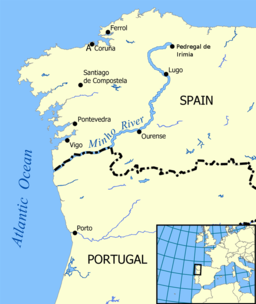
 The Miño project came about through a comission for the Portuguese  Guimaraes International Jazz Festival for Baldo Martinez, Galician double bassist noted for his work in the area of modern tendencies of European jazz.Some of the compositions, all originals, are based on traditional lyrics and music from his homeland. They are interpreted by nine excellent  musicians, each one well known in the jazz and folk circuits, who achieve a rich and varied timbre, combining traditional instruments like hurdy-gurdy together with electric guitar, tuba, vibes, double bass.......developed within a contemporary jazz idiom, this music is inspired by the traditional music from the river Miño area, on the border between Galicia in the north-west of Spain and the north of Portugal. It offers a personal approach within the latest European jazz fields with very strong autoctonas roots.
  
  
The Galician double-bass player Baldo Martínez is one of the most representative musicians within Spanish contemporary jazz and one of those with greater recognition outside of Spain, proof of which is the recent tour of Germany(Trienal Festival of Cologne, European Jazz made in.....in Munich) where he presented the Projecto Miño, one of the most daring and innovative directed by Baldo Martínez.. In 1994 he formed his own group, after previously founding bands like Zyklus or Clunia, and having worked with respected national and international musicians: Paolo Fresu(2003), Louis Sclavis(2006), Joachim Kühn(from 2005), Jorge Pardo, Wade Mattews, Carlo Actis Dato(from 2001), Maria Joao (from 1985), Mike Rabinowitz, Chano Dominguez, Angel Rubio and a long etc... Baldo Martinez's first record, "No Pais dos Enanos" was received with very positive reviews and was considered by the magazine Cuadernos de Jazz as the 2nd best record in 1996. Two years later he presented his 2nd work as leader, "Juego de Niños" in the Matosinhos-Porto International European Jazz Festival (Portugal) where it received great acclaim from the public and very favourable reviews.This record was also considered to be one of the 5 best in 1998. He also presented it in France,where it was very well recieved "standing apart within Spanish Jazz,Baldo Martinez impregnates with elegance and creativity the paths of European Jazz". Featured also in the special cultural supplement Babelia, to celebrate the 25th aniversary of the newspaper El País,he was considered to be one of the most prominent Spanish jazz musicians within the European jazz scene. The past may this group have participate in the EUROJAZZ in Mexico, this festival show the last ways of European Jazz. "The Baldo Martinez quintet has managed to .........the idea of flamenco-jazz and has enriched it with the influence of popular music creating a personal language...a music laced with ethnic tonalities with contemporary touches"(El Heraldo De MEXICO (April 2002) In 1999 he was asked to lead "Miño Project" in the International Jazz Festival in Guimaraes, Portugal, considered to be one of the most important within the new European jazz scene. This project develops a reperetory based on the traditional music of Galicia and the north of Portugal, with a 9 piece band (Maria Joao, Gregg Moore, Carlos Beceiro, etc..).Worthy of mention also is his recent collaboration with the Italian musician Carlo Actis Dato o Paolo Fresu the last Summer It is one of the most stable and solid groups currently existing in Spain, formed with internationally recognized musicians.
    Baldo Martinez have take his music for Spain, Germany, Portugal, Maruecos, Mexico, Luxemburgo, France, etc... The recording by the title "Nai" (2001), mixes a large part of his recent musical experiences, and we can find music inspired in folk, especially Galician, played with vanguard style within current European jazz. The group is formed by leading musicians from the national scene; the guitarrist, also Galician, Antonio Bravo, revelation in recent years; the British trumpet-player David Herrington, very creative with his warm sound, on drums and electronic percussion, Pedro Lopez, one of the most imaginative musicians who also formed part of the group Zyclus with Baldo Martinez, and the most recent member, Eduardo Ortega, a young violinist, virtuoso and great improviser, who lends the group a personality and sonority that fits perfectly within the eschetic planning of Baldo Martinez's music. Recently, 5 years after it's creation, he presented the Projecto Miño in Spainlast January in the Circulo de bellas Artes in Madrid within the Festival Internacional Escena Contemporánea, achieving great recognition from the public and media, who described it as "one of the most emotive, ambitious, exuberant and intelligent projects that has appeared in Spanish jazz in a long time" Pablo Sanz –EL MUNDO- During this year, 2005, he has edited two cd's, one with his quintet, called TUSITALA and another in duo with the Italian saxophone and bass-clarinet player Carlo Actis Dato, titled FOLKLORE IMAGINARIO from the British label, Leo Records. In 2006 he formed TRIEZ with Agustí Fernandez and Ramón López., they presented this grouping “JAZZYCOLRS FESTIVAL” in Paris, November 2006 Also at the present he is member of “Joachim Kühn Iberia Trio”.
homepage 


River