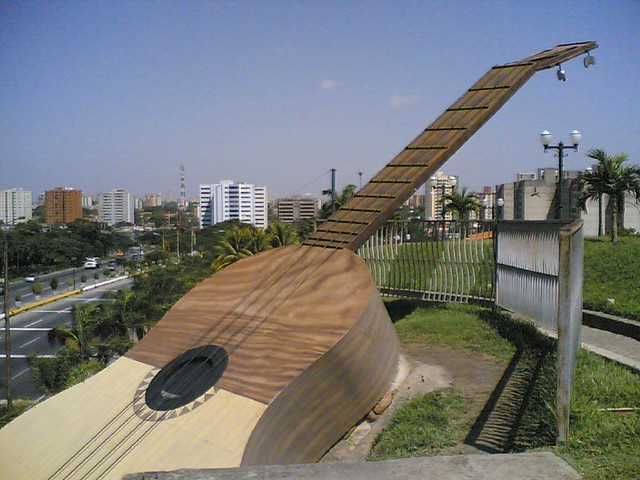
Showing posts with label Guitar. Show all posts

24.4.15

La Donna canta e suona la chitarra

 
Marina Pittau
Raighinas
2003

Tracks:

01. Su beranu (Le printemps) - 5:13
02. A bosu pregaus - 4:00
03. Rosariu - 1:50
04. Ballu sardu - 4:29
05. Su bandidu antuneddu - 5:45
06. Dadenos abba (Donnez nous de l'eau) - 4:53
07. Duru duru a trunfa (Tourner) - 4:15
08. Dies Irae (Le jour de la colère) - 5:00
09. Sa chiterra - 3:19
10. A badda (À danser) - 5:51
11. Non potho reposare - 5:15
12. Dillu de Anton'istene - 3:28
13. Goccius de Santa Luxia (Joie de Santa Lucia) - 4:44

Personnel:

Marina Pittau (Voix, guitare (4, 5, 10, 11), percussions (8), trunfa (7))
Valentino Meloni (Guitare (1, 2, 5, 7, 8, 10, 11, 12))
Orlando Mascia (Launeddas, organittu, trunfa, sulittu)
Peppino Cabiddu (Guitare sarde (9))
Rossella Faa (Voix (3, 6))
Marco Malatesta (Percussions (1, 7, 10))
  
♫☆`*♥¸¸.•*¨*•♫☆`*♥¸¸.•*¨*•☆♫

.ღ•:*´♥`*:•ღ. 

♫☆`*♥¸¸.•*¨*•☆♫`*♥¸¸.•*¨*•☆♫
  
 Marina Pittau was born in Cagliari, Sardinia. From her earliest childhood, she was inspired by the music she heard around her and she taught herself to sing and play the guitar. For the past ten years or so she has been living in Geneva, where she teaches music and singing, but she returns to Sardinia regularly, and it was there that this recording was made, with some of the island’s most remarkable musicians. And the result meets all our expectations, with a colourful mixture of the ‘musical mysteries’ of Sardinia, including fascinating instruments such as the launeddas, and the cosmopolitan sensibility of this very fine singer.

"Il est étonnant de ressentir l'entrain irrésistible à la danse autant que les accents d'une douleur insondable, qui cohabitent dans le répertoire de cette magnifique vocaliste comme dans le génie de son pays natal" (Vibrations)
 
  
Ce CD se présente sous forme d’un voyage imprégné des sons et des songes de la Sardaigne, où la mélancolie des ballades alterne avec les rythmes effrénés des danses. Il nous conte l’amour, la séparation, l’exil, l’espoir de retour, mais nous parle aussi de légendes et de rites magiques. La recherche musicale de Marina Pittau vise à mettre en évidence le côté narratif du texte. À côté de ses propres compositions, nous pouvons entendre des chants issus de la tradition orale, du XIVe siècle à nos jours, redécouverts dans un arrangement nouveau. Marina Pittau est ici accompagnée par une palette de musiciens sardes, dont les timbres instrumentaux ancrent sa démarche dans une tradition en perpétuel renouvellement.
 
  
Marina Pittau est née à Cagliari, en Sardaigne. Dès sa plus tendre enfance, elle s’imprègne de toutes les mélodies et des rythmes qu’elle entend. Elle aime chanter ! Mais sa terre lui paraît hostile : elle ne peut pas y développer sa passion pour le chant et la musique. Comme un oiseau qu’on veut mettre en cage, elle doit s’envoler. Elle décide de partir pour le Nord, ses bagages emplis de souvenirs et de mélodies. La musique est désormais sa seule patrie et elle erre longtemps comme une nomade. Foncièrement autodidacte, elle témoigne dans son chant et son jeu de guitare d’une grande liberté expressive.

En 1982, elle arrive à Paris, où elle entreprend ses premières études musicales, et aussi ses premières expériences de la scène en interprétant les chants traditionnels de sa terre natale. Elle est invitée plusieurs fois à la radio, d’abord à France Musique, puis à France Culture, qui lui consacre une émission, « une Sarde à Paris ».

Après quelques années, elle poursuit ses études au Conservatoire populaire de Genève, où elle obtient un diplôme de chant classique. C’est à cette époque qu’elle commence à étendre son champ artistique en direction de la composition et du théâtre. Elle participe dès lors à de nombreux concerts, festivals, émissions de radio et de télévision en France, en Suisse, en Italie, en Espagne et, dernièrement, jusqu’au Maroc.

Marina Pittau enregistre son premier CD, « A Distempus », en 1996, en duo avec la chanteuse Lucia Albertoni. Depuis plusieurs années, elle se consacre à l’enseignement de la guitare et, surtout, du chant dans le cadre des Ateliers d’ethnomusicologie de Genève, animant notamment des stages de chant polyphonique.

Pour préparer ce nouveau disque, Marina a fait un long séjour dans sa terre natale afin d’y retrouver ses racines et de renouer des liens avec des musiciens traditionnels. Les enregistrements, réalisés sur place, présentent les résultats de cette rencontre avec certains des plus remarquables de l’île.

Valentino Meloni est né à San Gavino Monreale en Sardaigne. Baignant dans la musique depuis son plus jeune âge, il commence à étudier la guitare avec son père, Maestro Celio Meloni. Guitariste éclectique, formé tant à la musique classique qu’au style traditionnel sarde, il a souvent accompagné des poètes improvisateurs. En tant qu’interprète et que compositeur, il se produit fréquemment en solo, en duo ou au sein de diverses formations. Depuis plusieurs années, il enseigne également la guitare en Sardaigne.

Orlando Mascia est né à Maracalagonis, en Sardaigne. Il se produit depuis de nombreuses années dans l’intention de faire vivre différents instruments typiques de Sardaigne : les launeddas, une triple clarinette de roseau, le sulittu, une petite flûte de berger, la guimbarde (trunfa) et l’accordéon diatonique (organittu). Spécialiste notamment de la fabrication de ces instruments, il enseigne et anime des stages dans différentes écoles de Sardaigne. Il a également participé à de nombreux festivals et émissions en tant que soliste ou qu’accompagnateur, en Sardaigne et à l’étranger.

Peppino Cabiddu est né à Abbasanta, en Sardaigne. Il chante et joue de la guitare sarde depuis l’âge de treize ans. Passionné par le « chant à guitare » (boghe a chiterra), un style qui s’est développé dans le Centre-Nord de l’île dont il est originaire, il est fréquemment invité à participer aux fameuses « sérénades » traditionnelles. Dans le passé, il a souvent accompagné à la guitare les plus grands chanteurs, notamment lors des joutes de chant à guitare (gare de boghe a chiterra), tout en se produisant aussi en soliste.

Rossella Faa, chanteuse et compositrice, est également sarde. Elle collabore à divers groupes de musique traditionnelle et a participé à différents projets théâtraux en tant que comédienne et que musicienne. Dans ce disque, elle prête sa voix à deux compositions de Marina Pittau : « Rosariu » et « Dadenos abba ».

Marco Malatesta est originaire des Abruzzes. Diplômé en musicologie de l’Université de Bologne, il suit également une formation de pianiste, de batteur et de percussionniste, qu’il a perfectionnée à Rome. Il travaille actuellement comme compositeur et musicien avec différentes troupes de théâtre et ensembles musicaux, avec lesquels il effectue de fréquentes tournées.


16.3.14

Flute & Guitar


Mie Ogura & 
Atanas Ourkouzounov
False Classic
2011

Tracks:

01 - Rada
02 - No Mystery
03 - Bul-Bop
04 - "Musica Ricercata" Allegro Con Spirito
05 - "Musica Ricercata" Rubato-Lamentoso
06 - "Musica Ricercata" Vivace
07 - "Musica Ricercata" Vivace-Energico
08 - "Three East Tales" N°1 the Fox's Dance
09 - "Three East Tales" N°2 the Red Elf's Lullaby
10 - "Three East Tales" N°3 Dracula's Caprice
11 - Spain
12 - Take the "A" Train
13 - Macedonian Song
14 - Bulchenska Ratchenitsa

Works by Ligeti, Corea, Ourkouzounov, Ellington, Papasov.

Mie Ogura: flute
Atanas Ourkouzounov: guitar

♫☆`*♥¸¸.•*¨*•♫☆`*♥¸¸.•*¨*•☆♫

.ღ•:*´♥`*:•ღ.

♫☆`*♥¸¸.•*¨*•☆♫`*♥¸¸.•*¨*•☆♫

Flute

  
Born in Japan 1973, Mie Ogura started to play the flute at age 7.
In 1989, she finished her studies at the Takamatsu Music Highschool in Japan and obtained the first price in the National students Flute Competition in Osaka.

In 1994,Mie Ogura moved to France,and in 1999 graduated with Diplôme Supérieur from Conservatoire National Supérieur de Musique de Paris under Pierre-Yves Artaud and Sophie Cherrier.. then obtained an improvisation diploma under the tutelage of Alain Savouret.
She also studied baroque flute with Pierre Séchet and jazz improvisation Jean-Charles Richard, as well as indian music with Patrick Moutal.

In 2001 she obtained a scholarship from the Academia Musicale de Siena(Italy) under Aurèle Nicolet(flute) and Alain Meunier(chamber music), also worked with Franco Donatoni.They highly appreciates her playing.

Her playng is called"The fan of sound",since 1995 Mie Ogura has appeared regulary as a soloist and chamber musician with different ensembles and orchestras,among others,Ensamble Sphota(improvisation),Ensemble L’Itinéraire,Ensemble Entretemps(contemporary music),Orchestre pour la paix(Classical), Compagny Robinson(contemporary Danse) etc...and invited in many festivals in the world (Europe,America,Canada,Australia,Japan..)

Her improvisation playng in also appreciated from many jazz and classical musiciens such as Loelle Léandre(cb), Glenn Ferris(tb), Masataka Hirano(Sax), Shin-Ichi Fukuda,Kazumi Watanabe, Carlo Domeniconi(gt) and many others.

Mie Ogura has recorded with the ensemble Triton2 (Label MFA,France) and Ensemble Ourkouzounov (Label KLE,Italy),and Duo with Atanas OURKOUZOUNOV (Label Varié in Japan and Label H&S Paris) also edited the jazz flute beginners book « Flute Jazz Coffeebreak », published in 2005 at Edition Trim (Japan).

Her favorite musiciens is Miles Davis,Roland Kirk,Chick Corea,Keith Jarrett,Hari Prasad Chaurasia etc....

Flute and imrovisation professor at the Jacques Ibert Conservatory in Paris,and Conservatory in Sucy en Brie.
  

Guitar
  
  
Atanas Ourkouzounov (b. 1970 in Burgas, Bulgaria), a leading figure in Bulgaria’s contemporary music, is winning international fame both as a guitarist and as a composer. His music features the asymmetric rhythms and modal harmonies typical of his homeland but, like Béla Bartók, Ourkouzounov (pronounced Oor-koo-ZOO-nov) uses regional traditions as a point of departure from which he ranges widely in an intu-itive and personal way. Whereas Bartók’s muse was the piano, Ourkouzounov’s muse is―fortunately for guitarists―the guitar. Ourkouzounov has written over 60 works for guitar―solos, duos, trios, quartets, instrumental ensembles, and two concerti―a number of which have won important prizes, and a majority of which have been published by leading publishers.

Atanas Ourkouzounov performs widely as soloist, with his wife the Japanese flautist Mie Ogura, and with the Ourkouzounov Ensemble (two guitars, flute and cello).
In addition to three CDs on which Ourkouzounov plays, more than 30 CDs of his music performed by others are currently available.

Ourkouzounov is also in demand as a teacher and juror at conferences and conservatories in Europe and Japan and he holds a full-time position at the Conservatoire “Maurice Ravel” in Paris.

Atanas Ourkouzounov grew up in Sofia, Bulgaria, where he began guitar studies with Dimitar Doitchinov.

Starting in 1992, he continued his studies in France with Arnaud Dumond, Alexandre Lagoya and Olivier Chassain. He studied guitar, chamber music, analysis, ethnomusicology and improvisation at the Paris Conservatory and graduated in 1997 winning by unanimous vote the First Prize in guitar.

Six years before he went to Paris, he started to compose. He was 16 years old and had been playing guitar only one year. For fun, he began changing details in pieces he was learning and then he wrote his first piece―3 Inventions―using the baroque idiom and subject of a fugue he was studying. He became intoxicated with composing and soon started using melodies, rhythms, and modal harmonies of Bulgarian folk music. At the same time, he was avidly listening to recordings, especially Arthur Honegger’s Symphonie N°5 and Igor Stravinsky’s Rite of Spring and Petrushka.To this day, Igor Stravinsky, György Ligeti, Ludwig van Beethoven, and Claude Debussy are among Ourkouzounov’s favorite composers.

While at least a trace of Bulgaria is always present in Ourkouzounov’s music, in the last eight years he has also written pieces he calls “dedications” in which he composes his own music
from the point of view of other composers and/or idioms―for example, Caprice d'après Paganini(which imagines a "new” Paganini as he might exist today); Fantaisie d'après Kapsberger (which draws on elements of 17th-century music for archlute); and Toryanse
Tales(which uses a Japanese folk theme).

Ourkouzounov is also fascinated by timbre and idiomatic colorisitic effects ―as explored for example in Light Echoes from Star -light―5 Nocturnes, in the Reflet guitar duos, and above all in the Visions Chromatiques N°1for guitar solo and the Visions Chromatiques N°2 for voice, violin, mandola, and guitar.

Ourkouzounov feels the “timbre” works are more contemporary and abstract―and perhaps more personal― than his pieces in which Bulgarian elements prevail.

Ourkouzounov enjoys performing flute-guitar duos with his wife. Typical programs are two Ourkouzounov works alongside arrangements and original music by diverse composers―for example, pieces by Chick Corea, Keith Jarrett, Béla Bartók, and Claude Debussy―as well as arrangements Ourkouzounov calls “postcards” (folk music from countries such as Mali, Japan, Bulgaria, Brazil, and India). As a listener, Ourkouzounov loves performers such as the conductor Carlos Kleiber, the pianists Grigory Sokolov and Keith Jarrett, and many jazz or folk-jazz musicians―for example, the Bulgarian clarinetist Ivo Papazov, the Bulgarian flautist Theodosii Spassov and the group Shakti (especially the guitarist John McLaughlin and the tabla player Zakir Hussain).


*♥


28.5.13

Flor Del Campo...

 
Alirio Díaz
Valses Del Pueblo Venezolano

1980

Tracks:

Side A

01- El Bejuquero (Anónimo)
02- El Ausente (Anónimo)
03- Flor Del Campo (Anónimo)
04- Siempre Invicto (Sebastian Díaz Peña)
05- Quejas (Paz Abreu)
06- El Diablo Suelto (Heraclio Hernández)
07- Las Bellas Noches De Maiquetia (Pedro A. Aponte)
08- Venezuela y Colombia (Pedro Oropeza)

Side B

01- El Gallo (Pedro Manuel Torres)
02- Aires de Mochima (Romón Calzadilla)
03- Pasillaneando (José La Riva)
04- Visión Porteña (Pedro Pablo Caldera)
05- Juliana (Lionel Belasco)
06- Conticinio (Laudeliano Mejias)
07- Sombra En Los Medanos (Rafael Sánchez López)

Guitar: Alirio Díaz
  
 ♫☆`*♥¸¸.•*¨*•♫☆`*♥¸¸.•*¨*•☆♫

.ღ•:*´♥`*:•ღ.

♫☆`*♥¸¸.•*¨*•☆♫`*♥¸¸.•*¨*•☆♫


Alirio Díaz (Guitar)

Born: November 12, 1923 - Caserio La Candelaria, Venezuela

The Venezuelan guitarist, Alirio Díaz, the eighth of eleven children, was born in Caserio La Candelaria, a small village near Carora in western Venezuela. From childhood he showed a great interest in music. He was taught to play the guitar by one of his uncles and from the age of ten he was capable of playing popular tunes with other amateur musicians. At the age of 15 he followed the famous cecilio Zubilaga to Trujillo, in the Venezuelan Andes, where he studied solfeggio and harmony. At age 16 he ran away from home to Carora, where he sought better schooling. He later went to Trujillo, and studied saxophone and clarinet under Laudelino Mejías while working as a typesetter in a newspaper. He also studied English and typewriting before going to Caracas in 1945 to study the guitar at the Escuela Superior de Musica José Ángel Lamas under Raul Borges.

In 1950 the Venezuelan Government awarded Alirio Díaz a scholarship to continue his guitar studies at the Conservatorio in Madrid, under Regino Sainz de la Maza. That same year he performed his first guitar concert in Europe. In 1951 he went to Siena (Italy), seeking to study with Andrés Segovia at the Accademy Chigiana. There he impressed Segovia greatly with his flawless technique and extensive repertoire. Three years later, he progressed to become the assistant and substitute to Segovia (until 1964), and started performing in some of the most prestigious concert halls of Europe.

From 1964, his brillant concertistic carrier begins in those years. With the Andrés Segovia's teachings, with the contacts with other important author, as Heitor Villa-Lobos, Lauro and others, with his virtuousity combined to a strong artistic sensibility, Alirio Diaz becomes one of the most famous guitar perfomers in the 20th century. He has concerts in many european nations, in Japan, in the USA, in Australia and he becomes citizen of the world.

In 1961, Spanish composer Joaquín Rodrigo's piece Invocación y Danza, dedicated to Alirio Díaz, won the First Prize at the Coupe International de Guitare, awarded by the Office de Radiodiffusion-Télévision Française (ORTF). In turn, Díaz obliged and the next year performed this very difficult solo piece. Due to its many complexities, this particular work is very seldom performed. This was the first of many compositions subsequently dedicated to Alirio Díaz.

Tireless divulger oflatin-american musical patrimony (Barrios, Lauro, Mangorè, Sojo, Cordero, Carreño and others), Alirio Díaz checks and several musics by Baroque authors as Scarlatti, Corbetta and V. Galilei, harmonizes popular South-American and napoletan songs giving them a new instrumental and interpretative dress and he records about thirty disks.

Alirio Díaz currently teaches in Rome and performs in concert with his son Senio. During the European winter, he usually returns to Venezuela to his native town, La Candelaria. Guest of honour in the greatest guitaristic shows, he partecipates in the Concorso Internazionale di Chitarra Classica di Alessandria since its first edition in 1968, conferring to it prestige and a big emphasis in the giutaristic world's panorama. For his artistic merits and for his human qualities he receives the freedom of Alessandria, great international recognitions and public assignments as cultural counseller at Foreign Office of Venezuela. For several years, a guitar contest named Concurso Internacional de Guitarra Alirio Díaz has been held in his honour in Caracas and other cities in Venezuela (the April 2006 contest was held in Carora), where he often makes appearances.


wiki

  
Venezuelan Waltz

Among the hall dances that arrived to Venezuela during the 19th century, waltz has been one of the most populars. Waltz consists of a musical expression derived from an Austrian popular dance, the ländler. Although an exact date cannot be defined about the arrival of the waltz to Venezuela, can be assured that for half-full of the 20th century it became present in the Venezuelan musical writing, registering scores in the New method for guitar and harp,
According to Luis Felipe Ramón y Rivera two currents in waltz exist, the hall and the popular waltz. At the hall waltz the favorite instrument for its execution is the piano. They emphasize names of Manuel Azpúrua, Manuel Guadalajara, Rafael Isaza, Rogelio Caraballo and Ramon Delgado Palacios at the beginning of this genre in Venezuela, that were dedicated to the composition of two parts waltzes. From this, composer Antonio Lauro, took an important waltz Literature for the saxophone.
The waltz of oral tradition (popular waltz) uses for its execution the own traditional instruments of each region, being cultivated fundamentally at the Andes and the center west of Venezuela. At the andean region, the violin and the bandola are the solo instruments, accompanied by guitar, triple and cuatro. Also in Lara is executed with: violin, mandolin, cuatro and guitar.
The musical structure characteristic of popular waltzes is of three parts. Even though some popular musicians have composed songs with their name, the majority has left their compositions in the anonymity. In the popular tradition we can find the waltz in many dances and folklorical manifestations, like in the joropo and Tamunangue.

wiki 


 source

19.5.13

Caminho Da Serra

  
Dimas Soares
Boas Horas
Viola Caipira Instrumental

2005

Tracks:

01. Viola De Brinquedo
02. Saracurinha
03. O Toque Do Rio Abaixo
04. Roda Dagua
05. Serepente De Asas
06. Sinha Violeira
07. A Cigana
08. A Hora Do Cramondongue
09. Na Beira Da Ribeira
10. Valseando Na Torda
11. Caminho Da Serra
12. Adeus Viola
 
♫☆`*♥¸¸.•*¨*•♫☆`*♥¸¸.•*¨*•☆♫

.ღ•:*´♥`*:•ღ.

♫☆`*♥¸¸.•*¨*•☆♫`*♥¸¸.•*¨*•☆♫

 Dimas Soares surgiu no meio da Mata Atlântica, numa relepa que sobrou no Vale do Mucurí em Minas Gerais. Passou a infância ouvindo sons de tropas com seus sincerros na estradinha centenária, aboios, papagaios, araras, jandaias, assobios de coisas estranhas e perigosas deste e do outro mundo pelas altas horas, cancelas batendo sozinhas sem vento pelas horas mortas, causos como o da cobra que virou criança no colo da moça, violas e folias, rezas “brabas” e ou mansas e outras coisas mais.
Ieuein?!
Pesquisa e aprende viola caipira, ou de dez cordas, desde a adolescência, tendo participado de trabalhos de músicos como Tavinho Moura, Chico Lobo e outros. Gravou o CD instrumental de viola caipira, “Boas Horas”, participou do Viola Minha Viola, da Inesita Barroso, na TV Cultura de São Paulo em 1998, Viola Brasil na TV Horizonte em 2004, 2008 e outros programas de Rádio e TV, tendo tangido as cordas por diversos arrebaldes. Desde o início veio criando e aperfeiçoando técnicas de execução da viola caipira.
Formou-se em História e se mantém numa linha independente de pesquisa evitando quebrar o encanto das “coisas”, de certas coisas em determinados momentos: é que “cada santo tem seu dia e cada coisa seu lugar”. O CD Boas Horas foi o pispêio e já que a latomia saiu no jeito, continua a chulata. Taí, 12 faixas de viola caipira
instrumental, a maioria acompanhada de violão, duas somente com viola, uma delas tendendo para o barroco, com duas violas de dez cordas, violinos, viola de arco e violão.
BOAS HORAS é uma saudação gravada, cuja função é substituir o bom dia, boa tarde ou o boa noite, e é usada há muito tempo pelo homem do campo no Norte e Nordeste de Minas Gerais.


Pesquisa a viola caipira ou viola de dez cordas, tendo participado de diversos trabalhos. Gravou cd boas horas de viola caipira instrumental e o cd viola da terra, tendo ja pisado muitas estradas pelo pais. A viola que aquí no brasil é chamada de caipira, viola cabocla, viola sertaneja, viola de arame, etc. porque foi adotada pelo caboclo assim que chegou da europa no século XVI com os primeiros colonizadores, é mostrada aquí procurando valorizar a sua sonoridade, timbre, e a ampla gama de recursos oferecidos por este instrumento, dando ao violeiro um espaço infinito para criar. 


The viola caipira (Portuguese for country guitar) is a ten-string, five-course guitar. Unlike most steel-string guitars, its strings are plucked with the fingers of the right hand similarly to the technique used for classical and flamenco guitars, rather than by the use of a plectrum.
It is a folk instrument commonly found in Brazil, where it is often simply called viola. Resonator models are also produced.
The origins of the viola caipira are obscure, but evidence suggests it evolved from the vihuela/viola de mano which was taken to the new world by Spanish and Portuguese settlers. It has also similarities with the 5 course baroque guitar, that elsewhere evolved into the modern guitar. It is likely a descendant of one of the many folk guitars that have traditionally been played in Portugal. The viola braguesa and viola amarantina, for instance, are two types of ten-string guitars from the north of Portugal, which are closely related to the viola caipira.
Some have described the viola caipira as Brazil's national instrument, but others argue that the tambourine-like pandeiro has a stronger claim. The Brazilian Embassy in Washington lists a national flower among the official symbols of Brazil, but no national musical instrument. What is undisputed is that the viola caipira was introduced in São Paulo before the violão, and is the basis for the música caipira, or São Paulo´s folk music, as Inezita Barroso states.
A large number of tunings are used; open tunings are common.
Violas are present in nearly all Brazilian music forms, anywhere in the country (although it is declining in some places). It most often associated with Caipira Music (Brazilian country music), with some forms of North-Eastern music and with folkloric music. It was once used to play urban music, like choro, samba and Maxixe, but has been replaced by the acoustic guitar.
The greatest virtuosos of Brazilian viola are Zé Côco do Riachão (composer from Minas Gerais), Toninho Ramos (composer from Minas Gerais live in France) and Almir Sater (successful singer-songwriter from Mato Grosso do Sul).
A National Association of Viola Players (Associação Nacional dos Violeiros) has been founded in 2004 and the Ministry of Culture has declared the preservation of the Viola tradition as of national interest.


17.5.13

Tu y Yo (Gavota romantica)

 
Antigoni Goni , guitar
Agustín Barrios
Guitar Music Vol.1

2001

Tracks:


01 - Maxixe
02 - Un sueno en la floresta
03 - Vals, Op. 8, No. 4
04 - Humoresque
05 - Sarita (Mazurka)
06 - Madrigal - Gavota
07 - Vidalita con Variaciones
08 - Junto a tu corazon - Vals
09 - Mabelita
10 - Tu y Yo (Gavota romantica)
11 - Villancido de Navidad
12 - Pepita
13 - Suite Andina - Aconquija
14 - Suite Andina - Aire de Zamba
15 - Suite Andina - Cordoba
16 - Suite Andina - Cueca
  
♫☆`*♥¸¸.•*¨*•♫☆`*♥¸¸.•*¨*•☆♫

.ღ•:*´♥`*:•ღ.

♫☆`*♥¸¸.•*¨*•☆♫`*♥¸¸.•*¨*•☆♫
  
Antigoni Goni plays in a rather more romantic style [than John Williams]. But Goni’s ebb and flow of rubato is a natural response to the line of the music and her playing always sounds spontaneous. She is very well recorded, and the back-up documentation is first class

 Penguin Guide, January 2009


The biography of
Agustín Barrios Mangoré
1885-1944

This South American maestro of the guitar was born into a large family with seven sons, he being the fifth, in the small town of San Bautista de las Misiones in southern Paraguay. His parents both placed great value on culture and the arts, both of them being educators.
Agustin Barrios
Free-scores Naxos Mauro Giuliani
Barrios would go on to speak both Spanish and his native Guarani, as well as reading the languages English, French and German. The guitar was an attraction to the young Barrios he took up the instrument, following in the footsteps of his mother.
The young barrios was exposed to the folk music of his native country, listening to styles such as the Polca Paraguaya, Vals, and the Zamba. He performed pieces written by the Argentine Juan Alais, and also composed works himself. At age thirteen he was introduced to the classical guitar repertory by Gustovo Sosa Escalada, his new teacher, and went on to study the works of Francisco Tárrega, Fernando Sor and Dionisio Aguado.
Barrios' parents were persuaded by Escalada to allow their son to study at the Universidad Nacional de Asunción, with the help of a music scholarship. Being age fifteen at the time he was one of the youngest university students in Paraguayan history. Apart from his studies in the college's music department, Barrios was also well appreciated by members of the college's mathematics, journalism and literature departments.


This Paraguayan Maestro dedicated his career to music composition and poetic literature after graduating from university. He was famed for his phenomenal performances, in which for some years, he would be attired in traditional Paraguayan dress. He would assume the concert persona of Cacique Nitsuga Mangoré, messenger of the Guaraní race (Nitsuga being 'Agustin' reversed). Despite his having lived well into the twentieth century, his works were largely late-romantic in character, and containing influences from Central and South American folk music. 


 Antigoni Goni


* Picture of the bull above:
"Watching the sunset over the pastures of Andalucia"
by David Ptolomey.

Thank you David! You gave me the last kick to buy the cd!

:-) 

29.2.12

Guitar, Bass &

   
Jimmy Giuffre & Jim Hall
Featuring Ralph Peña
The Original Trio


Tracks:

01. Gotta Dance
02. Two Kinds Of Blues
03. Song Is You
04. Crazy She Calls Me
05. Voodoo
06. My All
07. That's The Way It Is
08. Crawdad Suite
09. Train And The River
10. Four Brothers
11. Gotta Dance
12. Two Kinds Of Blues

Bonus Tracks*:

13. Train And The River
14. Train And The River

Personnel:
  
Jimmy Giuffre (cl, ts, bs)
Jim Hall (g)
Ralph Peña, Jim Atlas* (b)
 
♫☆`*♥¸¸.•*¨*•♫☆`*♥¸¸.•*¨*•☆♫

.ღ•:*´♥`*:•ღ.

♫☆`*♥¸¸.•*¨*•☆♫`*♥¸¸.•*¨*•☆♫

you can buy it here : )

Innovative stuff from the first Jimmy Giuffre trio, an unusual line-up of guitar and bass with Giuffre alternating between sax and clarinet, happy to dispense with a drummer and rely on an implied rhythm supplied by collective musicianship.

Studio sessions from 1956/57 are augmented with recordings from the “Stars of Jazz” and “The Sound of Jazz” TV shows, including a second version of Giuffre’s most famous tune 'The Train and the River'. (Jim Atlas replaces Ralph Peña on bass on both cuts).

  
An expanded version of the first album to feature the Jimmy Giuffre trio – originally issued by Atlantic as The Jimmy Giuffre 3, but featuring additional bonus live tracks here! The core session is groundbreaking trio work from Giuffre – an album that cut loose both the piano and the drums – in a way that took Gerry Mulligan's earlier rhythm-less experiments with jazz, and pushed them one degree further! The group on the session features Giuffre on clarinet, tenor, and baritone sax – alongside the guitar of Jim Hall and bass of Ralph Pena – all working together with no other accompaniment, but in a way that's as swinging as it is airy – an amazing exercise in tone, color, and control! The sound is out of this world, and the notes just hang lightly in air – beautifully dancing around one another.
© 1996-2012, Dusty Groove America, Inc.


28.1.12

Musica para guitarras y charango

  
Quique Sinesi
Cuentos de un pueblo escondido
2005

Tracks:

01. Voces Tempranas: Cuentos, Pt. 1/Das Canciones Para Augusto (2:04)
02. Candombe del Arco Iris (2:55)
03. Canción Hacia Vos (3:26)
04. Tormenta de Ilusión: Cuentos, Pt. 2 (1:37)
05. Contramarea (5:39)
06. Espacio (2:58)
07. Dos Soles (4:38)
08. Despertando de Otro Sueño: Cuentos, Pt. 3 (1:31)
09. Yorugua (3:12)
10. Imágenes Naturales (4:36)
11. El Abrazo (4:57)
12. Alta Paz (5:30)
13. Terruño (3:31)
14. El Colibrí Entre Suspiros: Cuentos, Pt. 4 (2:51)
15. Manantial de Luz (2:25)
16. Berliner Tanguísmos (2:06)
17. Llama Viva (3:23)

Todas las composiciones son de  Quique Sinesi

Quique Sinesi:

Charanga en temas 1,4,8 y 14
Guitarra Española de 7 cuerdas en temas 2, 3, 5, 7, 10, 11, 13 y 16
Guitarra Piccolo en temas 12 y 17
Guitarra acústica en temas 6, 9 y 15

Grabado en Colonia, Alemania en el año 2001
  
♫☆`*♥¸¸.•*¨*•♫☆`*♥¸¸.•*¨*•☆♫

.ღ•:*´♥`*:•ღ.

♫☆`*♥¸¸.•*¨*•☆♫`*♥¸¸.•*¨*•☆♫
   
(...) The music of Quique Sinesi emerges from the very roots of our traditional music. A popular genre that Sinesi rewrites and expands with new concepts and styles, exploring the borders between indigenous tradition and global modernity (...)´.

Cuentos de un Pueblo Escondido is a recording of Sinesi ´pure´ - he performs alone his original works making use of Argentine urban rhythms and combining his jazz improvisation with classical virtuosity. (...)
  
***
  
Quique Sinesi was born in Buenos Aires, Argentina in 1960.

He is considered one of the most important guitarrists in Argentina for his personal style, his music is based in elements of Tango and Folclore from his country and rhythms from “Rio de la Plata” like Candombe, incorporating elements of jazz, improvisation, classic and world music, using 7 strings Spanish Guitar, Piccolo, Acoustic and Charango.

He played for years with the bandoneonist Dino Saluzzi and founded the group Alfombra Mágica with Matias Gonzalez and Horacio López. Some other musicians with whom he has played or recorded are: Enrico Rava, Pedro Aznar, Ruben Rada, Paquito de Rivera, Joe Lovano, Markus Stockhausen, Erling Kroner, Wolfgang Haffner, Marcelo Moguilevsky, Michael Forman, Carlos Aguirre, Juan Falú, Karnataka College of Percusion, Dieter Ilg, Jasper Van Hof, Nazim, Daniel Messina, Pablo Ziegler Quintet, to name just a few.

Since 1999 he has played in a regular duo with the legendary saxophonist Charlie Mariano, recording the CD “Tango para Charlie” (enja).

In the year 2000 he started the project “New Tango Duo” with Pablo Ziegler (former pianist of Astor Piazolla) and both invited Walter Castro to join them as special permanent guest.

As soloist he has recorded several CDs and has played in many important international Guitar Festivals. In 2003 he recorded as soloist the Double Concert for Guitar and Bandoneon from Astor Piazzolla with Lothar Henzel and the Symphonic Orchestra from Deutschland Radio Berlin.
With different projects he played in several countries: Argentina, Uruguay, Brasil, Bolivia, Chile, Colombia, Mexico, U. S. A, Canada, Germany, Sweden, Denmark, Austria, Switzerland, Luxemburg, Spain, England, Greece, Croatia, The Netherlands, Croatia, Turkey, France

Quique Home


"One of the many joys of my recent visit in Buenos Aires was meeting and hearing Quique Sinesi. He became -instantly- one of my favorite guitarists." Jim Hall


1.1.12

Bandurrias in Kawaguchi

  
Orquesta de Plectro de Córdoba
Concierto Kawaguchi
2003

Tracks:

01. Intro
02. El baile de Luis Alonso
03. Canción bohemia
04. Popourri de Aires Andalucez
05. Sevillanas del siglo XVIII
06. Danza ritual del fuego
07. La boda de Luis Alonso
08. Orgía
09. Sakura
10. Intro II
11. Canción de la playa
12. España cañí
 
☆`*♥¸¸.•*¨*•☆`*♥¸¸.•*¨*•☆
        
        
☆`*♥¸¸.•*¨*•☆`*♥¸¸.•*¨*•☆
 
Bandurria
  
The bandurria is a plectrum chordophone from Spain, similar to the cittern and the mandolin, primarily used in Spanish folk music.

Prior to the 18th century, the bandurria had a round back, similar or related to the mandore. It had become a flat-backed instrument by the 18th century, with five double courses of strings, tuned in fourths. The original bandurrias of the Medieval period had three strings. During the Renaissance they gained a fourth string. During the Baroque period the bandurria had 10 strings (5 pairs). The modern bandurria has 12 strings (6 pairs). The strings are tuned in unison pairs, going up in fourths from the low G#. The lowest four strings are a major-third above those of a standard guitar and the highest two strings are a fourth above a standard guitar, ie G♯, c♯, f♯, b, e and a.
 
   
Orquesta de Plectro de Córdoba
 
Orquesta de Plectro de Córdoba is an association of thirty young musicians whose sole purpose is to enjoy making music.

What makes this Orchestra different is that it has successfully fused classical music, popular nationalist and popular music with instruments of their land, resulting in a very special timbre that is attractive to all kind of ears. In their desire to make music it is a priority to rescue the unjustly neglected works and authors that have gone unnoticed in the history of music.
   
   
The Bandurria (mandolin) is the instrument that gives its name to the family, because when we speak Spanish lutes we refer to the entire group of ibises, ie, soprano mandolin, mandola contralto, tenor mandolin, mandola mandolin low bass, but are popularly other names, such as bandurrín, lute, Laudon, on lute, etc.., reserving the term mandolin, soprano exclusively for the instrument.

We find the term "Mandura" Provencal language "mandoire" in French. The two appear to be derived, according to John Joseph King and Antonio Navarro from the Sumerian "pan-tur" through the Greek "pandurion" and the Latin "pandura." However, in "The Book of Good Love" from Arciprestre de Hita (fourteenth century), which first appears in a literary text the word "lute", citing as an instrument instruments that already has some tradition.

Today, after having gone through different shapes and sizes throughout history, we can draw such a small instrument with sounding pear profile, tapas and a mast parallel fretted, through which the cords extend (six distributed in pairs), topped with a peg, needing to execute a plectrum or pick. It is therefore an instrument belonging to the category of compounds stringed instruments.

The mandolin in the s. XX, is becoming an essential tool in the folklore of some Spanish regions, and appears also quite often in the Spanish lyrical genre, the Zarzuela.

translation-thanks-to-google
  
source of the music & the fotos - Gracias! 
  
hoping to have made the orchestra a little bit more known... : )

and one more time:
 
¡Feliz Navidad y Feliz Año Nuevo!
 
~♥ ~
 

7.1.11

Jorma

  
Jorma Kaukonen
River of Time

2009

Tracks:

01. "Been So Long" (Jorma Kaukonen) – 3:58
02. "There's a Bright Side Somewhere" (Rev. Gary Davis) – 3:01
03. "Cracks in the Finish" (Kaukonen) – 3:30
04. "Another Man Done a Full Go Round" (Roy Book Binder) – 3:39
05. "Trouble In Mind" (Traditional) – 3:25
06. "Izze's Lullaby" (Kaukonen) – 3:32
07. "More Than My Old Guitar" (Merle Haggard) – 3:45
08. "Nashville Blues" (Alton Delmore, Raybon Delmore) – 3:23
09. "A Walk with Friends" (Kaukonen, Barry Mitterhoff, Larry Campbell) – 4:33
10. "Operator" (Ron McKernan) – 3:48
11. "Preachin on the Old Camp Ground" (Mississippi John Hurt) – 3:48
12. "River of Time" (Kaukonen) – 2:56
13. "Simpler Than I Thought" (Kaukonen) – 6:10

Personnel:

    * Jorma Kaukonen – guitars, vocals
    * Larry Campbell – guitar, baritone guitar, tenor guitar, resophonic guitar, fiddle, dobro, mandolin, cittern, percussion, producer
    * Barry Mitterhoff – banjo, mandolin, tenor guitar
    * Lincoln Schleifer – bass
    * Levon Helm – drums on "Cracks in the Finish" and "Trouble in Mind"
    * Teresa Williams – vocals on "More Than My Old Guitar", "Nashville Blues" and "Preachin' on the Old Camp Ground"
    * Myron Hart – bass on "More Than My Old Guitar" and "Nashville Blues", vocals on "Preachin' on the Old Camp Ground"
    * Justin Guip – drums on "More Than My Old Guitar", "Nashville Blues", and "Operator"
 
♫☆`*♥¸¸.•*¨*•♫☆`*♥¸¸.•*¨*•♫
        
        
♫☆`*♥¸¸.•*¨*•☆♫`*♥¸¸.•*¨*•♫
 
While America was in the throes of rock & roll's dawn, his ears were elsewhere as a devotee of acoustic bluesmen of the past. After relocation to San Francisco, he was one of the first to back another recent arrival (from Texas) named Janis Joplin. As founding member of Jefferson Airplane, he became pioneering architect of the guitar sound that became the genre Psychedelic Rock. His music became the soundtrack of the Counterculture and the Woodstock Generation, it's accompanying lifestyle / philosophy influenced millions. At the height of Airplane's fame as the most successful American rock band of the 1960s, he walked away to play roots music in Hot Tuna. The following decades he forged his own solo career and continued with Hot Tuna, was elected to the Rock & Roll Hall of Fame and founded the Fur Peace Guitar Ranch.

RIVER OF TIME is the perfect distillation of the journey, some 50 years after he bought his first guitar.

Produced by Larry Campbell (Dylan Band) at Levon Helm's Woodstock studio, RIVER features Levon on drums and a cast of stellar musicians including mandolin virtuoso Barry Mitterhoff. Campbell also plays and his wife Teresa Williams lends her outstanding vocal prowess.

Six of it's thirteen songs are Jorma originals, a prolific showcase with themes of family, friends and inspired memory throughout.

The album also revisits the blues and country music that Jorma first fell in love with in his youth, featuring bright new interpretations of Mississippi John Hurt, Merle Haggard and Rev. Gary Davis...and pays tribute to old friend "Pigpen" Ron McKernan on the Grateful Dead's "Operator." Whether reinterpreting classics or crafting new originals and shimmering instrumentals, RIVER OF TIME finds Jorma at the top of his game with inventive arrangements and his strongest songwriting to date.
 
 
Time has aged Kaukonen's voice into a warm, deep chestnut grain, his vocal approach to the songs ranging from an energetic whisper to a soulful drawl. Accompanied by his impressive guitarwork, which Kaukonen has honed to near perfection over the past five decades, the songs on River of Time are a near-perfect blend of Delta-inspired blues and dustbowl folk that is lively, thoughtful, and laid-back with a carefree energy that makes the album a real pleasure to hear.


13.10.10

Viola Caipira

  
Ivan Vilela
Paisagens

1998

Tracks:

1. Prá Matar a Saudade de Minas
2. Armorial
3. Saudade da Minha Terra
4. Cururu prá São João
5. Asa Branca
6. Valsa para Viver um Grande Amor
7. Paisagens
8. Calma Roceira
9. Nananenem
10. Pula brincando
11. Cabriolinha
12. Catira de Mariamar
13. Cururu prá São João
14. No Balanço do Jacá
15. Baiãozim Calungo
16. Solidão
17. A Força do Boi

Ivan Vilela: Viola Caipira (Ten String Guitar)

Ilustração e projeto gráfico: Fernando Vilela
  
   
♫☆`*♥¸¸.•*¨*•♫☆`*♥¸¸.•*¨*•♫
        
        
♫☆`*♥¸¸.•*¨*•♫☆`*♥¸¸.•*¨*•♫
  
Ivan Vilela
  
Ivan Vilela is one of the main ten-string guitarists nowadays. With a special style and very developed technique, he has more than 13 albums recorded, solo or with different groups, and was nominated or awarded in several prestigious prizes in Brazil.

He is also the director and arranger of the Orquestra Filarmônica de Violas and a researcher of the traditional music from São Paulo and Minas Gerais - two Brazilian states rich in countryside culture.

He has been frequently performing not only in Brazil, but also in Spain, France, Britain, Italy and Portugal.
 
***
 
Ivan Vilela (born August 28, 1962 in Minas Gerais) is a Brazilian composer, arranger, research, teacher and viola caipira player. Ivan Vilela is teacher of the School of Arts and Communication, University of São Paulo. He is director of Orquestra Filarmônica de Violas, a Brazilian orchestra composed by Brazilian violas. Ivan Vilela is one of the main ten-string guitarists (viola caipira) nowadays. With a special style and very developed technique, he has more than 15 albums recorded, solo or with different groups, and was nominated or awarded in several prestigious prizes in Brazil.
  
Biography

Ivan Vilela is the youngest of a family of eleven children. When he was 11 years, Ivan has gained from his father a guitar. The first guitar teacher was in 1973, Amaury Vieira, Itajubá. He began his artistic career at 18 years, integrating the "Pedra" Group and then the "Àgua doce" Group, who did research on the music roots from the state of Minas Gerais. Vilela attended the faculty of history before joining the course in Music Composition from the Universidade Estadual de Campinas (UNICAMP) where he completed a BA and MA in Arts. In 1989, he moved to Campinas. In 1995, he assumed the viola as a solo instrument. Since 1996 he has been frequently performing not only in Brazil, but also in Spain, France, Britain, Italy and Portugal. Vilela worked for over 20 years of research with popular culture. He is currently completing a doctorate in social psychology from the University of São Paulo with a thesis on the social history of Brazilian country music.