Showing posts with label France. Show all posts

7.5.17

¡Vive La France!

 
Luc Le Masne
Un Français a Veracruz
Marimba Mexicain: Vincent Limouzin
2001

Tracks:

01. El Canto Del Papaloapan - 4:13
02. Loteria Y Amor - 4:12
03. Eso Es! - 2:21
04. Un Francais A Veracruz - 3:02
05. Manos De Cangrejo - 4:13
06. Promesa - 5:22
07. Vuelve A La Vida - 3:02
08. Torito - 2:40
09. Luz De Veracruz - 5:55
10. Gaviota Enamorada del Sol - 3:42

♫☆`*♥¸¸.•*¨*•♫☆`*♥¸¸.•*¨*•☆♫

·.ღ•:*´♥`*:•ღ.·

♫☆`*♥¸¸.•*¨*•☆♫`*♥¸¸.•*¨*•☆♫
 
Marimba 2 features ‘Mexican’ compositions by Luc Le Masne interpreted by Vincent Limouzin, vibraphonist with the Orchestre National de Jazz who has also created a show on “The Xylophones of the World”.

I wanted to express my acknowledgement to my friends by writing these simple, festive or nostalgic melodies aiming to give my personal rendition of the danzón, the bolero, and the ‘Jarocha’ waltz while remaining very close to the universe of the Veracruz harbour. Some of these melodies have already been adopted by local musicians.” (Luc Le Masne)

Luc Le Masne a vécu plusieurs années à Veracruz et y a noué de solides amitiés avec les virtuoses du marimba. C'est donc tout naturellement qu'il a souhaité leur exprimer sa reconnaissance, en écrivant ces mélodies simples, festives ou nostalgiques. Certaines de ces musiques sont déjà reprises par les musiciens locaux. Elles sont ici interprétées par Vincent Limouzin, vibraphoniste de l'Orchestre National de Jazz, créateur du spectacle « Les Xylophones du monde ».


***

 Nous avons seulement un monde...

 **

17.8.15

Bom Berim Bam Bim Bau

 
François Kokelaere
Berimbau
The Art of Berimbau 
(Brazilian musical bow)
1997
 
Tracks:

01. Guarda - 1:22
02. Santos - 4:07
03. Grand Teles - 6:30
04. Babunda Song - 3:52
05. Indianafrika - 10:49
06. Tarantella - 4:27
07. L'ombre L'a Dit - 29:29
08. Sur Un Fil - 4:25

François Kokelaere: Berimbau

John Boswell: Tabla (track 05)
Maitre Sombra: Berimbau  (track 07)

♫☆`*♥¸¸.•*¨*•♫☆`*♥¸¸.•*¨*•☆♫

.ღ•:*´♥`*:•ღ. 

♫☆`*♥¸¸.•*¨*•☆♫`*♥¸¸.•*¨*•☆♫
 
 Masterful Work of Skill

Even though the berimbau is not a well known cultural instrument, it has its deep cultural roots. This single steel bowed instrument is largely connected with the Brazilian fight dance, Capoeria, and is primarily considered a percussion instrument. Francois Kokelaere creates wonderful rhythms and textural tones with the hash sounding instrument. Whether it is the culturally rooted "Santos", the riveting "Babunda Song" or the extended masterpiece, "L'ombre L'a Dit" where he plays with Master 'Sombra'; Kokelaere creates a wonderful album highlighting the great berimbau. Even though those who aren't used to berimbau or cultural music may find "The Art of Berimbau" strange at first, listen carefully and you will hear the art and wonder of the strong instrument. As a player myself, I respect the skill needed to play such an instrument well and with the clear and concise program notes about the composer and the instrument this album is definately a tribute to the strong cultural berimbau.

By Adam
 
 
 François Kokelaere

a étudié le berimbau (arc musical) au Brésil avec le maître Sombra de l’Académie de Capoeira Senzala de Santos et le tambour djembé en Guinée avec le chef-tambour du Ballet National Djoliba, Koungbanan Condé. Il est titulaire duDiplôme d’État de professeur de musique et fut membre de jury pour le Certificat d’Aptitude en Musiques Tradionnelles auprès du Ministère de la Culture.
A joué avec le groupe Magma de Christian Vander et joue actuellement avec le saxophoniste Julien Soro, le tubiste François Thuillier, la guitariste Fabienne Magnant, le trio Mandingo World Project avec le joueur de kora Prince Diabaté.
Fondateur et directeur artistique de l’Ensemble National des Percussions de Guinée en 1987 à la demande du gouvernement guinéen jusqu’en 1995 et du groupe Wofa tournées internationales (amérique du nord, asie, europe).
Directeur musical du groupe de Momo Wandel Soumah – “Matchowé” (Buda Musique) et de “l’anthologie du balafon Mandingue en trois volumes” de El Hadj Djéli Sory Kouyaté (Diapason d’Or musique traditionnelle).
Conseiller artistique du projet Korongo Jam d’Erik Aliana à Yaoundé et de la chanteuse camerounaise Kareyce Fotso – « Kwegne » (Label Contre-Jour).
Directeur artistique de la Compagnie L’Heure du Thé et des « Rencontres Touzazimuts » autour des expressions artistiques contemporaines.
Coordinateur de la venue de 115 artistes guinéens pour”La Marseillaise “ de Jean-Paul Goude sur les Champs-Elysées de Paris le 14 Juillet 1989.
Compositeur pour les pièces chorégraphiques de la Cie l’Arbre-Voyageur – Doriane Larcher.
Création en 2005 du spectacle Jeune Public “Chemins de paille” et en 2007 du spectacle « Le voyage de Monsieur Tambour » enla collaboration du plasticien JCh Fischer.


The Brazilian berimbau de barriga, or simply berimbau, is a gourd-resonated, braced musical bow of African origin. The instrument consists of a 4'–5' (1.2 m–1.5 m) branch of biriba, bamboo, oak or other wood bent into an arc. The bow is strung with a single metal string, usually recycled from an industrial use.

Attached to the convex back of the bow with a small loop of string is a gourd resonator, although coconut, calabash or a tin can is occasionally substituted for a gourd. The string loop also serves as a bridge, dividing the metal string into two sections. The little finger of the musician’s left hand (assuming a right-handed player) passes underneath the string loop to hold the berimbau.

The string is struck with a thin stick called a vaquita or vareta, which is held in the player’s right hand along with a small basket rattle called caxixi. A small coin (dobrão) or stone (pedra) held between the musician’s left thumb and index finger is pressed to the string, resulting in a pitch change of about a minor or major second above the berimbau’s fundamental tone.

The berimbau originated in an early nineteenth-century Brazilian slave culture. Several historical notices and depictions from this period demonstrate the continued presence of a variety of central African musical bows (Koster 1816, 122; Graham 1824, 199; Walsh 1830, 175-176; Debret 1834, 39; Wetherell 1860, 106-107). Popular among African-Brazilian vendors and street musicians, these musical bows were known by African names such as urucungu, madimba lungungo, mbulumbumba, and hungu (Shaffer 1976, 14; Kubik 1979, 30). As a result of pan-African technology-sharing, organological traits of these various musical bows were fused to create a single African-Brazilian instrument (Graham 1991, 6).

Sometime in the late nineteenth century, this new musical bow received a Lusophone name—berimbau de barriga, or "jaw harp of the stomach"—and entered a new cultural context, the African-Brazilian martial art form known as capoeira (Kubik 1979, 30-33). Beginning at least as early as the eighteenth century, capoeira was fought to the music of an African-derived hand drum or to simple handclapping. Capoeira is now fought to the toques (rhythms) of the berimbau, which accompany the songs known in Brazil as cantigas de capoeira.

The musical ensemble employed in contemporary capoeira features one to three berimbaus, an atabaque (conical hand drum), a pandeiro (tambourine) and an agogô (double bell). Where multiple berimbaus are employed in an ensemble, they are often tuned to separate pitches. In Salvador de Bahia, the cultural epicenter of capoeira, different names are used for berimbaus of various sizes, including viola (small), medio (medium) and gunga (large) (Lewis 1992, 137). From the 1940s, a number of capoeira schools in Bahia began to paint their berimbaus with colorful stripes and other decorations, reflecting their pride in their individual academias (traditional capoeira schools) (Shaffer 1976, 26).

Richard P. Graham
Asheville, North Carolina

read it all here: 


15.7.15

All together now...


Massoud Shaari
Christophe Rezai
Journey
2001

Tracks:

01 Presence 10:44
02 Journey 15:47
03 Fervor Of Love 08:50
04 Complaint 14:23
05 Rejoicing 09:1

Personnel:

Massoud Shaari - Setar
Christophe Rezaï - Composer

Darshan Jot Singh Anand - Tabla
Manu Codjia - Electric Guitar

and Reza Asgarzadeh

♫☆`*♥¸¸.•*¨*•♫☆`*♥¸¸.•*¨*•☆♫

.ღ•:*´♥`*:•ღ. 

♫☆`*♥¸¸.•*¨*•☆♫`*♥¸¸.•*¨*•☆♫
    
Journey is the fruit of collaboration between two musicians, Massoud Shaari, a traditional Iranian musician and a virtuoso of Persian setar and Christophe Rezaï, a French-Iranian composer of European culture.

Journey is introduced under the form of five pieces for Setar evoking four different modalities and therefore four different ambiences of traditional Persian music.

The Indian tabla (played by the Indian Darshan Jotsingh Anand), closely linked to the setar, takes us further to the east towards Indian tradition, which has many common points with Persian music.

Furthermore the accompaniment by classical or contemporary orchestral formations such as Strings, Electric Jazz Guitar, Sound Effects... takes us to the west towards the "European musical tradition" of the 21st century.

Journey is based on five pieces for setar evoking different modalities and ambiences of traditional Persian music. The Indian tabla, closely linked to the setar, takes us further east while classical and contemporary orchestral formations such as strings, electric jazz guitar, sound effects... pay tribute to European musical traditions of the present day.
  

Massoud Shaari

Born in 1961 (Tehran, Iran), started playing Santur at the age of 13 and soon his tendency to Setar led him to master Dariush Talai. In 1982 he started practicing Tar with masters Mohammad Reza Lotfi and Bahari, but his vocation for playing Setar became most apparent under the mentorship of master Hossein Alizadeh.

Since the mid 90s and parallel to his musical creation, he is actively teaching Setar and theory of traditional Persian music at the Open University Tehran and his self-established Hamsaz musical center.

So far he has recorded four albums (solos snd duo for setar and tabla). Shaari has also assisted Christophe Rezai in the composition of the Persian part of the "Peace Anthem for the 3rd Millenium" in June 200


 Christophe Rezai

Born in Toulouse, France in 1966, Christophe Rezai studied music (theory, piano and vocals) alongside his college education in hydraulic engineering and marketing. As a composer, he has written the scores of a number of French and Iranian films and documentaries.

A tenor, he co-founded Aria Musica, a group that staged numerous concerts in Iran and India. He further established the Nour Ensemble, whose repertoire focuses on medieval, baroque, Kurdish and Persian vocal music. The Nour Ensemble has been featured in a documentary produced by Arte in 2002 and has performed in numerous concerts in France, Iran, Belgium, the Netherlands, South Korea and Austria. In the summer of 2004, Nour appeared in a second musical documentary, this time filmed at the Babakan Castle in Firouzabad. The arrangements of Journey (2001, Hermes Records) is also among Christophe's musical activities.

In 2003, Rezai won the first prize of the Avignon Film Festival for the best Film Music. Since then, he has concentrated on writing music for films and on developing the Nour Ensemble.


 rickdog says:

I absolutely love this recording.  This is contemporary Persian music, simple in orchestration but cinematic in sound.  The main instruments are the setar ... the tabla ...  These ... instruments are accompanied in parts by modern string orchestra, electric guitar and sound effects.  The result is sonically sensual and multi-textured.  For those not familiar with the fantastic contemporary music coming out of Iran then please check out the Hermes record label for consistently high quality releases.


30.6.15

O sole mio :-)

  
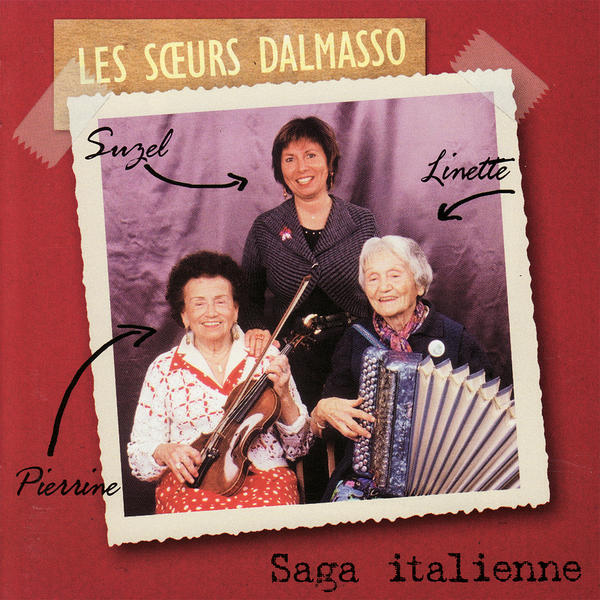
Les Sœurs Dalmasso
Saga Italienne
2004

Tracks:


01. La mamma
02. Torna a Surriento
03. Una canzone per te
04. Portami tante rose
05. Ai Maria
06. Violino tzigano
07. Tarentelle
08. La strada del bosco
09. Brasilia
10. Vivere
11. O sole mio

Interprètes:

Les Sœurs Dalmasso:

Suzel Zajac Dalmasso (Voix)
Linette Dalmasso (Accordéon, Voix)
Pierrine Zajac Dalmasso (Violon)

avec:

Dominique Cravic (Guitare)
Robert Santiago (Accordéon diatonique)

Enregistrement 2003-2004

♫☆`*♥¸¸.•*¨*•♫☆`*♥¸¸.•*¨*•☆♫

.ღ•:*´♥`*:•ღ. 

♫☆`*♥¸¸.•*¨*•☆♫`*♥¸¸.•*¨*•☆♫

 Utterly charming music from another era, 
from sisters with a tale to tell.

:-)


 read it all


6.5.15

Apprendre le français


Boulanger

Nadia Boulanger

Nadia Boulanger & Astor Piazzolla

... One of the prizes he won at this composition contest was a scholarship from the French governement to study in Paris (where he goes in 1954), with Nadia Boulanger, considered the best educator in the world of music at the time. At first, Piazzolla tries to hide his tanguero past and his bandoneon work, thinking that his destiny is in classical music. This situation is quickly remedied when he opens his heart to Boulanger and he plays his tango “Triunfal” for her. From then on he receives a historic recommendation: “Astor, your classical pieces are well written, but the true Piazzolla is here, never leave it behind” ...


Georges Rabol
Adios Astor
1994

Tracks:

01 - Libertango
02 - Alguien le dice al tango
03 - Adios nonino
04 - Imperial
05 - Vuelvo al sur
06 - Milonga del angel
07 - Invierno porteño
08 - Contrastes
09 - S.V.P.
10 - Luz y sombra
11 - Chau Paris
12 - Adios Astor (by Georges Rabol)

all tracks by Astor Piazzolla except track 12

Georges Rabol (Piano)

♫☆`*♥¸¸.•*¨*•♫☆`*♥¸¸.•*¨*•☆♫

.ღ•:*´♥`*:•ღ. 

♫☆`*♥¸¸.•*¨*•☆♫`*♥¸¸.•*¨*•☆♫

 Georges Rabol

Born 1938 in Paris
 
Georges Rabol's father was born in Martinique. Rabol studied music first with Jean Courbin and Lazare Lévy; then entered the Conservatoire National Supérieur de Musique de Paris, where he studied piano, harmony and counterpoint.

After finishing his studies, Georges Rabol has given numerous concerts all over the world, in recital and in chamber music with renowned soloists as F. Lodéon, F. Fontanarosa, Mr. Maïski, G. Caussé, A. Flammer, I. Gitlis, G. Zamfir, etc.

Georges Rabol's multiple gifts also led him to compose for the ballet, the theatre, the cinema, the radio and television: Roland Petit (Parisiana 25), René de Obaldia (La Baby-Sitter, Le Banquet des Méduses), Luis Bunuel (Le Charme Discret de La Bourgeoisie, Le Fantôme de la Liberté, Cet Obscur Objet du Désir), Med Hondo (West Indies), Radio France (Fantaisie Ballet, work for symphony orchestra), Jean-Christophe Averty (2 Dramas), etc. From the beginning he was interested in the musical writing and recorded many discs of his own compositions (Baroque Jazz Trio, Aenaon, Alchimie…), beside specific orders such as virtuoso pieces for flute and piano (Songe Caraïbe) or a suite in septuor created for the Opéra de Marseille.

His original course led Georges Rabol from Baroque to Jazz, through the Romantic period, the French music and the musical richness of Americas: Gottschalk, Gershwin, Piazzolla, etc. He can be defined as a cross-over artist, who did handle with brilliance all kinds of music, on the interpretation level as well as on the composition level. His mixed Antilles-European blood made it natural for him being interested in all the kinds of music...


10.4.15

Womanhood

   
Donnisulana
Per Agata
Polyphonies corses
1994

Tracks:

01. Princantula (m. raffaelli) 3:54
02. Padre (trad.) 5:15
03. Da qui un cantu (m. raffaelli) 4:46
04. Paghjelle (trad.) 3:09
05. S'è tù passi (trad.) 3:03
06. E sette galere (trad.) 6:07
07. U ventu (m. raffaelli) 3:22
08. Paghjelle ( trad.) 2:59
09. Lamentu di mufrella (maistrale) 5:46
10. Paghjella per agata (trad.) 2:20
11. Diafunia (m. raffaelli) 3:19
12. Terzini guagnesi (trad.) 3:36
13. Miseremini mei 4:05

Performers:

Aline Filippi, Dominique Bianconi, Gigi Casabianca, Jacky Micaelli, Patrizia Dau
   
♫☆`*♥¸¸.•*¨*•♫☆`*♥¸¸.•*¨*•☆♫

.ღ•:*´♥`*:•ღ. 

♫☆`*♥¸¸.•*¨*•☆♫`*♥¸¸.•*¨*•☆♫

 This record was recorded between the 20th and 24th August 1992 at Ritiru di Marcassu.

Diapason d'Or - Grand Prix du Disque, Académie Charles Cros.
  
Donnisulana's, of course, is all polyphonic singing; but done by a group of women -- which is considered to be very untraditional in Corsica. 

some people don't know much about tradition...
traditions of course die for many reasons... 
but they may be born again for reasons... 

 Donnisulana was probably the first well-known women's group singing Corsican polyphony publicly. They have now broken up, but are well remembered. They combined the image of the island with that of womanhood. They did not attempt simply to copy their brethren, but to interpret traditional songs in their own special way. There are new women's groups emerging now - many of them inspired by the pioneering work of Donnisulana.

Jacky Micaelli, the then leader of the group has continued to sing on her own and with others. 

Per Agata 1992 - this was recorded in memory of a lamented founder member of the group - Paghjella per Agata was written in her memory. There are other contemporary tracks as well as traditional sacred music. Most embody the sad hopefulness of Corsican singing.
Donnisulana 1992 - their first record.


 The female face of Corsican polyphony

Donnisulana, founded in 1989, soon proved that women, contrary to the allegations of Corsican men, could also master polyphonic song – hitherto entirely a male domain. These were pioneers who were no longer content only to sing lullabies and death chants as their great-grandmothers had done before them, but who sought to blend tradition with their own interpretations, giving Corsican polyphonic music a new face.


9.4.15

Songs from the beginning of the world

   
Voce Di Corsica
Corse éternelle
Les plus belles Chansons

Remasterisé
2002

Tracks:

01. A me brunetta
02. Ecco bella
03. Barbara fortuna
04. Iste confessor
05. Kyrie
06. Lettera a mamma
07. Moita
08. Salva sancta parens
09. Te Deum
10. Terzetti di rusiu
11. Terzine
12. Dio vi salvi regina
  
♫☆`*♥¸¸.•*¨*•♫☆`*♥¸¸.•*¨*•☆♫

.ღ•:*´♥`*:•ღ. 

♫☆`*♥¸¸.•*¨*•☆♫`*♥¸¸.•*¨*•☆♫

 Voce di Corsica

Formed: 1991, Ajaccio, Corse

Members: Petru Guelfucci (vocals), Dumenicu Leschi (vocals), Filippu Rocchi (vocals), Maï Pesce (vocals), Thierry Pesce (vocals), Lurenzu Barbolosi (vocals, 1991-2001), Indria Olivi (vocals, 1991-2001), Benedetu Sarocchi (vocals, 1991-2001), Jean-Marc Bertrand (vocals, 2001-present), Jean-François Giamarchi (vocals, 2001-present), Petru Santu Guelfucci (vocals, 2001-present)

The group was formed in 1990 by six male singers from the interior of the island and they sing both sacred and profane music. Polyphonies produced in 1993 includes different song types including lamentu (about exile, misfortune...), madrigale (poetic songs), terzetti (based on troubadors songs from Tuscany of the middle ages).
   
   
Polyphony

A significant, though not the only aspect of Corsican traditional music is polyphony (many voices): unaccompanied (a capella) singing by small groups of three to eight or nine people. It is closely associated with the island's identity and its rebirth coincided with the resurgence (riaquistu) of national political ambition in the seventies. Thirty years on polyphony is widely celebrated as the country's cultural expression - more than any other art form.

Dorothy Carrington, doyenne of living Corsican chroniclers described singers of polyphony, who "...never... feel so united in their apartness, their insularity, as when performing this indigenous music inherited from their unremembered past. Fathers and sons and brothers and cousins stand or crouch in close formation, body to body, ear to ear, linked in the communion of singing with each other, with their race and with the hosts of their ancestors." Phew! "I had the impression of hearing a voice from the entrails of the earth. Song from the beginning of the world," she said after hearing singing one Christmas eve in a chapel in the Fiumorbu.

The origins of Corsican polyphony are much disputed and since until recently they have been undocumented, no clear evidence exists of its source. Though I'm no musician, I sense it as inheriting a bit of everything Mediterranean from the north, south, east and west. Friends often ask about the Arab influence.

Traditional Corsican polyphony, following its revival in the 1970s, is now a central part of the expression of Corsican culture. There are those who stress its political importance, while others insist more on the music in its own right. There were those who recorded old people singing time-honoured aurally transmitted chants and others who started writing what can be described as political songs. In any event, the fact that polyphony has taken a central place in community life is a natural process, similar to the process of identity seeking in many other cultures.

read this and a lot more:


or 


10.7.14

Les toits de Barcelone dans la clair de lune

 
Clar de Llunes
Música de l'espectacle de Pep Bou i Jordi Masó 
2007

Tracks:

  
01. Mompou: "Angelico" (de Música Callada)
02. Debussy: Clair de lune (de Suite Bergamasque)
03. Mompou: Escenes d'infants: Crits al carrer: Crits al carrer
04. Mompou: Escenes d'infants: Jocs a la platja: Jocs a la platja
05. Mompou: Escenes d'infants: Joc 2: Joc 2
06. Mompou: Escenes d'infants: Joc 3: Joc 3
07. Mompou: Escenes d'infants: Noies al jardí: Noies al jardí
08. Blancafort: La lluna brilla (de Notes d'antany)
09. Séverac: Vals romàntic (de En vacances)
10. Mompou: Cançó i dansa No. 6
11. Donostia: Cantant a la llum de la lluna (Preludi base No. 12)
12. Mompou: Suburbis: El carrer, el guitarrista i el vell cavall: El carrer, el guitarrista i el vell cavall
13. Mompou: Suburbis: Gitanes I: Gitanes I
14. Mompou: Suburbis: Gitanes II: Gitanes II
15. Mompou: Suburbis: La cegueta: La cegueta
16. Mompou: Suburbis: L'home de l'aristó: L'home de l'aristó
17. Fauré: Nocturne Op. 33, No. 3
18. Mompou: Preludi No. 7 "Palmera d'estrelles"
19. Turina: Sota els tarongers (de Sevilla) 

  
 ♫☆`*♥¸¸.•*¨*•♫☆`*♥¸¸.•*¨*•☆♫

.ღ•:*´♥`*:•ღ. 

♫☆`*♥¸¸.•*¨*•☆♫`*♥¸¸.•*¨*•☆♫

  
 ...Pianist Maso skilfully accompanies Bou’s meditative actions, enhancing their dream-like qualities with wonderfully emotive interpretations of pieces by French and Catalan composers, perfect for letting one’s mind drift along with the bubbles...

 
Jordi Masó was born in Barcelona, Spain, and studied at the Barcelona Conservatory with Josep M. Roger, at the Barcelona School of Music, with Albert Attenelle, and at the Royal Academy of Music of London with Christopher Elton and Nelly Akopian. He graduated from the Royal Academy of Music in 1992 with a DipRAM, the institution's highest distinction.

Masó specializes in the music of Spanish composers, notably those of the 20th and 21st centuries. He has won first prizes in a number of national and international competitions, and has performed in most European countries, in South America and in Asia. He regularly performs as a soloist with major Spanish orchestras. Since 1996, he has been a member of the contemporary music group Barcelona 216, which won the Barcelona City Prize for music in 2000. In 2008 he was awarded the Associated Royal Academy of Music (ARAM), given to the Academy most distinguished students.

Masó has recorded several dozen CDs for labels such as Anacrusi, Marco Polo, and Naxos. He specializes in Spanish music, and has notably recorded the complete piano music of Frederic Mompou on six discs, and the complete piano music of Padre Donostia. He also recorded the complete piano music of Joaquín Turina and Déodat de Séverac for Naxos.

Masó teaches piano at the Granollers Conservatory and at the ESMUC (Escola Superior de Música de Catalunya).


Jordi
 
PS: you don't need bubbles just ears... ; )

14.3.14

Pourquoi le ciel est-il bleu...

  
Alberto Cruzprieto
Bleu
1999

Tracks:
    
01. Danzas nocturnas - Luis Jordá (5:45)
02. Mélancolíe - Francis Poulenc (5:14)
03. Barcarole no. 1, op. 26 - Gabriel Fauré (3:52)
04. Prélude, fugue et variation - César Franck (10:30)
05. Berceuse - Ricardo Castro (3:13)
06. Mazurca - Manuel M. Ponce (3:12)
07. Sonatine - Maurice Ravel (10:22)
08. Paysage - Ernest Chausson (3:07)
09. La cathédrale engloutie - Claude A. Debussy (6:28)
10. La fille aux cheveux du lin - Claude A. Debussy (2:45)

Recorded in Auditorio Blas Galindo of the National Arts Centre, on Nov. 12-13, 1997
  
♫☆`*♥¸¸.•*¨*•♫☆`*♥¸¸.•*¨*•☆♫

.ღ•:*´♥`*:•ღ.

♫☆`*♥¸¸.•*¨*•☆♫`*♥¸¸.•*¨*•☆♫

 Alberto Cruzprieto, piano

La carrera de Alberto Cruzprieto es una de las más interesantes en nuestro medio musical y no puede ser medida con los parámetros tradicionales de concursos ganados y premios obtenidos.

Poseedor de una excelente técnica, Alberto se encuentra componiendo con la difusión de la buena música bien ejecutada. No en balde directores de la talla del fallecido Eduardo Mata lo seleccionaron como solista para presentaciones y grabaciones.

La música de cámara ha sido su principal ámbito de trabajo, donde es invitado con frecuencia por los mejores grupos. Por otro parte, su nombramiento como Concertista de Bellas Artes le permite dedicar parte importante de su tiempo a ejecutar no sólo las grandes obras del repertorio para piano, si no difundir composiciones que han sido injustamente olvidadas.

Otro de sus campos de acción favoritos es el de la música de nuestro siglo y a las propuestas de música nueva para el piano. Testimonio de esto son las múltiples grabaciones hechas para radio y televisión, y que abarcan tanto el repertorio pianístico como música de cámara, en las que Alberto ha participado. Es invitado imprescindible para todas las actividades relacionadas con la difusión de la música nueva que se realiza en el país. En 1992 grabó el Concierto para piano y alientos de Stravinsky, con la Camerata, bajo la dirección de Eduardo Mata, así como un disco en Londres junto a la mezzo-soprano mexicana Encarnación Vázquez.

Recibió en 1990 la Beca del Fondo Nacional para la Cultura y las Artes. Recientemente ha participado en conciertos con artistas de la talla de Pierre Amoyal, Stephanie Chase y el Cuarteto Latinoamericano. 


7.8.13

Dansez...

  
Tribal Jâze
Trash, Trad & Roots
2008

Tracks:

01. Ouverture En Si Bémol Mineur
02. An Dro De Travers
03. La Tordue
04. Bourrée À Deux Ronds
05. Oudent Waltz
06. Bambi Roots
07. Cottage
08. Nin Nin Nin
09. Bourrée Du Tiot
10. The Miller Of Drohan
11. Dimanche Matin
12. De L'aut' Jour

Cédric "le Tiot" Hergault : Tambour & Percussions
Boris "le Secos" Nortier : Accordéon diatonique
Marc "le Gros" Buvry : Sax baryton
  
♫☆`*♥¸¸.•*¨*•♫☆`*♥¸¸.•*¨*•☆♫

.ღ•:*´♥`*:•ღ.

♫☆`*♥¸¸.•*¨*•☆♫`*♥¸¸.•*¨*•☆♫
  
Musiques de bal folk à danser mais avec une pointe d'humour et de swing.
Vous ne resterez pas sur votre chaise en écoutant la musique de ces 3 compères !
Le message est clair: amusez-vous et dansez jusqu'au bout de la nuit.

Vive La France!

   
Attribut ou à la tribu ?

Ils font comme les bretons, ils ressemblent aux bretons, ils sont des bretons.

Trois belles bêtes (le secos au diato, le ‘tiot au tambour  et le gros d’la troupe au baryton) amoureux de la terre, des côtes d’agneau grillées à la menthe, du bon vin et de la musique. Bref, ces trois lascars pourraient être de parfaits limousins.
Le jâze ? Un clin d’œil à la grosse caisse tambourinante des trios populaires en Bretagne au début du XXème : l’époque glorieuse du diato arrivé fraîchement sur les côtes …atlantiques.

En place pour un parcours de danses traditionnelles...


Bonjour à tous,
Nous somme le groupe TRIBAL JÂZE


"Créé en 2005 par Boris Nortier, Marc Buvry et Cédric Hergault, Tribal Jâze est un trio d’accordéon diatonique, sax baryton et tambour-jâze officiant dans le créneau des nouvelles musiques traditionnelles.

En 2007, Tribal Jâze s’attache à la production d’un premier album autoproduit « Le Grand Saut ». Avec leur deuxième album « Trash, Trad & Roots » produit en 2008, et « III », produit en 2011, ils sortent des sentiers battus des musiques traditionnelles et élargissent leur univers en s’accompagnant d’un V-Jay lors de leurs concerts.

Ils participent à de nombreux festivals en France mais également à l’étranger (Belgique, Portugal, Italie, Angleterre)."

Venez nous découvrir sur notre site ou en live pour danser !


also look for Timothée Le Bour & Youen Bodros : )


30.11.11

Tambor de cuerdas y flauta de tres agujeros

   
La Tradicion Musical En España Vol. 15
El Tambor De Cuerdas De Los Prineos
1999

Tracks:

BIELLO ARAGÓN:

01. Paloteau de Lanuza
02. Paloteau de Jaca
03. Pedro Gil
04. El ciervo
05. Dance de Sinués
06. Dance de Aragües del Puerto
07. Dance de Embrún

NAVARRA ORIENTAL:

08. Ttun-ttun de Isaba
09. Ttun-ttun de Uztarroz
10. Pasacalles de Burguete

BIGORRA:

11. Danza del Ben-Yar

OSSAU y BEARN:

12. Maudit sia l´amor
13. Bèra Vinagrèra
14. Madamisèla deu Bornau
15. De la mes charmante anesqueta
16. Au verdurèr
17. Branlo Ayrejan
18. Moutchicou

XIBERO:

19. Hegi
20. Bralea
21. Martxa (Godalet Dantza)
22. Ahuntza
23. Barrikada Haustea
24. Buhameak

NAVARRA NOR-OCCIDENTAL:

25. Mando Zaharrarena
26. Mutil-Dantza (Soka Dantza)

Personnel:

Enrique Tello (tambor de cuerdas y flauta de tres agujeros), Javier Lacasta, Marcel Gastellu, Luis Salesa, Faustino Villacampa, Álvaro de la Torre (tambor de cuerdas y flauta de tres agujeros)...
 
♫☆`*♥¸¸.•*¨*•♫☆`*♥¸¸.•*¨*•♫


♫☆`*♥¸¸.•*¨*•☆♫`*♥¸¸.•*¨*•♫
  
This volume is of particular interest since it scans an instrumental tradition known on both sides of the Pyrenees, that of the three-holed flute played with the drum string. This instrumental ensemble (played by a single musician) has come down to us in the Spanish provinces of Navarre and Aragon and, for our part in Béarn (Ossau valley), Bigorre and Soule. This disc is therefore appealing to musicians from the various regions (including Marcel Gastellu Etchegorri, musician, researcher of long standing, is efficient as discreet), some pretty old and younger but all playing traditional and mostly solo . This gives us an interesting overview of the instrument in which the double flute melody runs while the drum string serves as the basic rhythm and stubborn bumblebee (vibration deliberately created by the curvature of the bridge contribute to in addition to these strings look more stamps to drum string zither). If the instrument is definitely designed for the dance (rich in high harmonics of the flute, the presence of the drone, rhythmic function of the drum), he can also give a haunting aspect to slow airs. Whether to retain something of these recordings is that the Pyrenees constitute an administrative barrier: eyes closed so try to assign each piece to its region unless you are an expert you will give your language quickly cat and if recent exchanges may have taken place, the unit organological and music that emerges here is undeniable.
  
Tambor de cuerdas
A psalterium /sɒlˈtɪəriəm/, or tambourin à cordes, is a stringed musical instrument, the name of which means the same thing as the one of psaltery. In specific usage, this name denotes a form of long psaltery that is tuned to provide drone chords. Sometimes called a string drum, it is usually used as rhythm accompaniment with a form of tabor pipe. It is also known as tambourin de Béarn in French, ttun-ttun (/cun'cun/, named after the sound emitted) in Basque or chicotén in Aragonese.

Some authors have called into question the inclusion of the Pyrenean stringed drum under the name of psalterium.


Method

It is slung on the arm or over the shoulder of a player who uses the same hand to play the pipe, while striking the strings with a linen covered stick held in the other hand. The 6 strings (3 sets) are most often tuned in octaves that match the keynote of the Tabor pipe, such as Cc Cc Cc or Dd Dd Dd etc. This musical percussion is quite pleasant and can be played pianisimo as well as forte'.
Extent and uses

The instrument is currently widespread in the western Pyrenees, and it bears the hallmark of the territory. Apparently invented in the 15th century, it came into use in the Pyrenees, where it took hold. It is popular in the easternmost Basque province of Soule (Zuberoa), where it provides along with the three hole flute (xirula) the necessary musical background for traditional dance performances and the carnival set of performances called maskarada, which takes place on a yearly basis in different villages of the former viscounty.

After losing ground during the 20th century in western and central Pyrenees, namely Bigorre, Béarn and Soule, the practice of the three hole flute and tambourin came almost to a halt after World War II, except for the Ossau Valley in Béarn. Evidence has been gathered also that with different names (such as salterio) it was played along with the flute early in the 20th century in small areas of High Aragon. From the 1970's on, the instrument has shown renewed vitality.


thanks for the music : )

4.4.11

Bagad & Bass

  
Bagad Men Ha Tan
Henri Texier
Doue Lann

1998
 
Tracks:
  
1. Les deux frères
2. Le cimetière des bateaux
3. Cayenne
4. Gwall amzer
5. Vents d'Est
6. Santa Maria
7. Café du port
8. Pub
9. Doue Lann
10. Félicité
11. Cap'tain
12. Port blanc

57'15

Personnel:

Henri TEXIER : contrebasse.

Pierrick TANGUY : compositions et direction du bagad
Ronan LE GOURIEREC, Christian MEHAT, Dominique CHAPRON, Magali DAVY, Nathalie DRANT, Gwenaël GOULENE, Guénolé KERAVEC : bombardes
Ronan GEFFRAY, Gaël JANNEE, Erwan KERAVEC, Patrice LE CORRE, Patrig LE ROUX, Tanneguy TESTARD : cornemuses
Ronan MELEARD : biniou koz
Stanislas AMBLARD, Tangui BODIN, Jean-Charles DAVY, Hervé LE ROUX, Tanguy LE ROUX, Pierre LE TOUX, Steven MARTIN, Jean-Noël PATRU, Ronan VILAIN : batterie
Tangui BODIN : accordéon
 
enregistrés à Saint Nazaire fin 1997.
   
♫☆`*♥¸¸.•*¨*•♫☆`*♥¸¸.•*¨*•♫
        
        
♫☆`*♥¸¸.•*¨*•☆♫`*♥¸¸.•*¨*•♫
   
"Pierrick Tanguy, ancien responsable du Bagad Kemperle, a réuni une nouvelle formation, constituée de musiciens issus de plusieurs bagadoù, pour pousser plus loin la démarche entreprise à Quimperlé. La musique de Pierrick Tanguy fait rimer sobriété et efficacité et le résultat est superbe tout simplement, très fort, à tel point que certains morceaux vous donnent la chair de poule. Al'image des photographies de Michel Thersiquel qui illustrent le livret vendu avec le CD. Un bel objet." LE PEUPLE BRETON


"La production bretonne est fascinante. Henri Texier respecte l'orchestre de Pierrick Tanguy, avec les contrastes, entre la stridence des bombardes, des cornemuses et du biniou, face aux grondements des batteries, mais il innove aussi." LIBERATION