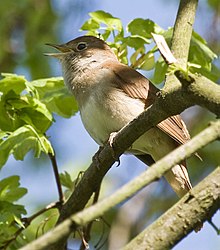
Showing posts with label Nightingale. Show all posts

8.2.13

Happiness, Eternity, Harmony.

 
Robert Yuldashev 
The Divine Melodies Of Kurai

Tracks:

01. Ural (3:21)
02. The Leader Kahym (2:59)
03. Taftilyau (3:08)
04. Abdrahman (2:51)
05. Kamalek (3:34)
06. Buranbai (4:07)
07. The Old Tashtugai (2:44)
08. Baias (2:41)
09. Koloi Kanton (4:11)
10. Khisam (2:50)
11. Sibai (4:13)
12. Nightingale (3:17)
13. Cuckoo (2:48)
14. The Pilgrim Gaisa (3:45)
15. Shafik (4:00)
16. Syrdarya (2:54)
17. Gilmiyaza (4:01)

♫☆`*♥¸¸.•*¨*•♫☆`*♥¸¸.•*¨*•☆♫

.ღ•:*´♥`*:•ღ.

♫☆`*♥¸¸.•*¨*•☆♫`*♥¸¸.•*¨*•☆
 
   
Robert Yuldashev 
 
 - kuraysy - (ethnic musician and performer on the ancient musical wind instrument Kurai).
Kurai is made of reed that grows in the southern Urals.

Robert Yuldashev long been a place of honor in the field of musical culture, conquered half the world by playing the instrument originally Bashkir - Kurai.

In kitty Robert Yuldashev collaboration with Nikolay Noskov, Garik Sukachev Pelagia, as well as performances with the "Moscow Virtuosi" Vladimir Spivakov. Robert Yuldashev had a hand in creating the soundtrack for the drama "House of the Sun" Garik Sukachev and together with the Symphony Orchestra of the Bolshoi Theatre has recorded music for the film "The Way."

One of the main achievements of the musician is performance on the stage of the world famous La Scala theater in Milan, along with opera singer Ildar Abdrazakov. But to call Yuldashev follower traditional Bashkir music can: together with the Moscow composer he wrote Marat Taturasom club project Haua, the purpose of which was a synthesis of contemporary electronic music and Kurai.

In June 2006, Robert Yuldashev creates its own group of musicians called "Kuraysy." The basis of the team, are the ancient Bashkir musical instruments Dungur, dumbra, kurai, kubyz.

Genre of musicians many directions: Folk-Music, jazz-rock, ethnic, jazz, orchestra music, chill out and lounge, but most of them close in spirit to the ethno-trance Music. In repertoire Bashkir folk and art music, covers of famous songs.

Of the last significant achievements:
international music forum "The Creation - 2011" Robert Yuldashev and his team "Kuraysy" received the nomination "Opening of the festival."

II in the international music competition "Terem Crossover 2012" received a nomination for "national identity" and the very highest nomination "Audience Award".


~♫~

27.5.10

Kyrgyzstan 3

 
Ordo Sakhna is a folk ethnographic theatre that was started in 1998 with the aim of introducing and popularizing the great nomad civilization of Central Asia from paganism to Islam among the audiences worldwide. We promote the diversity, beauty and diapason of ancient musical instruments and the authentic nomad dress style while staging traditional Kyrgyz music and dance, as well as modern ballet and fashion shows. The music that Ordo Sakhna has been playing and recording possesses truly transcendental and healing quality probably in addition to or perhaps due to its ancient roots, especially compositions Ordo, Tush (Dream), Chogoino, Kyiak recorded in the Music of the Legends CD as well as Oemur (Life) recorded in the Song of Nomad CD.
 
  
Ordo Sakhna
Song of Nomad

Tracks:

01. Omur (Life) / B. Niazbekova / A. Maldybaev
02. Sary Oi / O.Kutmanaliev / folk
03. Karagul botom / A. Aitaliev / folk
04. Da’anyshman (Wise old love) / A. Djumabaev / M. Baetov
05. Kuidum chok (Burning) / B. Shatenov / A. Ogonbaev
06. Koshok / B. Niazbekova / folk
07. Bekbekey / D. Niazbekova / folk
08. Aitysh / D. Niazbekova, B. Shatenov / folk
09. Kyiylip turam / G. Bayzakova / K. Dosmambetova
10. Alma alam (Buy an apple) / A. Djumabaev / M. Baetov
11. Oi Bülbül (Nightingale) / B Shatenov / A. Ogonbaev
12. Gulzhan / D. Niazbekova / folk
13. Nadyndan (From Naryn) / B. Shatenov / A. Aitaliev
14. Op Maida! / choir band / folk
 
 ♫☆`*♥¸¸.•*¨*•♫☆`*♥¸¸.•*¨*•♫
♫☆`*♥¸¸.•*¨*•♫☆`*♥¸¸.•*¨*•♫

The folk ethnographic theater “Ordo-Sakhna” was created in 1999 and combined a group of professional musicians – graduates of the conservatory and laureates of international and regional contests. The theater is directed by film director Shamil Djaparov. The aim of the theater is to retain, develop, and popularize Kyrgyz folk heritage around the world. The originality of the Theater lies in the fact that the members’ perception of folklore is not simple enthusiasm, but a deep study of the spiritual culture of the Kyrgyz people. Meeting with the bearers of folk traditions, the artists of the Theater have managed to recreate the ancient dances “Bakshy-Biy” and “Shyrdak-Biy,” which were forgotten until recently. “Ordo-Sakhna” has gathered an exclusive collection of ancient traditional melodies and dastans (small epos), which came to us through centuries of generations. Through careful searching and experiments the musicians adapted the ancient heritage to modern society. The artists have considered every aspect of the songs and dances: detailed recreations of traditional costumes, mannerisms of motion and symbolism of gestures. With the aid of these factors they have succeeded in recreating a realistic and honest ethnographical picture of Kyrgyz culture. In 2004 year was created a social cultural educational foundation “Ordo-Sakhna” named after the artist of Kyrgyz Republic M. Nazaraliev. M. Nazaraliev – was the creator of Kyrgyz drama Music Theater. Since 1999 the Theater has recorded three CDs: The Music of the Legends in 2000, Song of Nomad in 2001 and The Flame Horses in 2007. The repertoire of the Theater is designed for a wide audience and its music ranges from the ancient archaic melodies (kuu) to folk-jazz. The Theater was broadcasted to the Kyrgyz population on national television in a TV program called Toguz-Ak.
 
 
 homepage
  

26.5.10

Bül-Bül


Bül-Bül
The Collection of Azerbaijan Music


Tracks:

01 Menim gulum (Folk song)
02 Ne olaydi (Folk song)
03 Xumar oldum (Folk song)
04 Gul camalin (J. Jahangirov)
05 "Nizami" operasindan Nizaminin ariasi (A. Badalbeyli)
06 Emek negmesi (I. Mamedov)
07 Sevgili cahan (U. Gadjibekov)
08 Intizar (S. Rustamov)
09 Qara teller (Folk song)
10 Almani atdim xarala (Folk song)
11 Baxcada guller (Folk song)
12 Veten negmesi (Niyazi)
13 Asiq yari (S. Aleskerov)
14 Ulduz (F. Amirov)
  
♫☆`*♥¸¸.•*¨*•♫☆`*♥¸¸.•*¨*•♫


♫☆`*♥¸¸.•*¨*•♫☆`*♥¸¸.•*¨*•♫
 
Bül-bül (real name: Murtuza Mamedov) (1897-1961), - famous vocalist, performer of opera and folk music, one of the founders of Azerbaijanian vocal arts and national musical theatre.

    Bül-bül was born in 1897 in the village of Khanbagi, near Shusha. From his childhood he became famous for his beautiful voice, for which people called him “Bül-bül”, which means “nightingale”. He studied music and vocal arts in Azerbaijan State Conservatoire and Italian “La Scala” in Milan .

    Bül-bül was famous not only for his beautiful tenor, but also for his ability to blend national manners of performance with traditions of Italian vocal school. Bül-bül was first to play the lead role of Koroglu in U.Hajibeyov's famous opera of the same name. The image of a legendary hero Koroglu he created have left a significant emotional impression in the minds of the Azeri people.

    Bül-bül was also a prominent music scientist and pedagogue. He wrote several monographs, which serve as an important source for the students of history of Azeri music. He was also the first person to prepare study-books and manuals for teaching play on tar, kemancha and balaban, the national musical instruments in Azerbaijan . From 1932 till his death Bül-bül taught in Azerbaijan State Conservatoire and helped bringing about new talented generation of vocalists.

    Bül-bül was awarded highest orders of the Soviet Union and also the Garibaldi order in Italy .

    Before Shusha's occupation in 1992 there was a home-museum of Bül-bül and several monuments. After occupation the house-museum, where Bul-bul used to live, and all his monuments were destroyed, just like the other house-museums of many other prominent Shushavians.

    Several years ago Ministry of Culture of Azerbaijan bought statues to Bül-bül and several other famous Karabakh Azeris in a black market in Georgia. These monuments, which once decorated the central streets of Shusha were intended to be sold as a scrap metal. Nowadays these monuments are kept in the courtyard of the Azerbaijani Museum of Arts in Baku. Pocked by bullet holes, Bül-bül's monument stands as another mute witness to the casualties that have resulted in the war over Mountainous Karabakh.


In 2008 the National Bank of Azerbaijan minted a 100 manat gold commemorative coin dedicated to Bulbul's memory.
  

12.5.10

Nightingale


"The nightingale"
Sing, you lad, with all your might,
Send the air a ringing.
Oh, the nightingale,
Where does the nightingale sing?
In the meadows it sings, by the riverside.
Let the songs that come from within
The young heart,
Send a thrill of delight and inspire
The sons of the Ural land.
Oh, the nightingale,
Where does the nightingale sing?
In the meadows it sings, by the riverside.


song text found here:


11.5.10

The Beauty of Birdsong

  
Les plus beaux chants d'oiseaux
The Beauty of Birdsong
Die schönsten Gesänge aus der Vogelwelt     
Jean C. Roché
France : Auvidis, p1987
  

Tracks:

01. Alouette lulu
02. Alouette des champs
03. Sirli du désert
04. Rouge-gorge
05. Rossignol progné
06. Rossignol philomèle
07. Merle noir
08. Grive musicienne
09. Hypolais icterine
10. Fauvette orphée orientale
11. Fauvette des jardins
12. Fauvette à tête noire
13. Corbeau-flûteur pie
14. Petit gobe-mouche bleu des collines
15. Merle shama
16. Gonolek à ventre blanc
17. Merle à poitrine tachetée
18. Cossyphe de Ruppel
19. Cossyphe d'Heuglin
20. Cossyphe choriste
21. Cossyphe du Natal
22. Troglodyte musicien
23. Siffleur des montagnes
24. Grive des bois
 
♫☆`*♥¸¸.•*¨*•♫☆`*♥¸¸.•*¨*•♫
  
♫☆`*♥¸¸.•*¨*•♫☆`*♥¸¸.•*¨*•♫
 
Some musicologists believe that birdsong has had a large influence on the development of music.  Although the extent of this influence is impossible to gauge, it is sometimes easy to see some of the specific ways composers have integrated birdsong with music.
  

8.5.10

Nightingale

The Nightingale (Luscinia megarhynchos), also known as Rufous  and Common Nightingale, is a small passerine  bird that was formerly classed as a member of the thrush family Turdidae, but is now more generally considered to be an Old World flycatcher, Muscicapidae. It belongs to a group of more terrestrial species, often called chats.
   
   
Nightingales are named so because they frequently sing at night as well as during the day. The name has been used for well over 1,000 years, being highly recognizable even in its Anglo-Saxon form - 'nihtingale'. It means 'night songstress'. Early writers assumed the female sang when it is in fact the male. The song is loud, with an impressive range of whistles, trills and gurgles. Its song is particularly noticeable at night because few other birds are singing. This is why its name includes "night" in several languages. Only unpaired males sing regularly at night, and nocturnal song is likely to serve attracting a mate. Singing at dawn, during the hour before sunrise, is assumed to be important in defending the bird's territory. Nightingales sing even more loudly in urban or near-urban environments, in order to overcome the background noise. The most characteristic feature of the song is a loud whistling crescendo, absent from the song of Thrush Nightingale. It has a frog-like alarm call.

  
♫☆`*♥¸¸.•*¨*•♫☆`*♥¸¸.•*¨*•♫
  
Nightingal 
   
♫☆`*♥¸¸.•*¨*•♫☆`*♥¸¸.•*¨*•♫
 
Lucretius/Creech
 
a link