24.10.10

Tambora

   
Martina Camargo
Aires De San Martin
Musica De Las Riberas Del Rio Magdalena
2005

Tracks:

01. Pan de Caracas
02. Corré morenita
03. Digan, digan
04. El playón de Santa Rosa
05. La pluma
06. Mi mamá se va a comprar
07. Tambora de palo y cuero
08. Samba llorona
09. La cuba e'
10. La muletilla
11. La Salamanca
12. La Pascua
13. Señora Colombia
14. La mina de los lobanos
15. Sombrerito blanco
16. Corocito
17. La pava echá
  
☆`*♥¸¸.•*¨*•☆`*♥¸¸.•*¨*•
        
        
☆`*♥¸¸.•*¨*•☆`*♥¸¸.•*¨*•
  
 Martina Camargo to represent Colombia on world tour
Monday, 12 July 2010 13:27 Tom Davenport
 
 
Martina Camargo

Colombian "tambora" artist Martina Camargo has begun her world tour. The singer from Bolivar is representing Colombia in Europe and the Middle East to mark the bicentenary of her country's independence.

The singer from San Martin de Loba in the Bolivar department has embarked on a journey which will take her to Barcelona, Cairo and Beirut. She was selected by the Ministry of Culture to represent Colombia on the world stage with her traditional brand of "tambora" music. Her tour is part of celebrations to mark the bicentenary of Colombian independence.

"Tambora", derived from the Spanish word "tambor" (meaning drum), is a folkloric musical style which originated in Camargo's home town San Martin de Loba where its lively rhythms can be heard in every street corner. Much like the Venezuelan Gaita and Colombian Cumbia, "Tambora" is punctuated by the rapid beating of hands against drums made from the skin of goats or deer. These percussion instruments were introduced to the Carribean region by African slaves brought there by the Europeans.

Camargo fell in love with music at a young age. Her father Cayetano Camargo, also a famous "tamborero", would sing to her as he rocked her and her five brothers in their hammocks. In 1987 she took to the stage with the "tambora" outfit Alé Kumá. Success was quick to follow for Carmago who went on to win the Tambora Festival in San Martin de Loba in 1988 with her "Las olas de la mar" - her favorite song and a composition of her father.

Later she worked with Aterciopelados-members Andrea Echeverri and Hector Buitrago, but her breakthrough came in 2009  when the magazine "Semana" ranked her album "Canto, palo y cuero" in the ten most important productions of the year.

Carmago, who has already toured in Italy and Mexico, is anxious to see how this international audience will respond to her traditional folkloric music which, she claims, makes Colombians themselves feel more Colombian. 
 
"I want to make them shiver, I want to make them feel," she told El Espectador. "We are going to whip up a huge party with our drums."
 
***
 
Martina Camargo y Etelvina Maldonado
 
***
 
Trailler: "el BEAT de la TAMBORA" from Patrik Moskera on Vimeo.
 
This is the story of a town which hearts reside on its music, its relationship with the Magdalena river in the Colombian Momposina’s Depression, a place where all the “Magic sub-realism” of Gabriel Garcia Marquez’s books comes to life.

This town has an ancient earthly music tradition called “TAMBORA” a music the rises from the “BEATS” of the alegre drums, la tambora bass drum, las maracas, but mostly from the “BEATS” of the hearts of every son and daughter of this land, whose voices give melody to the “TAMBORA” and whose clapping hands sheer every second of this ground shaking music called “TAMBORA”.

This is the story of a struggle for surviving. A sound that does not wan to stop sounding; A people that does not want to let their ancestral traditions disappear in to the avalanche of globalization, A river that does not want to run dry for the contamination and deforestation of the industrial world; This is the struggle for keeping ones identity, for saving the soul of your land.

This land is called SAN MARTIN DE LOBA, and its heart “BEATS” because of the sound of the “TAMBORA” without it this town will surely die, and a part of every one of us as well.
   

23.10.10

Canto y Repique de Tambor

  
Etelvina Maldonado
Canto y Repique de Tambor

Corporación Cultural Cabildo del músico - 2006

Tracks:

1.Así Así
2.Déjala Dí
3.Camisola
4.A Piá El Arró
5.Juana Gómez
6.Llego La Cumbia
7.Dame La Mano Prima
8.Llorando
9.Ron Café
10.Que Se Quema El Monte
11.Déjala Llorar
12.Manuelita

Músicos:

Cantaora: Etelvina Maldonado De La Hoz
Tambor Alegre: Orlando Oliveros,
Tambor Alegre: Víctor Medrano (El docto),
Gaita Hembra: Stanley Montero,
Bombo: Luis Ramos,
Guache: Stanley Montero,
Coros: Cecilia Silva, Vania Gelabert y Luis Gonzalez (Luchito).

Músicos Invitados:

Yovanis Pérez Chamorro, Braulio Arnold Salgado.
  
☆`*♥¸¸.•*¨*•☆`*♥¸¸.•*¨*•
        
        
☆`*♥¸¸.•*¨*•☆`*♥¸¸.•*¨*•
  
Colombian Folk Music Legend Etelvina Maldonado Dies at 75
By WMC News Dept. Saturday January 30, 2010
  
 
Her legend was solidified in 1996 when the Alé Kumá album by Leonardo Gómez came out. It was a fusion of jazz with traditional music and it included four cantaoras, two from the Pacific region and two from the Caribbean area, combined with a jazz group. One of the female singers was Maldonado.

Since then, Maldonado became known as one of the leading cultivators of Colombian traditional music. One of her highlights was her participation at the Gran Concierto Nacional held last year, where she showcased her talent.

Colombian music critics regarded her as one of the top folk vocalists in Colombia along with Totó La Momposina and Petrona Martínez. However, her fragile health prevented her from touring.

"Etelvina Maldonado was a legend of traditional Colombian music and one of the most important interpreters of Afro-Colombian song," said Kaisha S. Johnson, Director of Touring Artists at the Center for Traditional Music and Dance. "Of particular note, was her association with bullerengue, a musical style originating on the Caribbean coast of Colombia."

Singing was her passion, but also a way to escape poverty. "Every time I went to participate in festivals, I always won or was one of the best," said Etelvina. "In one occasion I sold several of those awards for an opportunity to register my son at school. I’ve always been ready to solve any problem to further their education."
  
  
a lot more to read

 
"El bullerengue es lo mejor de mi vida": Etelvina Maldonado
  
bullerengue - A Costeño form, performed by flute-and-drum ensembles
A glossary of Colombian music
  
 ♥

Cantaoras

  
Alé Kumá
Cantaoras

2002
  
Tracks:

01. Etelvina Maldonado - Se quema el monte (fandango de lengua)
02. Gloria Perea - La choca (aguabajo)
03. Martina Camargo - Una canción en el magdalena (cumbia sentá)
04. Benigna Solís - Oiaymeló (currulao)
05. Etelvina Maldonado - ¿Por Que Me Pegá? (bullerengue sentao)
06. Martina Camargo - Las olas del mar (tambora golpiá)
07. Gloria Perea - Meme, neguito (canción afro)
08. Benigna Solís - Ronca Canalete (juga)
09. Etelvina Maldonado - Negro mirar (bullerengue)
10. Gloria Perea - El moro (abozao)
11. Benigna Solís - A,B,C,CH (bunde)
12. Martina Camargo - Volá pajarito (guacherna)
13. Etelvina Maldonado - Llorando te coge el día (chalupa)
14. Benigna Solís - Berejú (afro-berejú)
15. Martina Camargo - Berroche (berroche)
16. Martina Camargo - Calabazo (berroche)
17. Etelvina Maldonado, Martina Camargo, Benigna Solís, Gloria Perea - Carambantúa (tradicional)

Musicians include:

Etelvina Maldonado: Cantaora
Gloria Perea: Cantaora
Martina Camargo: Cantaora, coro
Benigna Solis: Cantaora, coro

Freddy Henriquez: Piano, coro, bombo, cununos, guazá, totuma
Leonardo Gomez: Contrabajo, marimbula

Paolino Salgado: "Batata" Tambor alegre, coro
Rodny Teherán: Llamador
Jorge Aguillar: Maracón, coro
Nataly Leal: Coro
Juan Carlos Puello: Tambora
Emeris Solis: Cununo hembra, coro
  
☆`*♥¸¸.•*¨*•☆`*♥¸¸.•*¨*•
        
        
☆`*♥¸¸.•*¨*•☆`*♥¸¸.•*¨*•
  
Colombian folklore at its nuanced best.
Featuring the vocalists Etelvina Maldonado, Gloria Perea, Martina Camargo, and Benigna Solis, Alé Kumá fuses soulful singing with driving percussion in the styles of fandando, aguabajo, cumbia, currulao, bullerengue entao, tambora golpiá, canción afro, juga, abozao, bunde, guacherna, chalupa, and berejú.
Highly Recommended. (BP, 2009-03-10)
  

*
  
Alé Kumá's name comes from a traditional Colombian dance, whose origin is indigenous (Guahibo community, located at the east of Colombia) and symbolizes the familiar union that could be translated as "union without rupture". Since its creation, Alé Kumá, has called to collaborate with some of the most interesting Colombian musicians. The greatest afro-Colombian percussionist, Paulino Salgado "Batata III" from San Basilio de Palenque, who already passed away, gave a big contribute to Alé Kumá's project.

The work of Alé Kumá explores the different musical styles from African influence that are largely played  along the Pacific and Atlantic Colombian coasts, as for instance cumbia, fandango, bullerengue, currulao, aguabajo, tambora, paseos, porros. Leonardo and Freddy (piano player) met veteran country cantaoras that have been making circulate the songs from woman to woman and from generation to generation and a lot of  master country percussionists who play this music. Their songs are full of regionalismos and what Leonardo and Freddy have learnt from them is not just its rhythms but its aesthetic and different ways of interpretation that change from one village to another.

What Alé Kumá does is pick up all the different styles of this music, traditional instruments and some of the best representative cantaoras from both Atlantic and Pacific Coast and join harmoniously in the piano and contrabass. The result is traditional compositions arranged with a contemporary touch. The unusual instrument combinations, the clear and pure choral styles and the deep and feisty cantaoras' voices give a magic soul sound that is the key to the success of Alé Kumá.

The experience, sensibility and respect of both traditional and urban musicians became the springboard for Alé Kumá's reinvention of the afro-Colombian musical style. In the Colonial period the Spanish brought European instruments that little by little were introduced into the traditional formats. Some of them as the guitar and the harp were transformed. Some others as the accordion, which later was introduced into vallenato music, and the piano remain intact but adopted the rhythms, melodies and modes from the music to which they were incorporated. The piano and contrabass never before have been introduced into afro-Colombian music but when the musicians and the cantaoras Etelvina Maldonado, Martina Camargo, Benigna Solis and Gloria Perea listened to Freddy's piano and Leonardo's contrabass they were charmed by their sound. All of them were opened up to this new format and immediately aware that they were going to sing and play in a not strictly traditional way.

Alé Kumá's music can't be marketed under the umbrella of straight traditional afro-Colombian music, despite the fact that it preserves the typical elements of the popular tradition. Alé Kumá is the result of a collective criterion, where each one of its experienced members furnishes ideas to the arrangements, which are based on the spontaneity and expressivity of these musical traditions. Alé Kumá is very much their own style and sound. 
It is the Colombian's soul music!

Alé Kumá have recorded till now two fantastic productions. The debut album Cantaoras, declared the best year's traditional production by Colombian weekly magazine Semana, was a highlight of afro-Colombian music in 2002, selling in Colombia more CD's than any other traditional production. It got the gold album, becoming the first time that in Colombia a traditional work was awarded with a such prize.


22.10.10

Gaitas

  
Sixto Silgado, Paito
y Los Gaiteros de Punta Brava
Gaita Negra

2005


Tracks:

1. El gusto de las mujeres
2. Recordando al grande
3. La avianca
4. La llorona
5. Señora María Macho
6. La promesa
7. Cuando yo aprendi atoca' gaita
8. Lo mejor de Colombia
9. Merengue faroto
10. La dormilona
11. El llanto de Susana
12. El pobre Paíto
13. El sapo
14. Ya se fue el maestro
15. La bozá de la máquina, la bozá del trueno
  
Personnel:

Sixto Silgado, Paito, gaita
César Carrasquilla, gaita macho
Giovany Silgado, el corso, tambora y coros
Daniel Silgado, ‘Nane’, tambor alegre
Jhon Páez, tambor llamador
José Borre, cantante
  
♫☆`*♥¸¸.•*¨*•♫☆`*♥¸¸.•*¨*•♫
        
        
♫☆`*♥¸¸.•*¨*•♫☆`*♥¸¸.•*¨*•♫
  
Sixto Silgado, Paito and Los Gaiteros de Punta Bravo play some typical drum and fife street music from the Caribbean part of Colombia. ...


The Gaita Colombiana

Gaitas are an indigenous flute of Colombia, commonly used by the Kogi, Zenu and Kuna Indians located on the Atlantic coast of Colombia.There are actually 2 different kinds of gaitas -- the male (macho) and female (hembra). The female has five openings and is responsible for the melody. The male gaita has only 2 openings and plays harmony. Often the person playing the male gaita will have a maraca in the other hand.

The flute is made from a corazon de cardon ( a plant that is hollow when dry), beeswax, and duck feathers.

Originally, the gaita was used in indigenous religious celebrations where the sound of the gaita imitated the sounds of the birds. But, with the cultural mixing of both the Spanish -- and particularly the African peoples, the sounds of the gaita have become an integral part of the culture of the Colombian Caribbean. The gaita plays a critical role in several musical genres including CUMBIA.


21.10.10

20.10.10

La Ceiba


La Ceiba, or the Tree of Life for Mayan culture, represents the belief that all aspects of life are interrelated. Body and mind are the synthesis of human existence and one does not coexist without the other.

For the Mayans, trees were intermediaries between the physical and spiritual worlds, and absolutely essential to life. They believed that without the tree man could not survive and that  "with the death of the last tree comes the death of the human race."

The tree of life is a common symbol in many cultures. To the Maya, the sacred Ceiba tree connects the three layers of the world. The roots reach into the underworld of death, the trunk is in the middleworld of life, and the branches reach up into the upperworld of paradise.

The trees, which grow extremely tall, connect the earth to the sky. It is said that the Ixtabai, the malevolent forest spirit, often frequents them at night. Besides the spiny trunk, the tree also has characteristic seeds imbedded with a soft material known as "kapoc".

The Ceiba is a rapidly growing deciduous tree that reaches heights of 80 feet or more, and a diameter of five to eight feet above its buttresses. 


Colombia
La Ceiba
1989

Tracks:

01. La Cuidad - Santiago Salgado (merengue)
02. El Manduco - Totó La Momposina (chalupa)
03. Grito de Vaquera - Maria De Los Santos
04. La Muerte - Los Gaiteros De San Jacinto (gaita corrida)
05. Pajarillo - Llano y Leyenda (toropo)
06. El Sapito - Pablo Carvajal (puya)
07. Tres Clarinetes - Concours de Fanfares de San Pelayo (fandango)
08. La Verdolaga - Totó La Momposina/Estefania Caicedo (bullerengue)
09. Cuando Llora el Indio - Los Gaiteros De San Jacinto (gaita corrida)
10. Criollito de Pura Cepa - Llano y Leyenda (seis por derecho)
11. La Ceiba - Cantadores De Arbolete (bullerengue)
12. Arbolete - Santiago Salgado (paseo)
13. Grito de Monte - Maria De Los Santos
14. El Estanquillo - Siete Notas (paseo)
15. A Pilar Arroz - Totó La Momposina/Estefania Caicedo (bullerengue)
16. Se Va Mama - Pito De Las Sabanas (bullerengue)
17. Mi Capi - Tres De Copa (bambuco)
18. Celestina - Los Gaiteros De San Jacinto (porro)
  
♫☆`*♥¸¸.•*¨*•♫☆`*♥¸¸.•*¨*•♫
        
        
♫☆`*♥¸¸.•*¨*•♫☆`*♥¸¸.•*¨*•♫
  
Performers include: Toto La Momposina.
Featured are new versions of several of Toto la Momposina's performances, along with several other groups playing gaitas, porros, bullerengues, and even a fandango. ~ David L. Mayers
I say: shut up, dl and listen...


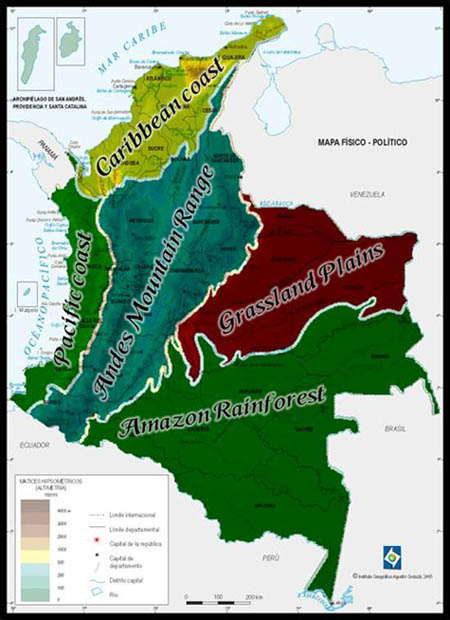
Colombian music and culture are truly representative of the area's geographic regions. As with many of the countries in the continent of South America, combinations of European, African and indigenous traditions emerged over the centuries, producing a wide variety of music (and dance) styles.
read it all here 
  
  
more to read & see


18.10.10

Raiz Pantaneira

  
Helena Meirelles
Raiz Pantaneira

1997

Tracks:

1. Volta da Guira Campana
2. Agua Parada
3. 1st de Maio
4. Fandango Em Porto
5. Rincao Guarani
6. Dona Dalva
7. Rio Negrinho
8. A Familia Arrastape
9. Nha Lorona
10. Acampamento Cerrollon
11. Capelinha Branca
12. Viradouro
13. Epitaciana
14. Guiomar
 
Personnel:
 
Helena Meirelles: Violão, Dobro, Viola
Gesílio Pereira: Baixo
Francisco Machado: Violão
Ailton Torres: Violão
 
Sérgio Reis: Vocal (14)
 
All tracks Helena Meirelles,
just track 14: Haroldo Lobo, Wilson Batista
   
♫☆`*♥¸¸.•*¨*•♫☆`*♥¸¸.•*¨*•♫
        
        
♫☆`*♥¸¸.•*¨*•♫☆`*♥¸¸.•*¨*•♫
  
I am a 49 years old Brazilian who grew up inland that country. Much to my parents disappointment, and to our maids relief in relation to the destination of my soul, I believed in mules-without-head, in devils incarnated as people with their goat-feet, and in the power of the holy water to make them explode leaving a sulphur smell... I only saw TV or a paved road when I went to Rio de Janeiro to visit my grandparents.
 
I had the privilege of living in different areas of Brazil, and to get to know its people, with their simplicity and wisdom, with their hopes and their suffering, with their disbeliefs--in politicians and government--and beliefs in the Other world, both marvelous and terrifying.
 
This way, through beloved maids and their families, I got to know the simple people's music, the ones played at backyards of simple homes at night, and at the farms by the simple workers using a "violão" (guitar), a "viola de doze cordas" (12 strings guitar), and a "sanfona" (acordeon).
 
The sounds were tangent, sad, melodious, and they were fading from the popular memory as the country started its exceedingly fast urbanization process in the late 50s.
 
Recently, some very special people have been digging the musical soil of the states of Goiás, Minas Gerais, and Mato Grosso. This "mining" process has uncovered beautiful gems, and Helena Meirelles is one of the most beautiful of them all: a clear Diamond!
 
I never heard about her until this February, when my husband came from Brazil with one of her records: "Raiz Pantaneira" (Pantaneira Roots - Pantanal is the swampy area in Mato Grosso do Sul).
 
It was fascination at first hearing: the soul of the aparently simple people of Goiás and Mato Grosso, with a Guarany background (Mato Grosso was taken by force from Paraguay one day, not long ago...), comes through her music. She is a master composer and a prodigy player, and I could only fall in love with this old Lady of Inland Brazil: Helena Meirelles!
 
May G'd bless you Helena for all the joy you bring to the world through your music, so simple and so elaborate, so happy and so sad: the music of a suffered people's soul. 
~Sonia Bloomfield Ramagem 
  
   
Helena Meirelles was born on a farm in the heart of the hinterlands of the state of Mato Grosso do Sul. The images familiar to her since she was a child were of rural workers, the routine of raising large herds of cattle, and the violeiros (rural musicians). She learned how to play the viola at nine. After an imposed marriage at 17 and the subsequent abandonment of her home, she became involved with several partners and lived in the hottest places, where there always was prostitution, music, and booze. In such hard living, she even had some of her 11 children all by herself, with no help whatsoever. In complete poverty, after 30 years without any contact with her family, she was found by her son who took her to her sister's home where she was taken care of. After a short while, in 1993, her nephew recorded a tape of her playing and sent it to Guitar Player magazine. The magazine's reporters had a hard time when they tried to find the sul-mato-grossense illiterate female musician, who lived in the distant and small city of Presidente Epitácio (São Paulo). She also didn't have a telephone and was completely unknown to the Brazilian specialized press and recording market. But in the next year, Guitar Player had included her in its list of the 100 best picks ever, together with B.B. King, Eric Clapton, and Jimi Hendrix's. In the first of three albums, Helena Meirelles released in that year, she took a large track to account for her life, providing great insight into her peculiar trajectory. She performed in a theater for the first of many times at 67, and her mostly instrumental albums reach an average 80,000 sold copies each, which is considered excellent in this market niche. 
~ Alvaro Neder, All Music Guide


thanks to Spinning In Air for showing the way :)

17.10.10

Caminhos Me Levem

   
Almir Sater
Caminhos Me Levem

1996

Tracks:

1. O vento e o tempo Ouvir (Paulo Simões, Almir Sater)
2. Caminhos me levem Ouvir (Paulo Simões, Almir Sater)
3. Brasil poeira Ouvir (Almir Sater, Renato Teixeira)
4. Floresta do arco-íris Ouvir (Almir Sater)
5. Pagode bom de briga Ouvir (Paulo Simões, Almir Sater)
6. Milhões de estrelas Ouvir (Paulo Simões, Almir Sater)
7. Viola fora de moda Ouvir (Capinan, Edu Lobo)
8. Cabecinha no ombro Ouvir (Paulo Borges)
9. Sodade matadeira Ouvir (Dorival Caymmi)
10. Mochileira Ouvir (Geraldo Roca)
  
♫☆`*♥¸¸.•*¨*•♫☆`*♥¸¸.•*¨*•♫
        
        
♫☆`*♥¸¸.•*¨*•♫☆`*♥¸¸.•*¨*•♫
  
Almir Sater brings to us the sweet music of the Brazilian wilderness of Pantanal, one of the most beautiful parts of the Earth, most of it still untouched. All the mystery, the starry nights, simple country love, the lonely train crossing the plains and the little boat sailing down the mighty river, all these images and draems, that's what the music is all about. All through his voice and the voice of his viola (the brazilian ten strings guitar). Great music!
~ Alexandre D. Tenorio

Muita paz.
Canções com ritmo , que fazem pensar no mundo em que vivemos, na vida e nos acontecimentos... Lindos versos, poesia, excelente para românticos... Alguns ritmos lembram o velho oeste. As instrumentais fazem viajar a um mundo inexistente... cheio de paz.
~ Marianna Degen Alves
 
      
Almir Eduardo Melke Sater (Campo Grande, 14 de novembro de 1956) é um violeiro, compositor, cantor e ator brasileiro.

Born in Mato Grosso do Sul (CW), he used to play the guitar as a child, but only discovered the viola caipira (an adapted acoustic guitar, smaller than the usual 6-string, used in the countryside) in Rio de Janeiro, where he was studying Law. Sater gave up becoming a lawyer and, instead, decided to take guitar lessons with Tião Carreiro. Later, he returned to Campo Grande (capital of Mato Grosso do Sul) and lined-up the duo Lupe & Lampião. In 1979, he moved to São Paulo, becoming a back up musician to singers like Tetê Spíndola and Diana Pequeno. His debut album, "Almir Sater", was released on Continental in 1981, followed by "Dona", on RGE. Three years later, he put the Comitiva Esperança together, touring the pantanal region and researching the music from the area. After releasing other albums and playing the Free Jazz festival, in 1989, Sater played a part in a soap-opera, which helped projecting his music. He released "Terra dos Sonhos" in 1994...


Música Caipira (Brazilian Country Music)

Brazilian countryside on viola strings
Rosa Nepomuceno

The catholic chants brought by Jesuits were mixed with Portuguese tunes and the dance and music of the Indians, original landlords of the newly discovered tropical country. Many styles emerged from that mixture, especially in the southeast, then in the south and center-western regions, integrating what would be known as "música caipira" (literally, country music). The viola, a Brazilian type of small, acoustic guitar, was carved from tree trunks. In the early days, the strings were made out of animals’ guts; later, they were switched to wire, and through the years, the viola has been testified as the basic instrument for the countryside style. Caipira is one among many words emerged from the incorporation of tupi and other indigenous idioms with Portuguese in colonial times. When broken down, we have caa (bushes), pir (something that cuts) and cururu, which is how the Indians attempted to say cruz (cross).

Missionaries moved
To prove their love
To the natives that feared
The foreign invader
But hearing the mellow sound
Of a weeping viola
The careful primitives
Leaned over to enjoy it.

(Assim Nasceu o Cururu, Cap. Furtado e Laureano)
 
...

...Through the 90s, the pop-sertanejo (tailored for foreign markets) and the neo-caipiras (educated musicians interested in rescuing the original roots of the style) managed to live in harmony. 

The latter have developed their own independent labels and show circuits. The key artists for the movement are Renato Teixeira and viola expert Almir Sater. Currently, Roberto Corrêa, Ivan Vilela, Pereira da Viola and Chico Lobo (from Minas Gerais), and Miltinho Edilberto (from São Paulo) are some of the greatest caipira music performers/composers.

...read the whole thing here

***
 
   
Roberto Correa
Viola Caipira
 

15.10.10

Ao Clarão da Lua

  
Aqua
A música das lavadeiras do Jequitinhonha
Jequitinhonha washerwomen's song
La música de las lavanderas

2004

Tracks:

01 - Navio de Guerra / Cessando Areia
02 - Beira Mar da Vigia
03 - Cai Bananeira
04 - Córrego Novo
05 - Senhora Santana
06 - Mestra Diôla
07 - Peneira Gavião
08 - Tributo ao Jequitinhonha
09 - Da Sala pra Varanda
10 - Rala o Coco Bem-te-vi
11 - Ao Clarão da Lua
12 - Rosa no Batuque
13 - Saude de Portugal

As lavadeiras-cantoras são:

Adélia Barbosa da Silva, Ana Isabel da Conceição, Emília Maria de Jesus, Juracy Lima da Silva, Mirian Fernandes Pessoa, Santa de Lourdes Pereira, Sebastiana Dias Silva, Teresa Fernandes de Souza Novais e Valdenice Ferreira Santos.

A banda básica é formada por:

Carlos Farias (violão e regência),
Carlinhos Ferreira e Guê Oliveira (percussões),
Sanráh (violão solo),
Ivan Virgílio (sopros)
Aloísio Horta (baixo).
 
♫☆`*♥¸¸.•*¨*•♫☆`*♥¸¸.•*¨*•♫
        
        
♫☆`*♥¸¸.•*¨*•♫☆`*♥¸¸.•*¨*•♫
 
Get on with the washerwomen's song

The washerwomen from the Jequitinhonha Valley, region located in the Northeast of Minas Gerais, Brazil, are old songs keepers - batuques, sambas, afoxés, frevos, rodas, modinhas and toadas (Brazilian rhythms and beatings)- which origin is lost in time's memory. They are working, playing and laudation canticles, influenced by the African, Indian and Portuguese tradition. They reveal the ethnic blending that bred the rich Brazilian Popular Music.
  
  
The history of "The Choir of the Washerwomen" began in 1991 when they were encouraged by the she singer and cultural researcher Carlos Farias and started to sing as a group and built up an association in the city of Almenara, where they still live. The recording of the CD-Book "Batukim Brasileiro", a gathering part of this collection, and its launching at Ilha da Madeira - Portugal, in 2002, just like the fulfilling of a victorious tour over many Brazilian Cities, consolidated a work that quests for enriching Brazilian immaterial cultural heritage, generate income and promote social inclusion. "Aqua", released in 2005 by Carlos Farias, is the sequence of this project. The rhythm and the lyrics reveal the interbreeding and the Brazilian religious blending. It really worth listening to CDs, and specially be touched by their in live performance. In both situations, the fusion of their voices with the sounds from the drums, the rattles, the guitars and the flutes create a revealing and fascinating presentation of the Brazilian soul." 


Contact for shows, speeches and CDs requesting:

epovaleeventos@yahoo.com.br

carlosfarias@terra.com.br

14.10.10

Grande Poder

  
«Tum Tum Tum by Déa Trancoso was born eternal. The repertoire is unique, universal, of rare beauty and essence. Music runs through time praying in joy, showing, on an impeccable production, the heart of Jequitinhonha. It’ll strike for many, many years within the best Brazilian music analogical albums.» 
Tavinho Moura
 
  
Déa Trancoso
TUM TUM TUM

2006

Tracks:

01. Filho Da Folha - catimbó
02. Tupinamba - catimbó
03. Passarinho Pintadinho - lundu
04. Grande Poder - coco
05. Indio-Filho Do Mato
06. Beija-Flor - congo
07. Rainha - catimbó
08. Luandas - maracatu
09. Benzim Veloso - acalanto
10. Canarim Do Mato
11. Meus Amo - coco
12. Canto De Uma Terra
13. Lagartixa No Fuba
  
♫☆`*♥¸¸.•*¨*•♫☆`*♥¸¸.•*¨*•♫
        
        
♫☆`*♥¸¸.•*¨*•♫☆`*♥¸¸.•*¨*•♫
  
Déa Trancoso

It all began with a ten year research on the traditions of Vale da Jequitinhonha, Minas Gerais, Brazil. The result was Tum Tum Tum, an album well acclaimed by the critics and nominated to several best record and best singer awards, alongside names such as Maria Bethânia, Alcione and Marisa Monte.

Influenced by violeiros (guitar players), cantadores (singers) and foliões (merrymakers) from Jequitinhonha, Déa Trancoso presents a work based on the mineira tradition of Terno de Catopés from Bocaiúva, a centenary group that accompanied her through a series of shows. Winner of the X Festivale – Popular Culture of Jequitinhonha Festival, Déa Trancoso entered the Brazilian musical scene with her natural voice surprising by its tuning but also by its technical abilities.

Endless scholar (with a degree on journalism and vocal techniques) she studies musical Brazilian roots, addresses to the origins of samba and its connection to the popular music of Congo and Angola, building rhythms both traditional and contemporary. In the words of the musician Ivan Vilela her voice has a “coming out of God knows where” strength and Egberto Gismonti, one of the most ingenious Brazilian composers, considers her voice to be incredibly beautiful and truthful.


“Este CD me dá a certeza do diamante jubiloso de Diamantina, que, como parte do Vale, aclarou os caminhos assanhados da Déa. Uma beleza inesgotável: Déa Jequitinhonha Trancoso!
As músicas têm o sabor que mais se gosta de saborear, o ritmo que mais se gosta de dançar, o sacolejo que se deve vascolejar até o riso se engraçar. Têm cantoria, melodia, harmonia e ladainha com ternura e meiguice. Têm invento, invenção e achado. Têm mentira com tanta verdade que parece coisa inventada, encantador, parece coisa encantada! “TUM TUM TUM” é muito perigoso porque quando a gente se agarra nele não consegue se soltar nem de noite pra sonhar”
Egberto Gismonti


13.10.10

Viola Caipira

  
Ivan Vilela
Paisagens

1998

Tracks:

1. Prá Matar a Saudade de Minas
2. Armorial
3. Saudade da Minha Terra
4. Cururu prá São João
5. Asa Branca
6. Valsa para Viver um Grande Amor
7. Paisagens
8. Calma Roceira
9. Nananenem
10. Pula brincando
11. Cabriolinha
12. Catira de Mariamar
13. Cururu prá São João
14. No Balanço do Jacá
15. Baiãozim Calungo
16. Solidão
17. A Força do Boi

Ivan Vilela: Viola Caipira (Ten String Guitar)

Ilustração e projeto gráfico: Fernando Vilela
  
   
♫☆`*♥¸¸.•*¨*•♫☆`*♥¸¸.•*¨*•♫
        
        
♫☆`*♥¸¸.•*¨*•♫☆`*♥¸¸.•*¨*•♫
  
Ivan Vilela
  
Ivan Vilela is one of the main ten-string guitarists nowadays. With a special style and very developed technique, he has more than 13 albums recorded, solo or with different groups, and was nominated or awarded in several prestigious prizes in Brazil.

He is also the director and arranger of the Orquestra Filarmônica de Violas and a researcher of the traditional music from São Paulo and Minas Gerais - two Brazilian states rich in countryside culture.

He has been frequently performing not only in Brazil, but also in Spain, France, Britain, Italy and Portugal.
 
***
 
Ivan Vilela (born August 28, 1962 in Minas Gerais) is a Brazilian composer, arranger, research, teacher and viola caipira player. Ivan Vilela is teacher of the School of Arts and Communication, University of São Paulo. He is director of Orquestra Filarmônica de Violas, a Brazilian orchestra composed by Brazilian violas. Ivan Vilela is one of the main ten-string guitarists (viola caipira) nowadays. With a special style and very developed technique, he has more than 15 albums recorded, solo or with different groups, and was nominated or awarded in several prestigious prizes in Brazil.
  
Biography

Ivan Vilela is the youngest of a family of eleven children. When he was 11 years, Ivan has gained from his father a guitar. The first guitar teacher was in 1973, Amaury Vieira, Itajubá. He began his artistic career at 18 years, integrating the "Pedra" Group and then the "Àgua doce" Group, who did research on the music roots from the state of Minas Gerais. Vilela attended the faculty of history before joining the course in Music Composition from the Universidade Estadual de Campinas (UNICAMP) where he completed a BA and MA in Arts. In 1989, he moved to Campinas. In 1995, he assumed the viola as a solo instrument. Since 1996 he has been frequently performing not only in Brazil, but also in Spain, France, Britain, Italy and Portugal. Vilela worked for over 20 years of research with popular culture. He is currently completing a doctorate in social psychology from the University of São Paulo with a thesis on the social history of Brazilian country music.