23.2.12

Étoile Du Raï

   
شابة فضيلة
Fadela
1986/1987

Tracks:

A1 - N'Sel Fik
A2 - Nebki Ouahdi
A3 - Ateni Bniti (Part 1)

B1 - Ateni Bniti (Part 2)   
B2 - Ha-Liya–Ouana Alach
B3 - Dja Yadhak
  
♫☆`*♥¸¸.•*¨*•♫☆`*♥¸¸.•*¨*•☆♫

.ღ•:*´♥`*:•ღ.

♫☆`*♥¸¸.•*¨*•☆♫`*♥¸¸.•*¨*•☆♫
  
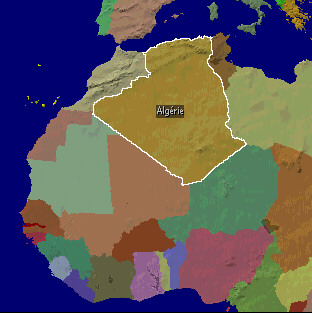
Rai, the popular music of Algeria, developed in the harbor city of Oran. In the late 1970’s, the more modern Pop-Rai movement followed and produced Cheba Fadela and her husband, Cheb Sahraoui, both of whom gained fame as Pop-Rai singers in Algeria.

Born in 1962 as Fadela Zalmat, Cheba Fadela grew up in a poor, formerly Jewish neighborhood, not far from the large city theater. At the age of fourteen, she played a role in the film "Djalti,” directed by Mohamed Ifticène and made her musical debut as a background singer in Boutiba S’ghir’s band. Her voice can also be heard on recordings by Rai singer Cheikha Djenia. Fadela’s nick name, "Remitti Sghira” (Little Remitti) followed as a result of the resemblance her potential career bore to that of famed Rai singer, Cheikha Remetti.

In the late seventies, Cheba Fadela was discovered by the legendary Rai producer, Rachid Baba Ahmed. Ahmed’s modern 24 track studio in Tlemcen was the power house that produced Algerian Pop-Rai. With his help, Fadela became one of the first stars of the new musical sound that appealed to a frustrated generation of Algerians. Thanks to the inexpensive cassette tape, Pop-Rai quickly achieved wide distribution. In contrast to the traditional Rai of the "Cheikhs” and "Cheikhas,” which was popular at the turn of the century in the bars and brothels of Oran, the new generation of Rai singers gave themselves the surname of "Cheb” or "Cheba,” meaning "the young.”

With the 1979 song "Ana Ma H’Lali Ennoun” (I don’t want to sleep), Fadela landed her first big hit. The recognition that she gained from that success catapulted her to even larger fame in 1983 with "N’Sel Fik” (You are mine), a song she recorded together with Mohammed Sahraoui. Their marriage immediately followed and the couple quickly became the dream pair of the Algerian music scene, always taking the stage together.

Like many other Algerian Rai singers, they emigrated to France in the late 1980’s to pursue a European career. When the first "world music wave” began there, Cheba Fadela and Cheb Sahraoui were at the center of attention. Their residence in Europe spared them the first-hand experience of the bloody civil war that rocked Algeria in the nineties. An attack by radical Muslims took the life of Rai singer Cheb Hasni in September of 1994. Famed Pop-Rai producer, Rachid Baba Ahmed, was murdered by "fanatics" during the same time period.

Unlike other stars of the Pop-Rai generation like Cheb Khaled, Cheba Fadela and Chab Sahraoui never achieved international success, largely because they relied too heavily on their success in Algeria. The couple separated both privately and professionally in the 1990’s.

In 2001, Cheb Sahraoui reappeared with "Un homme libre,” an album that reflects the sound of modern French commercial music. Nothing noteworthy has been reported of Cheba Fadela in recent years.


thanks for the music
  

Yes, yes this was my first Raï  lp... goose pimples... all over me...


~♥~


19.2.12

Liberté

  
Algérie
Les Plus Grands Artistes Algériens
2000

Tracks:

01. Matoub Lounès - Hymne a Boudiaf
02. Boukrif - Araw Idhourier
03. Cheikha Remitti - El Guellil
04. Raina Rai - Raïna Hak
05. Cherifa - Mabrouk el Farh
06. Dahmane - Erti Rahti
07. Hisnet Staifi - Yhama
08. Takfarinas - Youba Erreman
09. Yani - Sin Sin
10. Messaouda - Enta Ouna Lik
11. Hasni - Jaya Nedmana
12. Bachir Sahraoui - Wach Yenessi
13. Mohamed Kheznadji - Ledda Li Chorb Elachiya
14. Saloua - Sâadi Ya Sâadi
  
♫☆`*♥¸¸.•*¨*•♫☆`*♥¸¸.•*¨*•☆♫

.ღ•:*´♥`*:•ღ.

♫☆`*♥¸¸.•*¨*•☆♫`*♥¸¸.•*¨*•☆♫
  
Sur le plan musical, l'Algérie est réputée pour son riche répertoire. Plusieurs styles de musique son inclus : classique arabo-andalou algérienne, le Chaâbi, le Rai qui est originaire de l'Oranie, la musique kabyle, la musique moderne comme le rock, le rap ou la musique diwane. Il se distingue également par la richesse linguistique de son répertoire mêlant arabe classique, arabe algérien, le français et l'amazigh (dites berbères) telle que kabyle, chaoui, touareg, etc.
  
 read it all here
and forget the English Wiki page


source & more to read


Freedom starts in your mind.
  
~♥~

18.2.12

Postcard from Crete

Don't be late...

  
Carnivals of Brazil
Rio, Recife, Bahia
1992

Tracks:

01. Ecole De Samba-Batucada-Rio
02. Ecole De Samba-Chant-Rio
03. Ecole De Samba-Batucada & Chant-Rio
04. Ecole De Samba-Batucada-Ambiance-Rio
05. Makulele-Danse-Bahia
06. Candomble-Tambours-Bahia
07. Capoeira-Danse-Bahia
08. Samba De Rocla-Danse-Bahia
09. Marakatu-Tambours-Recife
10. Caboclinhos-Dance-Recife
11. Ecole De Samba-Ranchos-Recife
12. Ursos- Danse- Recife
  
♫☆`*♥¸¸.•*¨*•♫☆`*♥¸¸.•*¨*•☆♫

.ღ•:*´♥`*:•ღ.

♫☆`*♥¸¸.•*¨*•☆♫`*♥¸¸.•*¨*•☆♫
    
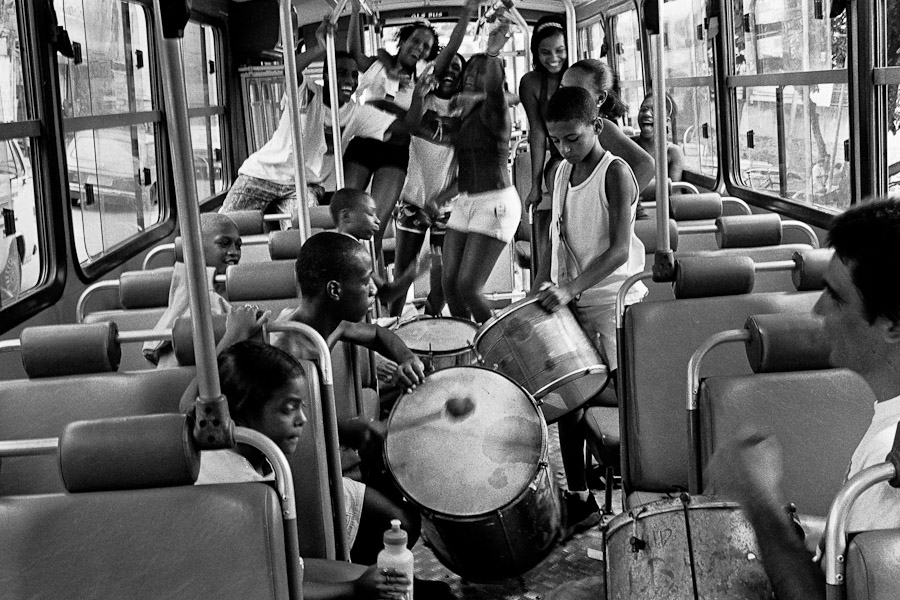
Get ready for Brazil Carnival. Rio de Janeiro is the mother of all Carnival celebrations in Brazil. But there's also much fun in the streets of Recife and Olinda. Decide to follow one of the Trio Eletricos in Salvador de Bahia and you will have a blast. What about Sao Paulo with its every year more popular...

This is recorded live on the streets of these 3 carnival sites, as you can well tell. Although the sound quality sometimes sounds more like an ocean wave than a samba ensemble, you can feel the pulse of the music and the excitement. Hard to get more real than this. Comes complete with whistles, bull horns, and random voices passing the microphone's path.


28.1.12

freedomblues

freedom, democracy, (...)
the blues...

(...)

Musica para guitarras y charango

  
Quique Sinesi
Cuentos de un pueblo escondido
2005

Tracks:

01. Voces Tempranas: Cuentos, Pt. 1/Das Canciones Para Augusto (2:04)
02. Candombe del Arco Iris (2:55)
03. Canción Hacia Vos (3:26)
04. Tormenta de Ilusión: Cuentos, Pt. 2 (1:37)
05. Contramarea (5:39)
06. Espacio (2:58)
07. Dos Soles (4:38)
08. Despertando de Otro Sueño: Cuentos, Pt. 3 (1:31)
09. Yorugua (3:12)
10. Imágenes Naturales (4:36)
11. El Abrazo (4:57)
12. Alta Paz (5:30)
13. Terruño (3:31)
14. El Colibrí Entre Suspiros: Cuentos, Pt. 4 (2:51)
15. Manantial de Luz (2:25)
16. Berliner Tanguísmos (2:06)
17. Llama Viva (3:23)

Todas las composiciones son de  Quique Sinesi

Quique Sinesi:

Charanga en temas 1,4,8 y 14
Guitarra Española de 7 cuerdas en temas 2, 3, 5, 7, 10, 11, 13 y 16
Guitarra Piccolo en temas 12 y 17
Guitarra acústica en temas 6, 9 y 15

Grabado en Colonia, Alemania en el año 2001
  
♫☆`*♥¸¸.•*¨*•♫☆`*♥¸¸.•*¨*•☆♫

.ღ•:*´♥`*:•ღ.

♫☆`*♥¸¸.•*¨*•☆♫`*♥¸¸.•*¨*•☆♫
   
(...) The music of Quique Sinesi emerges from the very roots of our traditional music. A popular genre that Sinesi rewrites and expands with new concepts and styles, exploring the borders between indigenous tradition and global modernity (...)´.

Cuentos de un Pueblo Escondido is a recording of Sinesi ´pure´ - he performs alone his original works making use of Argentine urban rhythms and combining his jazz improvisation with classical virtuosity. (...)
  
***
  
Quique Sinesi was born in Buenos Aires, Argentina in 1960.

He is considered one of the most important guitarrists in Argentina for his personal style, his music is based in elements of Tango and Folclore from his country and rhythms from “Rio de la Plata” like Candombe, incorporating elements of jazz, improvisation, classic and world music, using 7 strings Spanish Guitar, Piccolo, Acoustic and Charango.

He played for years with the bandoneonist Dino Saluzzi and founded the group Alfombra Mágica with Matias Gonzalez and Horacio López. Some other musicians with whom he has played or recorded are: Enrico Rava, Pedro Aznar, Ruben Rada, Paquito de Rivera, Joe Lovano, Markus Stockhausen, Erling Kroner, Wolfgang Haffner, Marcelo Moguilevsky, Michael Forman, Carlos Aguirre, Juan Falú, Karnataka College of Percusion, Dieter Ilg, Jasper Van Hof, Nazim, Daniel Messina, Pablo Ziegler Quintet, to name just a few.

Since 1999 he has played in a regular duo with the legendary saxophonist Charlie Mariano, recording the CD “Tango para Charlie” (enja).

In the year 2000 he started the project “New Tango Duo” with Pablo Ziegler (former pianist of Astor Piazolla) and both invited Walter Castro to join them as special permanent guest.

As soloist he has recorded several CDs and has played in many important international Guitar Festivals. In 2003 he recorded as soloist the Double Concert for Guitar and Bandoneon from Astor Piazzolla with Lothar Henzel and the Symphonic Orchestra from Deutschland Radio Berlin.
With different projects he played in several countries: Argentina, Uruguay, Brasil, Bolivia, Chile, Colombia, Mexico, U. S. A, Canada, Germany, Sweden, Denmark, Austria, Switzerland, Luxemburg, Spain, England, Greece, Croatia, The Netherlands, Croatia, Turkey, France

Quique Home


"One of the many joys of my recent visit in Buenos Aires was meeting and hearing Quique Sinesi. He became -instantly- one of my favorite guitarists." Jim Hall


17.1.12

All Aboard!

  
Arturo Sandoval & Y El Tren Latino
1995

Tracks:

01. Be-Bop     4:18    
02. La Guarapachanga     3:59    
03. A La P.P.     2:47    
04. Waheera     5:13    
05. I Can't Get Started     4:25    
06. MarteBelona     3:47    
07. Royal Poinciana     3:16    
08. The Latin Trane     5:15    
09. Candela (Yo Si Como Candela) / Quimbombo     4:50    
10. Drume Negrita     2:45    
11. Orula     6:01    
12. I Can't Get Started (Instrumental)     4:25 
  
Personnel:

Arturo Sandoval (trumpet, flugelhorn, piano, percussion); Celia Cruz, Oscar D'Leon, Luis Enrique, Joe Williams (vocals); Kenny Anderson, Ed Calle (saxophone, flute); Dana Teboe (trombone); Otmaro Ruiz (piano); Rene Toledo (guitar); David Enos (bass); Aaron Serfaty (drums); Manuel "Egui" Castrillo, Luis Henrique, Edwin Bonilla (percussion); Vicente Rojas, Laura Pifferver, Cheito Quinones (background vocals).
  
♫☆`*♥¸¸.•*¨*•♫☆`*♥¸¸.•*¨*•☆♫
        
        
♫☆`*♥¸¸.•*¨*•☆♫`*♥¸¸.•*¨*•☆♫
  
Trumpet Player Arturo Sandoval of Hidden Hills, California was born on November 6, 1949, in Artemisa, a small town east of Havana in the Pinar Del Río province, home of Cuba's finest tobacco growing region, the Vuelta Abajo. Arturo's family was poor, existing on an income from his father's mechanics business. By the age of six, Arturo had a strong desire to be a musician.

Arturo began playing the congas and put together a mini-circus act with a cat on a high wire. He charged the neighborhood kids a penny to see his show. When his village organized an orchestra for local events, he joined and tried out a bunch of instruments, including the trombone, bass drum and the flute, which he didn't like because it made him dizzy. Arturo started looking at the trumpet and decided that's what he wanted to play.

The band didn't have an extra trumpet, and the family had no money to buy one; however, his Aunt bought him a Cornet. Arturo states that he started to blow the cornet and just figured it out. Arturo sought out a respected local trumpet player for some training and was rebuffed and told not to waste his time. Arturo left that meeting in tears but more determined than ever.

Amazingly, Arturo never received formal trumpet lessons. He played and practiced, but that was it. One day in 1963, Arturo saw a flyer for a scholarship program offering classical music training at the National School of Arts. He applied, and secretly went to Pinar Del Río for an aptitude exam that was mostly gauged to test his musical ear. When the telegram arrived with his acceptance, he announced to his parents that he was going to go to Havana to become a full-time musician. Arturo continued his education and musical training until he was about 16, when the government formed a big band, known as the Cuban Orchestra of Modern Music. The first trumpet in the national symphony, Luis Escalante, also was chosen as lead trumpet in the big band. The announcement energized Arturo, who had begun to chafe under the restrictions that he could only play classical music at the school. "I was dying to meet Luis Escalante," says Arturo. Escalante's hobby was fixing cars, and because of Arturo's experience helping his father, he established a connection with the vaunted trumpeter. They became friends, and finally Arturo told Escalante that he was a trumpet player, too. They started playing duets, and one day, Escalante asked if Arturo would like to take his place in the big band group. "I was speechless," Arturo says. "I told him they wouldn't let me play." But after Escalante intervened, the young Sandoval became the last chair in the trumpet section. Three years later, at the age of 20, he became the first trumpet in the orchestra, which in big band parlance meant he really became the band's leader...

read it all here


1.1.12

Bandurrias in Kawaguchi

  
Orquesta de Plectro de Córdoba
Concierto Kawaguchi
2003

Tracks:

01. Intro
02. El baile de Luis Alonso
03. Canción bohemia
04. Popourri de Aires Andalucez
05. Sevillanas del siglo XVIII
06. Danza ritual del fuego
07. La boda de Luis Alonso
08. Orgía
09. Sakura
10. Intro II
11. Canción de la playa
12. España cañí
 
☆`*♥¸¸.•*¨*•☆`*♥¸¸.•*¨*•☆
        
        
☆`*♥¸¸.•*¨*•☆`*♥¸¸.•*¨*•☆
 
Bandurria
  
The bandurria is a plectrum chordophone from Spain, similar to the cittern and the mandolin, primarily used in Spanish folk music.

Prior to the 18th century, the bandurria had a round back, similar or related to the mandore. It had become a flat-backed instrument by the 18th century, with five double courses of strings, tuned in fourths. The original bandurrias of the Medieval period had three strings. During the Renaissance they gained a fourth string. During the Baroque period the bandurria had 10 strings (5 pairs). The modern bandurria has 12 strings (6 pairs). The strings are tuned in unison pairs, going up in fourths from the low G#. The lowest four strings are a major-third above those of a standard guitar and the highest two strings are a fourth above a standard guitar, ie G♯, c♯, f♯, b, e and a.
 
   
Orquesta de Plectro de Córdoba
 
Orquesta de Plectro de Córdoba is an association of thirty young musicians whose sole purpose is to enjoy making music.

What makes this Orchestra different is that it has successfully fused classical music, popular nationalist and popular music with instruments of their land, resulting in a very special timbre that is attractive to all kind of ears. In their desire to make music it is a priority to rescue the unjustly neglected works and authors that have gone unnoticed in the history of music.
   
   
The Bandurria (mandolin) is the instrument that gives its name to the family, because when we speak Spanish lutes we refer to the entire group of ibises, ie, soprano mandolin, mandola contralto, tenor mandolin, mandola mandolin low bass, but are popularly other names, such as bandurrín, lute, Laudon, on lute, etc.., reserving the term mandolin, soprano exclusively for the instrument.

We find the term "Mandura" Provencal language "mandoire" in French. The two appear to be derived, according to John Joseph King and Antonio Navarro from the Sumerian "pan-tur" through the Greek "pandurion" and the Latin "pandura." However, in "The Book of Good Love" from Arciprestre de Hita (fourteenth century), which first appears in a literary text the word "lute", citing as an instrument instruments that already has some tradition.

Today, after having gone through different shapes and sizes throughout history, we can draw such a small instrument with sounding pear profile, tapas and a mast parallel fretted, through which the cords extend (six distributed in pairs), topped with a peg, needing to execute a plectrum or pick. It is therefore an instrument belonging to the category of compounds stringed instruments.

The mandolin in the s. XX, is becoming an essential tool in the folklore of some Spanish regions, and appears also quite often in the Spanish lyrical genre, the Zarzuela.

translation-thanks-to-google
  
source of the music & the fotos - Gracias! 
  
hoping to have made the orchestra a little bit more known... : )

and one more time:
 
¡Feliz Navidad y Feliz Año Nuevo!
 
~♥ ~
 

31.12.11

¡Feliz año nuevo!


may all your wishes come true : )

25.12.11

Ox, Fox, Bear and Goat...

  
Slavic Folk Carols
2006
  
Tracks:

01. Ай, калядачки, наши нежачки
02. Го-го-го, коза
03. Коляда, бегла коледко
04. Прыйшла каледа увечара
05. Ой, ты, бабочко, стара галочко
06. А у заенки тры домухны
07. Ой, стоить явар, тонки, высоки
08. И далина-долинушка
09. В Рожество Христово
10. Добры вечар табе, пане-гаспадару
11. Раждество твае, Хрысте Божа
12. Ой учора з вечора
13. Радуйся, Марыя
14. Ой Божае нарождене
15. По конец стола седить Микола
16. Божа благодати, Варварыная мати
17. Ой рано-рано куры попели
18. А у лузи, у лузи
19. Запеймо песню славуному пану
20. А талды, талды, заради, Божа
21. Ходило-блудило сэмсот молойцев
22. Да на Дунаечку
23. Сьяты вечор, сьяты Василек
24. За горою каменою
25. Малады Женечка хвалиуся канем
26. А у пана Алега вумная Жана
27. Ое дай, Божа, нам коляд даждать
  
`*♥¸¸.•*¨*•♫`*♥¸¸.•*¨*•
        
        
`*♥¸¸.•*¨*•♫`*♥¸¸.•*¨*•


 Ethno-trip. The collection of ethnic music. Volume 11
 
From the manufacturer:

Unique records from personal files, collected in different provinces, in the Slavic villages, these Slavic traditions. They are not forgotten!

The word "Christmas carol" or "carol" has as its root the Latin word "Kalenda", which is the first of the month or the first of the year, from which in European languages, and there was the word "calendar".

With the birth of Christ associated the concept of establishing a new era that has long calculate the "before and after the birth of Christ." Singing carols was the glorification of this great event, "the first era."

Carols - common Christian songs that have appeared yet in the days of the birth of Christianity, but only among the Slavic peoples, they retained their title. "Kolyadovat" - it means to sing under the windows on the eve of Christmas songs called carols. To him who carols, always throw in a bag owner or the owner of the sausage or bread, or a copper penny, than the wealthy. "Costumed go!" - Shout owner of the window. So, now starts the song-dance. Kalyada!

(translation google)
  
  
Kolyada
 
Christmas in Russia is associated with a number of other practices, which represent a blend of tradition from Russia's Christian and pre-Christian past. It was once common practice, on Christmas Eve, for groups of people masquerading as manger animals to travel from house to house singing songs known as kolyadki. Some kolyadki were pastoral carols to the baby Jesus, while others were homages to the ancient solar goddess Kolyada, who brings the lengthening days of sunlight through the winter. In return for their songs, the singers were offered food and coins, which they gladly accepted before moving on to the next home...

Kolyada or koleda (Cyrillic: коляда, коледа, колада, коледе) is an ancient Slavic winter ritual celebrating the "old" New Year.

 
Ha! Ha! Ho! Ho! 
..all because of Calender confusion the party never ends... 
...almost :-) 

24.12.11

And so this is Christmas...


my best wishes go out to all of you :)
   
and a big hug for Kokolo who found the picture of the christmas bull...
   

~♥~