1.3.12

Eureka :- )


Κώστας Μουντάκης
 Kostas Mountakis
I Kriti tou Kosta Mountaki - 45" records

Tracks:

     
CD1

01. Tin tihi ti dokimasa (Kostas Mountakis-Ermina Nikoladaki)
02. Eharisa ta niata mou
03. O ponos o dikos mou
04. Rethemniana mou kimata
05. Pote tha kani xasteria
06. Tou kouzoulou to fesi
07. Tou kosmou i katakravgi
08. Rethemniotikos sirtos
09. I pantermi xenitia
10. Palies anamnisis
11. Onte peraso ke me dis
12. Sirtos Apokoronou
13. Sti gitonia mas idane
14. Apo ton Agio Mina
15. Ego eho tin kardia sou
16. Kontilies Milopotamitikes
17. Kritiko pentozali

CD2

01. Glikoharazi avgerinos
02. Dos mou apo ta hili sou krasi
03. Saranta hronia
04. Sousta Rethimnis
05. Tis akrogialias neraida
06. Malevisiotikos pidihtos horos
07. Mi me rotate an agapo
08. Kastro kai poune i pirgi sou
09. Kritikopoula mou
10. Ke na me sfaxis den pono
11. Variitero anastenagmo
12. Eftase o ponos stin kardia
13. Iha mia mikri agapi
14. Exomologisis (Kostas Mountakis-Stavrakakis)
15. Na zitianevo ti hara (Kostas Mountaksi-Stavrakakis)
16. Sirtos Rethemniotikos
  
♫☆`*♥¸¸.•*¨*•♫☆`*♥¸¸.•*¨*•☆♫

.ღ•:*´♥`*:•ღ.

♫☆`*♥¸¸.•*¨*•☆♫`*♥¸¸.•*¨*•☆♫
   
Kostas Mountakis (Greek: Κώστας Μουντάκης, a.k.a. Μουντόκωστας) (10 February 1926, Alfa in Milopotamos, Rethymno Prefecture – 31 January 1991) was a Greek musician who popularized the traditional music of the island of Crete, primarily with the lyra, the bowed string instrument of Crete and most popular surviving form of the medieval Byzantine lyra. His parents came from the village Kallikratis in Sfakia, Crete. His older brother Nikistratos was playing the lira and so did Mitsos Kaffatos - one of the best musicians in Rethymno at that time - who was to become Kostas’ tutor.

When the German military occupation of Crete started, Kostas Mountakis was 15 years old. In those days, he played his lira and sang at the village coffee shop, and later at wedding receptions.

In 1952, Kostas Mountakis participated for the first time in an album recording when he accompanied Stelios Koutsourelis at the song “Arpaxsa kai Baildisa”. In 1954, he recorded his first personal album accompanied by the Koutsourelis brothers with the all time classics “De thelo stin kardia”, “O pramateutis”, “O argaleios”, “Milonades kai mazoxtres”, “Sto stadio pou m’efere”, “Rethemniane mou kantife”, “Harami sou”, Erotokritos”, “Kritikos Gamos”, “H mahi tis Kritis”, “O thanatos tou lirari”. These songs are a small sample of his music.

Kostas Mountakis played an important and vital role to the popularization of the lyra as well as to the formation of its teaching methods. His overall contribution to the musical tradition of Crete is very important.
 
  
Kostas Mountakis 1926-1981

“Birds, take my pain and sing it to the world!”

Kosta Mountakis often used to say that an artist should continuously practice. How can today's players practice, however, when there are but few points of reference? How, when the greatest and most inspired pieces of music, such as those by Kostas Mountakis, are almost entirely absent from the catalogues of today's recording industry.

This situation has presented "Seistro" music publications with a special challenge, which is none other than to issue a complete collection of this great artist's work aimed primarily at young artists as well as at its natural audience: the people who worshipped him.

It was during the fall of 2001 that discussions began, in both Crete and Athens, with Manos Mountakis (K.Mountakis' son) laying the foundations for the commencement of this work. Many fans and collectors of Kostis Mountakis' music, following the initiative of his son, contributed to the process of collecting archival material, interviews, rare recordings, photographs, and even narrations of striking and magical moments in the life of this exceptional musician.

This process would never have been possible without the assistance of a particular individual who has, for many years, played a unique role in the creation of an archive of recordings of Cretan Music: Giorgos Gongas. During his long residence in Athens, Cretan artists would always find "refuge" in his hospitable home. It was there that their final rehearsals before studio recordings would inevitably take place. These live recording sessions at the home of Giorgos Gongas, are indeed unique and constitute the primary source for this edition. Of special importance also were the recordings from radio programs, unreleased recordings, as well as recordings from concerts in London, all of which were put at our disposal by Manos Mountakis. Valuable material was also obtained from local radio stations, events in honor of Kostas Mountakis, festivals, weddings, as well as from various other performances, such as those at the theatre Nikos Kazantzakis in Iraklio which were generously provided by various individuals.

Of great importance also was a visit to Estavromeno, to the home and school of Kostas Mountakis, where his son Manos, his student (and now teacher himself), Giorgos Skoutelis, and the music historian-musicologist Anna-Maria Giannakodimou presented us with a wealth of unique documents from the archives of Kostas Mountakis himself.

Resulting, having gathered all of the necessary material reflecting the life and work of Kostas Mountakis, we began in February 2002, the process of sorting and selection. The sheer amount of material at our disposal was such that we were obliged to make a careful selection which would be suitable for this edition. It was also necessary to ascertain the exact time and location of each recording, as well as the identity of each of the accompanying musicians. It was also very important to chose the recordings which best reflect the best moments and the particular atmosaphere of Mountakis’ unique playing. In this respect, I hope that we have managed to bring about the best possible result.

Once, when Kostas Mountakis was asked how he sees Cretan Music, he answered in the following words: «Whatever begins with the criterion, and basic motive of material gain, without having any real feeling , can never be successful, it will never realize its full potential. Music is not made to order, it isn’t just executed, whenever you try and contain it within specific boundaries, to limit it, to play just to make a living, for example, it will never achieve its potential grandeur.It must always rest on feeling because maintaining the tradition means treating it as a passion, as something which inspires deep feelings, not seeing it as merely a profession. When you treat music in this way only then can you progress. We have such richness in our tradition, rhythms, poetry, great strength. Let’s look at our tradition from the point of view of what we can offer and not what we can gain, what can we leave behind us for others

We are now in the very fortunate position to be able to share with you this effort, to listen, to celebrate together with the great Master himself, Kostas Mountakis.

Michael Aerakis

Support Greece, Greek music, Greek artists...

buy your music 


...no money to I-shareholders... ; )

   
and last but not least:

Thanks
  
to you
  
for making me listen!

: )

29.2.12

Guitar, Bass &

   
Jimmy Giuffre & Jim Hall
Featuring Ralph Peña
The Original Trio


Tracks:

01. Gotta Dance
02. Two Kinds Of Blues
03. Song Is You
04. Crazy She Calls Me
05. Voodoo
06. My All
07. That's The Way It Is
08. Crawdad Suite
09. Train And The River
10. Four Brothers
11. Gotta Dance
12. Two Kinds Of Blues

Bonus Tracks*:

13. Train And The River
14. Train And The River

Personnel:
  
Jimmy Giuffre (cl, ts, bs)
Jim Hall (g)
Ralph Peña, Jim Atlas* (b)
 
♫☆`*♥¸¸.•*¨*•♫☆`*♥¸¸.•*¨*•☆♫

.ღ•:*´♥`*:•ღ.

♫☆`*♥¸¸.•*¨*•☆♫`*♥¸¸.•*¨*•☆♫

you can buy it here : )

Innovative stuff from the first Jimmy Giuffre trio, an unusual line-up of guitar and bass with Giuffre alternating between sax and clarinet, happy to dispense with a drummer and rely on an implied rhythm supplied by collective musicianship.

Studio sessions from 1956/57 are augmented with recordings from the “Stars of Jazz” and “The Sound of Jazz” TV shows, including a second version of Giuffre’s most famous tune 'The Train and the River'. (Jim Atlas replaces Ralph Peña on bass on both cuts).

  
An expanded version of the first album to feature the Jimmy Giuffre trio – originally issued by Atlantic as The Jimmy Giuffre 3, but featuring additional bonus live tracks here! The core session is groundbreaking trio work from Giuffre – an album that cut loose both the piano and the drums – in a way that took Gerry Mulligan's earlier rhythm-less experiments with jazz, and pushed them one degree further! The group on the session features Giuffre on clarinet, tenor, and baritone sax – alongside the guitar of Jim Hall and bass of Ralph Pena – all working together with no other accompaniment, but in a way that's as swinging as it is airy – an amazing exercise in tone, color, and control! The sound is out of this world, and the notes just hang lightly in air – beautifully dancing around one another.
© 1996-2012, Dusty Groove America, Inc.


27.2.12

Gasba

  
Afrah
L’art de la Gasba
2009

Tracks:

01. Mawwal À La Gasba     2:38
02. Mawwal Tsersim - Gasba Et Voix     4:56
03. Eddiouni Littabib (Emmenez - Moi Chez Le Médecin)     5:10
04. Essakra (L'ivresse)     5:25
05. Mawwal Gasba Et Voix     4:59
06. Rani Mashour (Je Suis Ensorcelé)     4:22
07. Ma Nzidchi Nesker (Plus Jamais Je Ne Boirai)     5:06
08. Ala Lazreg Rani Habla (Je Suis Folle D'Un Homme Noir)     5:07
09. Ensaini (Oublie-Moi)     5:12
10. Mawwal À La Gasba (Alternate Version)     1:41

Afrah - Mpihira

Majyd SOUILAH :vocals, direction
Mohamed EL HAYANI : gasba (flûte)
Mohamed SEHLI : gasba (flûte)
Mohamed ben Khelifa BELAOUD : bendir
Khalid KEROUMI : bendir
  
♫☆`*♥¸¸.•*¨*•♫☆`*♥¸¸.•*¨*•☆♫

.ღ•:*´♥`*:•ღ.

♫☆`*♥¸¸.•*¨*•☆♫`*♥¸¸.•*¨*•☆♫
  
 Afrah's second album, recorded during a tour in France, the Art of Gasba wants to be more intimate than their first album. Indeed, this album focuses Gasba, the flute from Maghreb, and envelops us with plush atmosphere that leaves its place to the expression of poetic talents of the troupe.

Coming from Outat El Haj, Afrah's musicians have learned music during their adolescence, from Mohamed El Hayani , a village elder, known for his knowledge. Relationships between musicians and the teacher are quite atypical compared to the Moroccan traditions on those subjects, which is usually structured around a relation between a master and students. Indeed, members of the band show Mohamed El Hayani as their «artistic advisor», and they nourish with him very egalitarian relations, although marked with a deep respect.

Afrah's songs, poems and music, come from the popular heritage. These are mainly love or seduction songs, sometimes audacious ones, but they can also talk about the life conditions of the peasant and of the popular classes. Songs can also touch to political themes, or topics inspired by actualities, like emigration, poverty, solidarity... In the Mawwal (improvised songs, accompagnied by Gasba alone), for example, singer often refers to local or international actualities, or even to the context of the concert.

Afrah's music is very representative from peasant music in the Arabic Maghreb; it's possible to recognize some of their rythmes and their melodies in the rural areas of Algeria and Tunisia. The dance takes an important place, due to the dancers who command to the percussionists the rythmic variations, contributing thereby to the music's quality by their dance's quality.

get the 2 albums here


~♥~

23.2.12

Étoile Du Raï

   
شابة فضيلة
Fadela
1986/1987

Tracks:

A1 - N'Sel Fik
A2 - Nebki Ouahdi
A3 - Ateni Bniti (Part 1)

B1 - Ateni Bniti (Part 2)   
B2 - Ha-Liya–Ouana Alach
B3 - Dja Yadhak
  
♫☆`*♥¸¸.•*¨*•♫☆`*♥¸¸.•*¨*•☆♫

.ღ•:*´♥`*:•ღ.

♫☆`*♥¸¸.•*¨*•☆♫`*♥¸¸.•*¨*•☆♫
  
Rai, the popular music of Algeria, developed in the harbor city of Oran. In the late 1970’s, the more modern Pop-Rai movement followed and produced Cheba Fadela and her husband, Cheb Sahraoui, both of whom gained fame as Pop-Rai singers in Algeria.

Born in 1962 as Fadela Zalmat, Cheba Fadela grew up in a poor, formerly Jewish neighborhood, not far from the large city theater. At the age of fourteen, she played a role in the film "Djalti,” directed by Mohamed Ifticène and made her musical debut as a background singer in Boutiba S’ghir’s band. Her voice can also be heard on recordings by Rai singer Cheikha Djenia. Fadela’s nick name, "Remitti Sghira” (Little Remitti) followed as a result of the resemblance her potential career bore to that of famed Rai singer, Cheikha Remetti.

In the late seventies, Cheba Fadela was discovered by the legendary Rai producer, Rachid Baba Ahmed. Ahmed’s modern 24 track studio in Tlemcen was the power house that produced Algerian Pop-Rai. With his help, Fadela became one of the first stars of the new musical sound that appealed to a frustrated generation of Algerians. Thanks to the inexpensive cassette tape, Pop-Rai quickly achieved wide distribution. In contrast to the traditional Rai of the "Cheikhs” and "Cheikhas,” which was popular at the turn of the century in the bars and brothels of Oran, the new generation of Rai singers gave themselves the surname of "Cheb” or "Cheba,” meaning "the young.”

With the 1979 song "Ana Ma H’Lali Ennoun” (I don’t want to sleep), Fadela landed her first big hit. The recognition that she gained from that success catapulted her to even larger fame in 1983 with "N’Sel Fik” (You are mine), a song she recorded together with Mohammed Sahraoui. Their marriage immediately followed and the couple quickly became the dream pair of the Algerian music scene, always taking the stage together.

Like many other Algerian Rai singers, they emigrated to France in the late 1980’s to pursue a European career. When the first "world music wave” began there, Cheba Fadela and Cheb Sahraoui were at the center of attention. Their residence in Europe spared them the first-hand experience of the bloody civil war that rocked Algeria in the nineties. An attack by radical Muslims took the life of Rai singer Cheb Hasni in September of 1994. Famed Pop-Rai producer, Rachid Baba Ahmed, was murdered by "fanatics" during the same time period.

Unlike other stars of the Pop-Rai generation like Cheb Khaled, Cheba Fadela and Chab Sahraoui never achieved international success, largely because they relied too heavily on their success in Algeria. The couple separated both privately and professionally in the 1990’s.

In 2001, Cheb Sahraoui reappeared with "Un homme libre,” an album that reflects the sound of modern French commercial music. Nothing noteworthy has been reported of Cheba Fadela in recent years.


thanks for the music
  

Yes, yes this was my first Raï  lp... goose pimples... all over me...


~♥~


19.2.12

Liberté

  
Algérie
Les Plus Grands Artistes Algériens
2000

Tracks:

01. Matoub Lounès - Hymne a Boudiaf
02. Boukrif - Araw Idhourier
03. Cheikha Remitti - El Guellil
04. Raina Rai - Raïna Hak
05. Cherifa - Mabrouk el Farh
06. Dahmane - Erti Rahti
07. Hisnet Staifi - Yhama
08. Takfarinas - Youba Erreman
09. Yani - Sin Sin
10. Messaouda - Enta Ouna Lik
11. Hasni - Jaya Nedmana
12. Bachir Sahraoui - Wach Yenessi
13. Mohamed Kheznadji - Ledda Li Chorb Elachiya
14. Saloua - Sâadi Ya Sâadi
  
♫☆`*♥¸¸.•*¨*•♫☆`*♥¸¸.•*¨*•☆♫

.ღ•:*´♥`*:•ღ.

♫☆`*♥¸¸.•*¨*•☆♫`*♥¸¸.•*¨*•☆♫
  
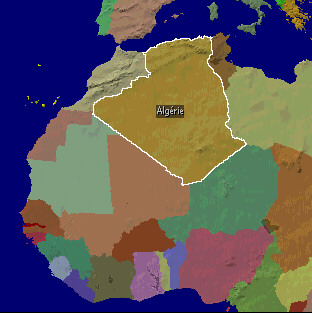
Sur le plan musical, l'Algérie est réputée pour son riche répertoire. Plusieurs styles de musique son inclus : classique arabo-andalou algérienne, le Chaâbi, le Rai qui est originaire de l'Oranie, la musique kabyle, la musique moderne comme le rock, le rap ou la musique diwane. Il se distingue également par la richesse linguistique de son répertoire mêlant arabe classique, arabe algérien, le français et l'amazigh (dites berbères) telle que kabyle, chaoui, touareg, etc.
  
 read it all here
and forget the English Wiki page


source & more to read


Freedom starts in your mind.
  
~♥~

18.2.12

Postcard from Crete

Don't be late...

  
Carnivals of Brazil
Rio, Recife, Bahia
1992

Tracks:

01. Ecole De Samba-Batucada-Rio
02. Ecole De Samba-Chant-Rio
03. Ecole De Samba-Batucada & Chant-Rio
04. Ecole De Samba-Batucada-Ambiance-Rio
05. Makulele-Danse-Bahia
06. Candomble-Tambours-Bahia
07. Capoeira-Danse-Bahia
08. Samba De Rocla-Danse-Bahia
09. Marakatu-Tambours-Recife
10. Caboclinhos-Dance-Recife
11. Ecole De Samba-Ranchos-Recife
12. Ursos- Danse- Recife
  
♫☆`*♥¸¸.•*¨*•♫☆`*♥¸¸.•*¨*•☆♫

.ღ•:*´♥`*:•ღ.

♫☆`*♥¸¸.•*¨*•☆♫`*♥¸¸.•*¨*•☆♫
    
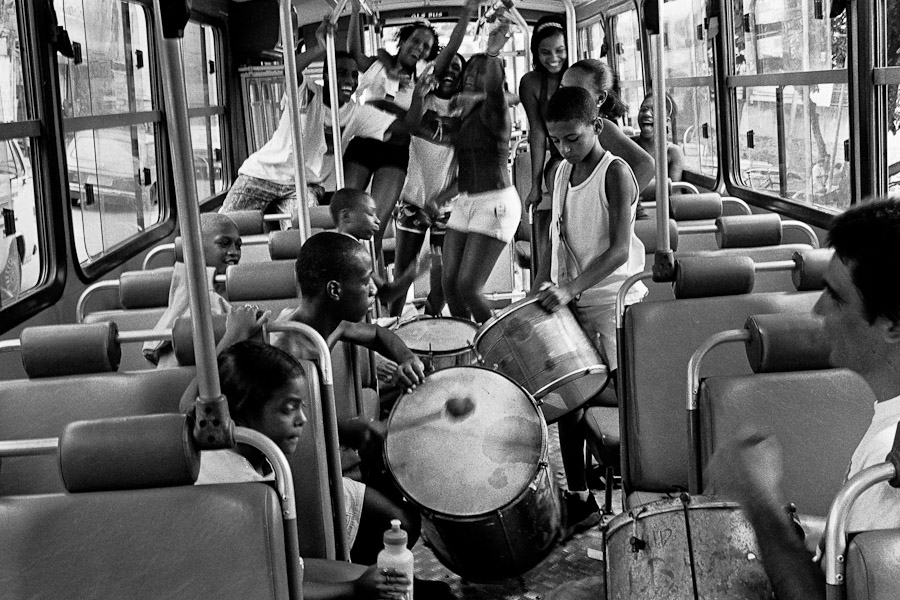
Get ready for Brazil Carnival. Rio de Janeiro is the mother of all Carnival celebrations in Brazil. But there's also much fun in the streets of Recife and Olinda. Decide to follow one of the Trio Eletricos in Salvador de Bahia and you will have a blast. What about Sao Paulo with its every year more popular...

This is recorded live on the streets of these 3 carnival sites, as you can well tell. Although the sound quality sometimes sounds more like an ocean wave than a samba ensemble, you can feel the pulse of the music and the excitement. Hard to get more real than this. Comes complete with whistles, bull horns, and random voices passing the microphone's path.


28.1.12

freedomblues

freedom, democracy, (...)
the blues...

(...)

Musica para guitarras y charango

  
Quique Sinesi
Cuentos de un pueblo escondido
2005

Tracks:

01. Voces Tempranas: Cuentos, Pt. 1/Das Canciones Para Augusto (2:04)
02. Candombe del Arco Iris (2:55)
03. Canción Hacia Vos (3:26)
04. Tormenta de Ilusión: Cuentos, Pt. 2 (1:37)
05. Contramarea (5:39)
06. Espacio (2:58)
07. Dos Soles (4:38)
08. Despertando de Otro Sueño: Cuentos, Pt. 3 (1:31)
09. Yorugua (3:12)
10. Imágenes Naturales (4:36)
11. El Abrazo (4:57)
12. Alta Paz (5:30)
13. Terruño (3:31)
14. El Colibrí Entre Suspiros: Cuentos, Pt. 4 (2:51)
15. Manantial de Luz (2:25)
16. Berliner Tanguísmos (2:06)
17. Llama Viva (3:23)

Todas las composiciones son de  Quique Sinesi

Quique Sinesi:

Charanga en temas 1,4,8 y 14
Guitarra Española de 7 cuerdas en temas 2, 3, 5, 7, 10, 11, 13 y 16
Guitarra Piccolo en temas 12 y 17
Guitarra acústica en temas 6, 9 y 15

Grabado en Colonia, Alemania en el año 2001
  
♫☆`*♥¸¸.•*¨*•♫☆`*♥¸¸.•*¨*•☆♫

.ღ•:*´♥`*:•ღ.

♫☆`*♥¸¸.•*¨*•☆♫`*♥¸¸.•*¨*•☆♫
   
(...) The music of Quique Sinesi emerges from the very roots of our traditional music. A popular genre that Sinesi rewrites and expands with new concepts and styles, exploring the borders between indigenous tradition and global modernity (...)´.

Cuentos de un Pueblo Escondido is a recording of Sinesi ´pure´ - he performs alone his original works making use of Argentine urban rhythms and combining his jazz improvisation with classical virtuosity. (...)
  
***
  
Quique Sinesi was born in Buenos Aires, Argentina in 1960.

He is considered one of the most important guitarrists in Argentina for his personal style, his music is based in elements of Tango and Folclore from his country and rhythms from “Rio de la Plata” like Candombe, incorporating elements of jazz, improvisation, classic and world music, using 7 strings Spanish Guitar, Piccolo, Acoustic and Charango.

He played for years with the bandoneonist Dino Saluzzi and founded the group Alfombra Mágica with Matias Gonzalez and Horacio López. Some other musicians with whom he has played or recorded are: Enrico Rava, Pedro Aznar, Ruben Rada, Paquito de Rivera, Joe Lovano, Markus Stockhausen, Erling Kroner, Wolfgang Haffner, Marcelo Moguilevsky, Michael Forman, Carlos Aguirre, Juan Falú, Karnataka College of Percusion, Dieter Ilg, Jasper Van Hof, Nazim, Daniel Messina, Pablo Ziegler Quintet, to name just a few.

Since 1999 he has played in a regular duo with the legendary saxophonist Charlie Mariano, recording the CD “Tango para Charlie” (enja).

In the year 2000 he started the project “New Tango Duo” with Pablo Ziegler (former pianist of Astor Piazolla) and both invited Walter Castro to join them as special permanent guest.

As soloist he has recorded several CDs and has played in many important international Guitar Festivals. In 2003 he recorded as soloist the Double Concert for Guitar and Bandoneon from Astor Piazzolla with Lothar Henzel and the Symphonic Orchestra from Deutschland Radio Berlin.
With different projects he played in several countries: Argentina, Uruguay, Brasil, Bolivia, Chile, Colombia, Mexico, U. S. A, Canada, Germany, Sweden, Denmark, Austria, Switzerland, Luxemburg, Spain, England, Greece, Croatia, The Netherlands, Croatia, Turkey, France

Quique Home


"One of the many joys of my recent visit in Buenos Aires was meeting and hearing Quique Sinesi. He became -instantly- one of my favorite guitarists." Jim Hall


17.1.12

All Aboard!

  
Arturo Sandoval & Y El Tren Latino
1995

Tracks:

01. Be-Bop     4:18    
02. La Guarapachanga     3:59    
03. A La P.P.     2:47    
04. Waheera     5:13    
05. I Can't Get Started     4:25    
06. MarteBelona     3:47    
07. Royal Poinciana     3:16    
08. The Latin Trane     5:15    
09. Candela (Yo Si Como Candela) / Quimbombo     4:50    
10. Drume Negrita     2:45    
11. Orula     6:01    
12. I Can't Get Started (Instrumental)     4:25 
  
Personnel:

Arturo Sandoval (trumpet, flugelhorn, piano, percussion); Celia Cruz, Oscar D'Leon, Luis Enrique, Joe Williams (vocals); Kenny Anderson, Ed Calle (saxophone, flute); Dana Teboe (trombone); Otmaro Ruiz (piano); Rene Toledo (guitar); David Enos (bass); Aaron Serfaty (drums); Manuel "Egui" Castrillo, Luis Henrique, Edwin Bonilla (percussion); Vicente Rojas, Laura Pifferver, Cheito Quinones (background vocals).
  
♫☆`*♥¸¸.•*¨*•♫☆`*♥¸¸.•*¨*•☆♫
        
        
♫☆`*♥¸¸.•*¨*•☆♫`*♥¸¸.•*¨*•☆♫
  
Trumpet Player Arturo Sandoval of Hidden Hills, California was born on November 6, 1949, in Artemisa, a small town east of Havana in the Pinar Del Río province, home of Cuba's finest tobacco growing region, the Vuelta Abajo. Arturo's family was poor, existing on an income from his father's mechanics business. By the age of six, Arturo had a strong desire to be a musician.

Arturo began playing the congas and put together a mini-circus act with a cat on a high wire. He charged the neighborhood kids a penny to see his show. When his village organized an orchestra for local events, he joined and tried out a bunch of instruments, including the trombone, bass drum and the flute, which he didn't like because it made him dizzy. Arturo started looking at the trumpet and decided that's what he wanted to play.

The band didn't have an extra trumpet, and the family had no money to buy one; however, his Aunt bought him a Cornet. Arturo states that he started to blow the cornet and just figured it out. Arturo sought out a respected local trumpet player for some training and was rebuffed and told not to waste his time. Arturo left that meeting in tears but more determined than ever.

Amazingly, Arturo never received formal trumpet lessons. He played and practiced, but that was it. One day in 1963, Arturo saw a flyer for a scholarship program offering classical music training at the National School of Arts. He applied, and secretly went to Pinar Del Río for an aptitude exam that was mostly gauged to test his musical ear. When the telegram arrived with his acceptance, he announced to his parents that he was going to go to Havana to become a full-time musician. Arturo continued his education and musical training until he was about 16, when the government formed a big band, known as the Cuban Orchestra of Modern Music. The first trumpet in the national symphony, Luis Escalante, also was chosen as lead trumpet in the big band. The announcement energized Arturo, who had begun to chafe under the restrictions that he could only play classical music at the school. "I was dying to meet Luis Escalante," says Arturo. Escalante's hobby was fixing cars, and because of Arturo's experience helping his father, he established a connection with the vaunted trumpeter. They became friends, and finally Arturo told Escalante that he was a trumpet player, too. They started playing duets, and one day, Escalante asked if Arturo would like to take his place in the big band group. "I was speechless," Arturo says. "I told him they wouldn't let me play." But after Escalante intervened, the young Sandoval became the last chair in the trumpet section. Three years later, at the age of 20, he became the first trumpet in the orchestra, which in big band parlance meant he really became the band's leader...

read it all here


1.1.12

Bandurrias in Kawaguchi

  
Orquesta de Plectro de Córdoba
Concierto Kawaguchi
2003

Tracks:

01. Intro
02. El baile de Luis Alonso
03. Canción bohemia
04. Popourri de Aires Andalucez
05. Sevillanas del siglo XVIII
06. Danza ritual del fuego
07. La boda de Luis Alonso
08. Orgía
09. Sakura
10. Intro II
11. Canción de la playa
12. España cañí
 
☆`*♥¸¸.•*¨*•☆`*♥¸¸.•*¨*•☆
        
        
☆`*♥¸¸.•*¨*•☆`*♥¸¸.•*¨*•☆
 
Bandurria
  
The bandurria is a plectrum chordophone from Spain, similar to the cittern and the mandolin, primarily used in Spanish folk music.

Prior to the 18th century, the bandurria had a round back, similar or related to the mandore. It had become a flat-backed instrument by the 18th century, with five double courses of strings, tuned in fourths. The original bandurrias of the Medieval period had three strings. During the Renaissance they gained a fourth string. During the Baroque period the bandurria had 10 strings (5 pairs). The modern bandurria has 12 strings (6 pairs). The strings are tuned in unison pairs, going up in fourths from the low G#. The lowest four strings are a major-third above those of a standard guitar and the highest two strings are a fourth above a standard guitar, ie G♯, c♯, f♯, b, e and a.
 
   
Orquesta de Plectro de Córdoba
 
Orquesta de Plectro de Córdoba is an association of thirty young musicians whose sole purpose is to enjoy making music.

What makes this Orchestra different is that it has successfully fused classical music, popular nationalist and popular music with instruments of their land, resulting in a very special timbre that is attractive to all kind of ears. In their desire to make music it is a priority to rescue the unjustly neglected works and authors that have gone unnoticed in the history of music.
   
   
The Bandurria (mandolin) is the instrument that gives its name to the family, because when we speak Spanish lutes we refer to the entire group of ibises, ie, soprano mandolin, mandola contralto, tenor mandolin, mandola mandolin low bass, but are popularly other names, such as bandurrín, lute, Laudon, on lute, etc.., reserving the term mandolin, soprano exclusively for the instrument.

We find the term "Mandura" Provencal language "mandoire" in French. The two appear to be derived, according to John Joseph King and Antonio Navarro from the Sumerian "pan-tur" through the Greek "pandurion" and the Latin "pandura." However, in "The Book of Good Love" from Arciprestre de Hita (fourteenth century), which first appears in a literary text the word "lute", citing as an instrument instruments that already has some tradition.

Today, after having gone through different shapes and sizes throughout history, we can draw such a small instrument with sounding pear profile, tapas and a mast parallel fretted, through which the cords extend (six distributed in pairs), topped with a peg, needing to execute a plectrum or pick. It is therefore an instrument belonging to the category of compounds stringed instruments.

The mandolin in the s. XX, is becoming an essential tool in the folklore of some Spanish regions, and appears also quite often in the Spanish lyrical genre, the Zarzuela.

translation-thanks-to-google
  
source of the music & the fotos - Gracias! 
  
hoping to have made the orchestra a little bit more known... : )

and one more time:
 
¡Feliz Navidad y Feliz Año Nuevo!
 
~♥ ~