19.7.12

Bouzouki and Greece

  
Vaggelis Korakakis
Where the wind goes out
1996

Tracks:

01. Memory and Sorrow (Vaggelis Korakakis) Ανάμνηση και πίκρα
02. Where the wind goes out (Gerasimos Andreatos)
03. The fate takes in early (Hara Pomoni)
04. The streets the doors (Gerasimos Andreatos)
05. Dawn me nights (Vaggelis Korakakis)
06. Tilt my eyes on earth (Hara Pomoni)
07. The Palioskaro (Vaggelis Korakakis)
08. Tangled confused (Hara Pomoni)
09. A glass drugs (Gerasimos Andreatos)
10. Who will extinguish the fire (Hara Pomoni)
11. You wont (Gerasimos Andreatos)
12. Night at my house To 'Rtheis (Niki Tsaireli)

Lyrics & Music: 

Vaggelis Korakakis

Singers:

Vaggelis Korakakis
Hara Pomoni
Gerasimos Andreatos
Niki Tsaireli

♫☆`*♥¸¸.•*¨*•♫☆`*♥¸¸.•*¨*•☆♫

.ღ•:*´♥`*:•ღ.

♫☆`*♥¸¸.•*¨*•☆♫`*♥¸¸.•*¨*•☆♫

Vaggelis Korakakis born in 1961 in Kaisariani.

His first contact with the bouzouki came at age 9 years old, across from where his family lived was a carpenter who was making and musical instruments. As characterized and says he: "I fell in love with a young child from the optical bouzouki! And the only thing I saw ... It was a great desire to get my bouzouki. Eventually my father got a Bouzouki from Omonia. After a Over the years, I learned on this bouzouki. "
The first bouzouki, stringed, was acquired at the age of 11 years.
The first album of Vaggelis Korakakis coming in 1985. This is the result of his meeting with lyricist Samartzi Tasos, who took the initiative and went to the Apostle Kaldara to get recommendations. So with the encouragement of the lyrics was released by the company LYRA, the album "In camps and ships", in which the Korakakis put music to 3 songs of Tassos Samartzi. The total of 12 songs on the album ermnineftikan by Kostas Antonopoulos. In 1988, on a proposal from the producer of LYRA, Aggelos Sfakianakis actually his first solo album titled, "The Lords".
In 1992 comes the "bouzouki with compass," and in 1993 the "Laurion" by the independent company LYRA, and they were the first step to becoming a Korakakis "considerable power", declared the producers Alex and Dimitri Vaki.


Oikeia sounds from the music scene of postwar folk song is the first impression associatively bring his songs V. Korakaki. Basismena the archetypal structures of Greek folk song without findings or innovations, the songs of this disc extending to the present day producing a musical style that has been abandoned by most composers before a couple decades. In this aesthetic effect, except for the melodies, orchestration helps the consistent and interpretative dimension Andreatou and Pomonis, and his voice is reminiscent due Korakaki timbres of M.Bamvakari on executions. Without having to present something special or extraordinary, this version keeps a level and I think fans will like kind. The CD accompanied by 16/selido elegant inlay-cover booklet with lyrics and reporting in rates.

Reviewed by: Nikos Dionysopoulos


Ανάμνηση και πίκρα

Φάληρο και Ελευσίνα/Πέραμα Σκαραμαγκά
επηγαίναμε για μπάνιο/όταν είμαστε παιδιά.
Τρώγαμε το μαριδάκι/απ' τα καθαρά νερά
δεν υπήρχανε φουγάρα/υπονόμοι και λοιπά.

Τώρα Αθήνα όλοι σε βρίζουν
δε σ' αγαπάνε και σε μισούν
γίνονται ανάμνηση οι ομορφιές σου
που τις γκρεμίζουν και ξεψυχούν

Το μικρό μπακαλικάκι/η ταβέρνα στη γωνιά
κι ο μανάβης με τη σούστα/γύριζε στη γειτονιά.
Τα βραδάκια οι μεγάλοι/τάβλι και κουτσομπολιά
κι εμείς τρέχαμε σαν ταύροι/μες στην τόση ξεγνοιασιά

Τώρα Αθήνα όλοι σε βρίζουν
δε σ' αγαπάνε και σε μισούν
γίνονται ανάμνηση οι ομορφιές σου
που τις γκρεμίζουν και ξεψυχούν

Τώρα ανάμνηση και πίκρα/νοσταλγία και οργή
όμως πουθενά δε βρήκα/της Αθήνας τη ζωή
Κρύβει τόσο μεγαλείο/κι αν πληγώνεται γελά
έχει ακόμα τόσες χάρες/και τον κόσμο κυβερνά


Memory and sorrow

Faliro and Eleusis, Perama Scaramanga (seashore outskirts of Athens)
we were going for swimming / when we are children.
and ate little smelts / from those clean waters
there were no stacks /or sewers and so on.

Now everyone  swears Athens
they don't love you anymore-they hate you
your  beauties  are just  remembrances
that they drag down and they die out .

The small shop / tavern on the corner
And the grocer with the clasp / going around the neighborhood.
in the evenings the older ones /with  backgammon and gossip
and we ran like bulls / so carefree

Now everyone  swears  Athens
they don't love you anymore-they hate you
your  beauties  are just  remembrances
that they drag down and they die out .

Now memories and bitterness / nostalgia and anger
but I didn't find anywhere / that life of Athens
that hides such a greatness  / even laughs  when it  hurts
with so many favors still / rules the world.

translation: Vasilis 


translations otherwise: gooogle : (


Ζήτω η  Ελλάδα ... long live Greece ...

 ~♥~

2.4.12

E lucevan le stelle

  
BENIAMINO GIGLI
Historical Recordings (1927-1951)

Tracks:

01. Giuseppe Verdi - Rigoletto, opera: Bella figlia dell'amore
02. Georges Bizet - Les Pêcheurs de perles, opera in 3 acts
03. George Frederick Handel - Serse (Xerxes), opera, HWV 40: Ronde tenere...Ombra mai fu
04. Gaetano Donizetti - L'Elisir d'amore, opera: Una furtiva lagrima
05. Ruggero Leoncavallo - I Pagliacci, opera: No, Pagliaccio non son!
06. Pietro Mascagni - Cavalleria rusticana, opera in 1 act: Mamma quel vino è generoso
07. Umberto Giordano - Andrea Chénier, opera: Sì fui soldato
08. Giacomo Puccini - Tosca, opera: E lucevan le stelle
09. Georges Bizet - Carmen, opéra-comique in 4 acts: Il fior che avevi a me
10. Giuseppe Verdi - Aida, opera: Se quel querrier...Celeste Aïda
11. Giacomo Puccini - La bohème, opera: O soave fanciulla
12. Wolfgang Amadeus Mozart - Don Giovanni, opera, K. 527: Il mio tesoro intanto
13. Giuseppe Verdi - Il Trovatore, opera: Di quella pira
14. Giuseppe Verdi - La forza del destino, opera: La vita è inferno all'infinito
15. Giuseppe Verdi - La forza del destino, opera: O tu che in seno agli angeli
16. Umberto Giordano - Andrea Chénier, opera: Come un bel dì maggio
17. Fromental Halévy - La Juive, opera: Rachel, quand du seigneur
18. Jules Massenet - Werther, opera: Ah! Non mi ridestar

♫☆`*♥¸¸.•*¨*•♫☆`*♥¸¸.•*¨*•☆♫

.ღ•:*´♥`*:•ღ.

♫☆`*♥¸¸.•*¨*•☆♫`*♥¸¸.•*¨*•☆♫


BENIAMINO GIGLI (1890-1957)   

In a certain way, Beniamino Gigli became a victim of La forza del destino (The force of destiny), or perhaps one ought to say: of his ambitions. After his brilliant American debut at the Metropolitan Opera in New York, he had sung there for twelve consecutive seasons in 28 different roles. As a result of the economic crisis however, the 'Met' was forced in 1932 to reduce all salaries and Gigli decided to return to his homeland Italy.

There he became a favourite of dictator Benito Mussolini. When World War II was over, the singer was criticized by a number of people in Italy and abroad for not having taken a stand against el duce. He was nevertheless allowed to sing in a Roman production of Tosca in 1945 and in La boh&me at Covent Garden. In London he came, he saw and he conquered, perhaps also as a result of the unusual casting: whereas Gigli himself played the Rodolfo part, that of Mimi was sung by his nineteen year old daughter Rina.

Beniamino Gigli was born on 20 March 1890 in Recanati as the son of a shoemaker. Like many Italian singers he began his career singing in the church choir; being seven years of age he entered the choir of the Recanati Cathedral where his father was also the sacristan. The young Gigli was taught initially by the local teacher, Quirino Lazzarini, and later by Antonio Cotogni and Enrico Rosati. He made his debut in 1914 with Ponchielli's La gioconda, after he had won an international competition in Parma. The jury seems to have been quite impressed, as can be read in a report by one of its members, the famous tenor Alessandro Bonci. In addition to the usual information regarding the candidate's age, appearance ('good'), intensity of voice ('strong, tenor, lirico-spinto'l, timbre ('appealing, warm'), intonation ('optimal') and interpretation ('warm expressive, very effective'), Bonci added the remark: 'Finally we have found a tenor'.

After several engagements in Italian theatres, Gigli performed in Spain, France and Germany, before he made his debut at the Milanese Scala in 1918. The next two years saw his first successes in South-America and his debut at the 'Met'. There he was considered to be the heir to Caruso, who at that time had stopped performing; Gigli sang several roles, but excelled in the veristic opera and in the French tragedy lirique. As is stated above, he shifted his attention to Europe after 1932, although he incidentally returned to the 'Met', namely in 1938 and 1939.

Throughout his life, Gigli toured the world and he appeared in operas as late as 1953. He gave his last concert two years later and retired to the country, near his native Recanati. There he could look back, not only on his operatic career, but also on the several movies he had appeared in. In addition to his dramatic activities, the great tenor also wrote two autobiographies, titled Confidenze (1943) and Memorie (1957). Beniamino Gigli died on 30 November 1957 in Rome.

A lot of Gigli's career is documented in the numerous gramophone recordings he made: especially his recording of arias from Les pecheurs de perles, L'elisir d'amore, Andrea Chenier and La forza del destino have been praised by many. Several critics considered him to be the golden voice of the twentieth century.

Frits de Haen
  
listen... just listen...

wiki
  
~♥~

25.3.12

What the hell else do you want?

   
Jim Hall - Live!
1975

Tracks:

01. Angel Eyes (Dennis-Brent)
02. 'Round Midnight (Monk-Williams-Hanighen)
03. Scrapple from the Apple (Parker)
04. The Way You Look Tonight (Kern-Fields)
05. I Hear a Rhapsody (Baker-Fragos-Gasparre)

Personnel:

Jim Hall (Guitar)
Don Thompson (Double Bass)
Terry Clarke (Drums)

Recorded live at Bourbon Street, Toronto, Canada in June 1975. (09/10/1975/09/11/1975).
Originally released on Horizon Records (705). 
  
♫☆`*♥¸¸.•*¨*•♫☆`*♥¸¸.•*¨*•☆♫

.ღ•:*´♥`*:•ღ.

♫☆`*♥¸¸.•*¨*•☆♫`*♥¸¸.•*¨*•☆♫
    
This was the first Jim Hall album I bought many years ago - I still think it's one of his best - and I've waited many years for it to be released on cd. Jim Hall is now in his early 70's. Hall is frequently listed as a major influence on the large number of jazz guitarists a generation younger than him, including Pat Metheny, Bill Frisell, John Scofield, Mick Goodrick and Mike Stern.

This recording catches Hall in his prime with many lengthy solos; something you don't often hear from him. It's from a 1975 club date with Don Thompson on bass and Terry Clarke on drums. The record starts with a lengthy version of the minor key standard Angel Eyes. Halls improvising is exploratory and inventive - you never feel that he's falling back on cliches or familiar patterns. His solos are frequently chord and rhythm based rather than just single note phrases for verse after verse. He keeps flashiness to a minimum but his playing is complex. Scrapple From the Apple, the Charlie Parker bebop tune, is also of note. Hall veers away from a typical bebop solo and works with dynamics; contrasting single note versus chord phrases and moving from a duet section with Clarke to the full trio again.

This should be "required" listening for any student of jazz guitar but will also be rewarding for all lovers of jazz. ~ Amazon
  
***
  This is in my opinion his greatest recording (I have every other one as well). First, it's a live recording and it has a freshness and spontaneity that is sometimes missing in studio recordings. Hall's playing is relaxed but incredibly sophisticated. He works these standards in subtle and clever ways. His lines/solos are melodic and story-like, but gently push the outer edge. Rhythmically there's pushing forward and holding back in ways that excite and engage the listener. This is subtle stuff, and it can be listened to for years while still discovering new elements and nuances. Much of the album's success is due to interplay between the three musicians (Don Thompson on bass and Terry Clarke on drums). They are all equal players, not just a rhythm section with a soloist. Don Thompson, in particular, is almost like a guitar player playing duets with Hall. The feel of the trio reminds me of Bill Evans w/ Scott LaFaro and Paul Motian. I very much wish Mr. Hall would play more often in this sort of context. ~ Amazon

***

For young musicians interested in playing jazz what do you say to them?

What I usually say is a long distance quote from John Lewis. John had this School for jazz at the end of summer for three weeks up in Lenox Massachusetts. At the end of one three week session he was talking to the graduates and a couple of guys asked if there were any gigs out there? John said: "Wait, wait, you got it backwards."

What he was saying was that music gives you so much already. What the hell else do you want? This is your reward right here just being involved. And it is really just stunning what you can get out of music. It's unique; it's yours and its something to be cherished. Making a living is an added bonus occasionally, but I think you already have quite a bit if you can play. . ..


~♥~

9.3.12

break...

  
I'll take a break...

I'll have a think or two...

take care...

See U...


1.3.12

Eureka :- )


Κώστας Μουντάκης
 Kostas Mountakis
I Kriti tou Kosta Mountaki - 45" records

Tracks:

     
CD1

01. Tin tihi ti dokimasa (Kostas Mountakis-Ermina Nikoladaki)
02. Eharisa ta niata mou
03. O ponos o dikos mou
04. Rethemniana mou kimata
05. Pote tha kani xasteria
06. Tou kouzoulou to fesi
07. Tou kosmou i katakravgi
08. Rethemniotikos sirtos
09. I pantermi xenitia
10. Palies anamnisis
11. Onte peraso ke me dis
12. Sirtos Apokoronou
13. Sti gitonia mas idane
14. Apo ton Agio Mina
15. Ego eho tin kardia sou
16. Kontilies Milopotamitikes
17. Kritiko pentozali

CD2

01. Glikoharazi avgerinos
02. Dos mou apo ta hili sou krasi
03. Saranta hronia
04. Sousta Rethimnis
05. Tis akrogialias neraida
06. Malevisiotikos pidihtos horos
07. Mi me rotate an agapo
08. Kastro kai poune i pirgi sou
09. Kritikopoula mou
10. Ke na me sfaxis den pono
11. Variitero anastenagmo
12. Eftase o ponos stin kardia
13. Iha mia mikri agapi
14. Exomologisis (Kostas Mountakis-Stavrakakis)
15. Na zitianevo ti hara (Kostas Mountaksi-Stavrakakis)
16. Sirtos Rethemniotikos
  
♫☆`*♥¸¸.•*¨*•♫☆`*♥¸¸.•*¨*•☆♫

.ღ•:*´♥`*:•ღ.

♫☆`*♥¸¸.•*¨*•☆♫`*♥¸¸.•*¨*•☆♫
   
Kostas Mountakis (Greek: Κώστας Μουντάκης, a.k.a. Μουντόκωστας) (10 February 1926, Alfa in Milopotamos, Rethymno Prefecture – 31 January 1991) was a Greek musician who popularized the traditional music of the island of Crete, primarily with the lyra, the bowed string instrument of Crete and most popular surviving form of the medieval Byzantine lyra. His parents came from the village Kallikratis in Sfakia, Crete. His older brother Nikistratos was playing the lira and so did Mitsos Kaffatos - one of the best musicians in Rethymno at that time - who was to become Kostas’ tutor.

When the German military occupation of Crete started, Kostas Mountakis was 15 years old. In those days, he played his lira and sang at the village coffee shop, and later at wedding receptions.

In 1952, Kostas Mountakis participated for the first time in an album recording when he accompanied Stelios Koutsourelis at the song “Arpaxsa kai Baildisa”. In 1954, he recorded his first personal album accompanied by the Koutsourelis brothers with the all time classics “De thelo stin kardia”, “O pramateutis”, “O argaleios”, “Milonades kai mazoxtres”, “Sto stadio pou m’efere”, “Rethemniane mou kantife”, “Harami sou”, Erotokritos”, “Kritikos Gamos”, “H mahi tis Kritis”, “O thanatos tou lirari”. These songs are a small sample of his music.

Kostas Mountakis played an important and vital role to the popularization of the lyra as well as to the formation of its teaching methods. His overall contribution to the musical tradition of Crete is very important.
 
  
Kostas Mountakis 1926-1981

“Birds, take my pain and sing it to the world!”

Kosta Mountakis often used to say that an artist should continuously practice. How can today's players practice, however, when there are but few points of reference? How, when the greatest and most inspired pieces of music, such as those by Kostas Mountakis, are almost entirely absent from the catalogues of today's recording industry.

This situation has presented "Seistro" music publications with a special challenge, which is none other than to issue a complete collection of this great artist's work aimed primarily at young artists as well as at its natural audience: the people who worshipped him.

It was during the fall of 2001 that discussions began, in both Crete and Athens, with Manos Mountakis (K.Mountakis' son) laying the foundations for the commencement of this work. Many fans and collectors of Kostis Mountakis' music, following the initiative of his son, contributed to the process of collecting archival material, interviews, rare recordings, photographs, and even narrations of striking and magical moments in the life of this exceptional musician.

This process would never have been possible without the assistance of a particular individual who has, for many years, played a unique role in the creation of an archive of recordings of Cretan Music: Giorgos Gongas. During his long residence in Athens, Cretan artists would always find "refuge" in his hospitable home. It was there that their final rehearsals before studio recordings would inevitably take place. These live recording sessions at the home of Giorgos Gongas, are indeed unique and constitute the primary source for this edition. Of special importance also were the recordings from radio programs, unreleased recordings, as well as recordings from concerts in London, all of which were put at our disposal by Manos Mountakis. Valuable material was also obtained from local radio stations, events in honor of Kostas Mountakis, festivals, weddings, as well as from various other performances, such as those at the theatre Nikos Kazantzakis in Iraklio which were generously provided by various individuals.

Of great importance also was a visit to Estavromeno, to the home and school of Kostas Mountakis, where his son Manos, his student (and now teacher himself), Giorgos Skoutelis, and the music historian-musicologist Anna-Maria Giannakodimou presented us with a wealth of unique documents from the archives of Kostas Mountakis himself.

Resulting, having gathered all of the necessary material reflecting the life and work of Kostas Mountakis, we began in February 2002, the process of sorting and selection. The sheer amount of material at our disposal was such that we were obliged to make a careful selection which would be suitable for this edition. It was also necessary to ascertain the exact time and location of each recording, as well as the identity of each of the accompanying musicians. It was also very important to chose the recordings which best reflect the best moments and the particular atmosaphere of Mountakis’ unique playing. In this respect, I hope that we have managed to bring about the best possible result.

Once, when Kostas Mountakis was asked how he sees Cretan Music, he answered in the following words: «Whatever begins with the criterion, and basic motive of material gain, without having any real feeling , can never be successful, it will never realize its full potential. Music is not made to order, it isn’t just executed, whenever you try and contain it within specific boundaries, to limit it, to play just to make a living, for example, it will never achieve its potential grandeur.It must always rest on feeling because maintaining the tradition means treating it as a passion, as something which inspires deep feelings, not seeing it as merely a profession. When you treat music in this way only then can you progress. We have such richness in our tradition, rhythms, poetry, great strength. Let’s look at our tradition from the point of view of what we can offer and not what we can gain, what can we leave behind us for others

We are now in the very fortunate position to be able to share with you this effort, to listen, to celebrate together with the great Master himself, Kostas Mountakis.

Michael Aerakis

Support Greece, Greek music, Greek artists...

buy your music 


...no money to I-shareholders... ; )

   
and last but not least:

Thanks
  
to you
  
for making me listen!

: )

29.2.12

Guitar, Bass &

   
Jimmy Giuffre & Jim Hall
Featuring Ralph Peña
The Original Trio


Tracks:

01. Gotta Dance
02. Two Kinds Of Blues
03. Song Is You
04. Crazy She Calls Me
05. Voodoo
06. My All
07. That's The Way It Is
08. Crawdad Suite
09. Train And The River
10. Four Brothers
11. Gotta Dance
12. Two Kinds Of Blues

Bonus Tracks*:

13. Train And The River
14. Train And The River

Personnel:
  
Jimmy Giuffre (cl, ts, bs)
Jim Hall (g)
Ralph Peña, Jim Atlas* (b)
 
♫☆`*♥¸¸.•*¨*•♫☆`*♥¸¸.•*¨*•☆♫

.ღ•:*´♥`*:•ღ.

♫☆`*♥¸¸.•*¨*•☆♫`*♥¸¸.•*¨*•☆♫

you can buy it here : )

Innovative stuff from the first Jimmy Giuffre trio, an unusual line-up of guitar and bass with Giuffre alternating between sax and clarinet, happy to dispense with a drummer and rely on an implied rhythm supplied by collective musicianship.

Studio sessions from 1956/57 are augmented with recordings from the “Stars of Jazz” and “The Sound of Jazz” TV shows, including a second version of Giuffre’s most famous tune 'The Train and the River'. (Jim Atlas replaces Ralph Peña on bass on both cuts).

  
An expanded version of the first album to feature the Jimmy Giuffre trio – originally issued by Atlantic as The Jimmy Giuffre 3, but featuring additional bonus live tracks here! The core session is groundbreaking trio work from Giuffre – an album that cut loose both the piano and the drums – in a way that took Gerry Mulligan's earlier rhythm-less experiments with jazz, and pushed them one degree further! The group on the session features Giuffre on clarinet, tenor, and baritone sax – alongside the guitar of Jim Hall and bass of Ralph Pena – all working together with no other accompaniment, but in a way that's as swinging as it is airy – an amazing exercise in tone, color, and control! The sound is out of this world, and the notes just hang lightly in air – beautifully dancing around one another.
© 1996-2012, Dusty Groove America, Inc.


27.2.12

Gasba

  
Afrah
L’art de la Gasba
2009

Tracks:

01. Mawwal À La Gasba     2:38
02. Mawwal Tsersim - Gasba Et Voix     4:56
03. Eddiouni Littabib (Emmenez - Moi Chez Le Médecin)     5:10
04. Essakra (L'ivresse)     5:25
05. Mawwal Gasba Et Voix     4:59
06. Rani Mashour (Je Suis Ensorcelé)     4:22
07. Ma Nzidchi Nesker (Plus Jamais Je Ne Boirai)     5:06
08. Ala Lazreg Rani Habla (Je Suis Folle D'Un Homme Noir)     5:07
09. Ensaini (Oublie-Moi)     5:12
10. Mawwal À La Gasba (Alternate Version)     1:41

Afrah - Mpihira

Majyd SOUILAH :vocals, direction
Mohamed EL HAYANI : gasba (flûte)
Mohamed SEHLI : gasba (flûte)
Mohamed ben Khelifa BELAOUD : bendir
Khalid KEROUMI : bendir
  
♫☆`*♥¸¸.•*¨*•♫☆`*♥¸¸.•*¨*•☆♫

.ღ•:*´♥`*:•ღ.

♫☆`*♥¸¸.•*¨*•☆♫`*♥¸¸.•*¨*•☆♫
  
 Afrah's second album, recorded during a tour in France, the Art of Gasba wants to be more intimate than their first album. Indeed, this album focuses Gasba, the flute from Maghreb, and envelops us with plush atmosphere that leaves its place to the expression of poetic talents of the troupe.

Coming from Outat El Haj, Afrah's musicians have learned music during their adolescence, from Mohamed El Hayani , a village elder, known for his knowledge. Relationships between musicians and the teacher are quite atypical compared to the Moroccan traditions on those subjects, which is usually structured around a relation between a master and students. Indeed, members of the band show Mohamed El Hayani as their «artistic advisor», and they nourish with him very egalitarian relations, although marked with a deep respect.

Afrah's songs, poems and music, come from the popular heritage. These are mainly love or seduction songs, sometimes audacious ones, but they can also talk about the life conditions of the peasant and of the popular classes. Songs can also touch to political themes, or topics inspired by actualities, like emigration, poverty, solidarity... In the Mawwal (improvised songs, accompagnied by Gasba alone), for example, singer often refers to local or international actualities, or even to the context of the concert.

Afrah's music is very representative from peasant music in the Arabic Maghreb; it's possible to recognize some of their rythmes and their melodies in the rural areas of Algeria and Tunisia. The dance takes an important place, due to the dancers who command to the percussionists the rythmic variations, contributing thereby to the music's quality by their dance's quality.

get the 2 albums here


~♥~

23.2.12

Étoile Du Raï

   
شابة فضيلة
Fadela
1986/1987

Tracks:

A1 - N'Sel Fik
A2 - Nebki Ouahdi
A3 - Ateni Bniti (Part 1)

B1 - Ateni Bniti (Part 2)   
B2 - Ha-Liya–Ouana Alach
B3 - Dja Yadhak
  
♫☆`*♥¸¸.•*¨*•♫☆`*♥¸¸.•*¨*•☆♫

.ღ•:*´♥`*:•ღ.

♫☆`*♥¸¸.•*¨*•☆♫`*♥¸¸.•*¨*•☆♫
  
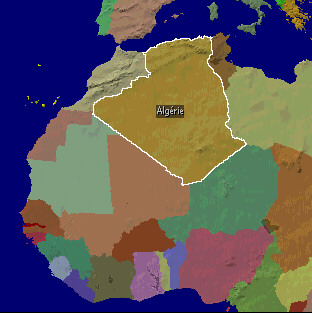
Rai, the popular music of Algeria, developed in the harbor city of Oran. In the late 1970’s, the more modern Pop-Rai movement followed and produced Cheba Fadela and her husband, Cheb Sahraoui, both of whom gained fame as Pop-Rai singers in Algeria.

Born in 1962 as Fadela Zalmat, Cheba Fadela grew up in a poor, formerly Jewish neighborhood, not far from the large city theater. At the age of fourteen, she played a role in the film "Djalti,” directed by Mohamed Ifticène and made her musical debut as a background singer in Boutiba S’ghir’s band. Her voice can also be heard on recordings by Rai singer Cheikha Djenia. Fadela’s nick name, "Remitti Sghira” (Little Remitti) followed as a result of the resemblance her potential career bore to that of famed Rai singer, Cheikha Remetti.

In the late seventies, Cheba Fadela was discovered by the legendary Rai producer, Rachid Baba Ahmed. Ahmed’s modern 24 track studio in Tlemcen was the power house that produced Algerian Pop-Rai. With his help, Fadela became one of the first stars of the new musical sound that appealed to a frustrated generation of Algerians. Thanks to the inexpensive cassette tape, Pop-Rai quickly achieved wide distribution. In contrast to the traditional Rai of the "Cheikhs” and "Cheikhas,” which was popular at the turn of the century in the bars and brothels of Oran, the new generation of Rai singers gave themselves the surname of "Cheb” or "Cheba,” meaning "the young.”

With the 1979 song "Ana Ma H’Lali Ennoun” (I don’t want to sleep), Fadela landed her first big hit. The recognition that she gained from that success catapulted her to even larger fame in 1983 with "N’Sel Fik” (You are mine), a song she recorded together with Mohammed Sahraoui. Their marriage immediately followed and the couple quickly became the dream pair of the Algerian music scene, always taking the stage together.

Like many other Algerian Rai singers, they emigrated to France in the late 1980’s to pursue a European career. When the first "world music wave” began there, Cheba Fadela and Cheb Sahraoui were at the center of attention. Their residence in Europe spared them the first-hand experience of the bloody civil war that rocked Algeria in the nineties. An attack by radical Muslims took the life of Rai singer Cheb Hasni in September of 1994. Famed Pop-Rai producer, Rachid Baba Ahmed, was murdered by "fanatics" during the same time period.

Unlike other stars of the Pop-Rai generation like Cheb Khaled, Cheba Fadela and Chab Sahraoui never achieved international success, largely because they relied too heavily on their success in Algeria. The couple separated both privately and professionally in the 1990’s.

In 2001, Cheb Sahraoui reappeared with "Un homme libre,” an album that reflects the sound of modern French commercial music. Nothing noteworthy has been reported of Cheba Fadela in recent years.


thanks for the music
  

Yes, yes this was my first Raï  lp... goose pimples... all over me...


~♥~


19.2.12

Liberté

  
Algérie
Les Plus Grands Artistes Algériens
2000

Tracks:

01. Matoub Lounès - Hymne a Boudiaf
02. Boukrif - Araw Idhourier
03. Cheikha Remitti - El Guellil
04. Raina Rai - Raïna Hak
05. Cherifa - Mabrouk el Farh
06. Dahmane - Erti Rahti
07. Hisnet Staifi - Yhama
08. Takfarinas - Youba Erreman
09. Yani - Sin Sin
10. Messaouda - Enta Ouna Lik
11. Hasni - Jaya Nedmana
12. Bachir Sahraoui - Wach Yenessi
13. Mohamed Kheznadji - Ledda Li Chorb Elachiya
14. Saloua - Sâadi Ya Sâadi
  
♫☆`*♥¸¸.•*¨*•♫☆`*♥¸¸.•*¨*•☆♫

.ღ•:*´♥`*:•ღ.

♫☆`*♥¸¸.•*¨*•☆♫`*♥¸¸.•*¨*•☆♫
  
Sur le plan musical, l'Algérie est réputée pour son riche répertoire. Plusieurs styles de musique son inclus : classique arabo-andalou algérienne, le Chaâbi, le Rai qui est originaire de l'Oranie, la musique kabyle, la musique moderne comme le rock, le rap ou la musique diwane. Il se distingue également par la richesse linguistique de son répertoire mêlant arabe classique, arabe algérien, le français et l'amazigh (dites berbères) telle que kabyle, chaoui, touareg, etc.
  
 read it all here
and forget the English Wiki page


source & more to read


Freedom starts in your mind.
  
~♥~

18.2.12

Postcard from Crete

Don't be late...

  
Carnivals of Brazil
Rio, Recife, Bahia
1992

Tracks:

01. Ecole De Samba-Batucada-Rio
02. Ecole De Samba-Chant-Rio
03. Ecole De Samba-Batucada & Chant-Rio
04. Ecole De Samba-Batucada-Ambiance-Rio
05. Makulele-Danse-Bahia
06. Candomble-Tambours-Bahia
07. Capoeira-Danse-Bahia
08. Samba De Rocla-Danse-Bahia
09. Marakatu-Tambours-Recife
10. Caboclinhos-Dance-Recife
11. Ecole De Samba-Ranchos-Recife
12. Ursos- Danse- Recife
  
♫☆`*♥¸¸.•*¨*•♫☆`*♥¸¸.•*¨*•☆♫

.ღ•:*´♥`*:•ღ.

♫☆`*♥¸¸.•*¨*•☆♫`*♥¸¸.•*¨*•☆♫
    
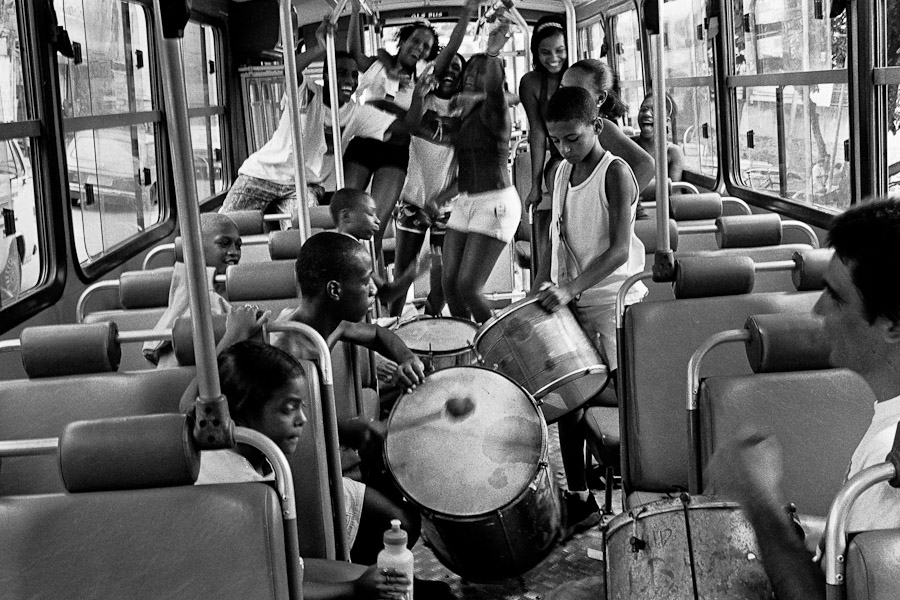
Get ready for Brazil Carnival. Rio de Janeiro is the mother of all Carnival celebrations in Brazil. But there's also much fun in the streets of Recife and Olinda. Decide to follow one of the Trio Eletricos in Salvador de Bahia and you will have a blast. What about Sao Paulo with its every year more popular...

This is recorded live on the streets of these 3 carnival sites, as you can well tell. Although the sound quality sometimes sounds more like an ocean wave than a samba ensemble, you can feel the pulse of the music and the excitement. Hard to get more real than this. Comes complete with whistles, bull horns, and random voices passing the microphone's path.