10.7.20

Padre e hija ... y música


Luis Kalaff Perez

This illustrious “maker of songs” was born on October 11, 1916 in Pimentel, Dominican Republic.

He first made his living as a carpenter and thus he made his first guitar, which soon led to his becoming an excellent guitarist, a talent he inherited from his mother who was a consummate guitar player. One day he fell deeply in love with his boss’ daughter and wrote for her his first song “Yo Vi Un Celaje” (I Saw A Sign).

He became so involved in singing and composing that his friends would worry: “He has a constant ‘heart to heart’ meeting with the muses”.

When his parents separated, together with his mother he moved to Bonao, where he pursued his musical passion and formed his first group. A second love led to his composing the now classical “Serenata De Amor” (Love Serenade). He loved to fall in love and compose beautiful songs for each new love. When juke boxes and 78 rpm disks became popular local musicians worried that the new technology would replace them, but Kalaff persisted in his art.

He formed the trio “Alegres Dominicanos” with Pablo Molina and Pedro Lapaix and soon signed a contract to perform in the radio stations “La Voz Del Tropico” and H.I.Z. When Lapaix left the trio Bienvenido Brens, another one of our great composers, took his place and together they created their best hits and performed in the historic radio station “La Voz del Yuna” where all the giants of the era played.

The trio then toured throughout the country charged with preserving their autochthonous rhythms. It is then that Don Luis composed “La Empaliza” one of his most emblematic works, which has been widely recorded, including a version by Julio Iglesias.

His creative genius is inexhaustible, he is always awake, in perpetual motion; his songs appear one after another and travel throughout the world carried by the best voices of the era, from Oscar de Leon to Celia Cruz among many, many of the biggest legendary names.

His tour of musical preservation through the inland small towns resulted in excellent works added to the country’s musical heritage, including the “mangulina” rhythm, with songs such as “Baitolin”, “Compay José”, “Compadre Cholo”, “Malao” and “Guayacanal”.

In 1956 the trio signed their first contract in Puerto Rico and in 1958 they moved to New York where he increased the size of his group and called it “Los Alegres Dominicanos” (The Happy Dominicans). Don Luis Kalaff’s artistic output is so vast that the list alone of his song titles, forms a splendid songbook: “Cuando vuelvas conmigo”, “Melancolía”, “Mi gloria”. “Acuérdate”, “Estoy a tu orden”, “Demasiado corazón”. “Olvídate de mí”, “Un corazón de acero”, “Amor sin esperanza”, “Voy a olvidarte”, “Aunque me cueste la vida”. “No tengo dinero”, “Al que me robó tu amor que le aproveche” and, of course, “Siempre hace falta una Mujer”.

Undoubtedly Don Luis Kalaff must have sworn eternal love to the love of his life: Music. At 93 he is still enveloped by the creative fire that only great artists have in their hearts. He has been a Peer composer since the early 50’s – probably one of the last surviving great composers. With over 700 songs to his credit, his works have been recorded by Julio Iglesias, La Lupe, Oscar d’Leon, Celia Cruz, Daniel Santos, Sergio Vargas, and Fernando Villalona among others – a living legend in his native Dominican Republic.


Lo ultimo de 
Luis Kalaff
1965

A1. El Merengue Del Cuentazo (Merengue)
A2. Yo Tranbajo En Eso (Merengue)
A3. Se Acabo Tu Juguetico (Bolero)
A4. La Viuda Cabrera (Merengue)
A5. Aunque Me Cueste La Vida (Bolero)
A6. La Pesadilla (Merengue)

B1. A La Orilla Del Rio (Merengue)
B2. l Telefono (Merengue)
B3. Acuerdate (Bolero)
B4. Ruque Que Te Ruque (Merengue)
B5. Yo Necesito Un Hombre (Bolero)
B6. Salve De Navidad (Merengue)

♫☆`*♥¸¸.•*¨*•♫☆`*♥¸¸.•*¨*•☆♫

.·.ღ•:*´♥`*:•ღ.·.

♫☆`*♥¸¸.•*¨*•☆♫`*♥¸¸.•*¨*•☆♫

*
*
*

25.4.20

A Better World ...


Amar El Achab
 Le Grand Maître Du Chaâbi Algérois

Amar El-Achab, the indisputable singer of the Chaâbi

The Algerian chaâbi is a traditional music from Algiers, formalized by El-Hadj M'Hamed El-Anka.
The Algerian chaâbi is a traditional music from Algiers, formalized by El-Hadj M'Hamed El-Anka. Appeared at the end of the 19th century, the Algerian chaabi is from La Casbah, inspired by the vocal traditions of Andalusian Arabic music. The word chaâbi means "popular" in dialectal Arabic. The themes sung are love, loss, exile, friendship and betrayal. The chaâbi is part of a deeply conservative tradition and its words often carry a very strong moral message.

The great masters of the “chouyoukh” chaâbi can be counted on the fingers of one hand, in this case Hadj El-Anka, Khélifa Belkacem, Hadj M'rizek, H'Sissen, Hadj Menouar, Cheikh El-Hasnaoui, Dahmane El -Harrachi, Hadj Boudjemaâ El-Ankis, Hadj Hachemi Guerouabi, Amar Ezzahi, Maâzouz Bouadjadj and Amar El-Achab, who was the last of the masters. We have chosen to pay tribute to him, in recognition of a great artist who marked the Algerian artistic scene.

Born on July 31, 1932 in Algiers, he was one of the figures of the Chaâbi song of the fifties and sixties, before leaving Algiers for France, where he still lives.

Young courier of a Belcourt dry-cleaner's, he kept humming songs. It is that at the time, he had a great fishmonger friend of his state, incidentally renowned conductor on the square, Mouloud Bahri, who had taken him in sympathy, because he is the first to have discovered with what talent Amar El-Achab gave pledges of his musical possibilities.

The singer's career was beginning. For a year, Amar played the derbouka, on the occasion of parties and weddings, acquiring the knowledge of his first master and the rudiments of a technique necessary for the exercise of the trade for which he intended. It was during this year that he learned Alla R'Soul El-Hadi, who was to be followed by Moulat Et-tadj. Therefore, invited in turn, he flies on his own wings and constantly improves in contact with Sheikh Namous and Sid Ali Snitra who gave him their advice. He was starting to make a name for himself. It was in 1952, when the radio asked him for a live broadcast of three quarters of an hour. Overcoming his stage fright, he sings. This is a decisive step for success, materialized fifteen days later by a second radio call which confronts him with the public in the company of the Skandrani orchestra. His interpretation of Brahim El-Khalil opens up new perspectives for him by making him aware of his own artistic value. Dounia, a prestigious publishing house, recorded him, in 783, on 78 T, a song, Mellah Ana Berkani, of which he is the author. Three years later, he signed, at Pathé Marconi, Ya Bélaredj, a title which he interpreted in the hawzi mode. The text, the author of which is unknown, is very successful and even arouses controversy because of its erotic substratum suggested by the refrain. The song will also be resumed with as much success by the great singer Fadèla Dziria, with whom Amar El-Achab befriends and for which he writes many songs. In 1966, always striving to improve, he decided to go learn music theory at the Conservatory. Lachab continues its breakthrough with songs remarkable by the pure verb, directly translating the evils of love and society, and their blues melodies on the bottom, dancing on the form. He who has a strong fondness for the Constantine malouf, the author of Ya laïm lech tloumni and Masbarni la Tihane opts for voluntary exile in France, in l976. He gave numerous concerts there and recorded, among others, a 33 T comprising six songs, including Qoulouli ya nais, Triq elli détni, Hiya eli trodni, and covers, Zoudj h'djoub, Sghier wana chibani. Lachab also has a good repertoire of short and rhythmic songs which he performs especially at weddings. His last recording on Algerian television dates from 1980. He has 33 recordings registered in the central nightclub of Algerian radio, but only a few on television. However, its discography is important, it includes more than sixty 45 T microgrooves and audit cassettes. Listening to his work reveals a penchant for the pure, classic, moralizing verb. What can we say about this man who was, in the general opinion of people of his generation, or even of his haulm, that he is one of the best Chaâbi singers. An artist who counted a lot and who made a huge contribution to Algerian song.

Amar El-Achab is perhaps relatively unknown on the part of the young generation, but his imprint is not about to die out, and his relative withdrawal from the music scene and his exile in France have not managed to fade this artist.

Amar El-Achab was and remains this distinguished and kind gentleman, a singer with a solid taste and an authentic servant of popular culture

K. A. A.


(google translation)


'Le Meilleur'
 1991

 Vol.01
01. Ya Rayeh El Ghali
02. Machi Ghir Enta Blak Rebbi
03. Trik Ennadjah
04. Mal El Hbib
05. El Faradjia
Vol. 02
01. Ellah yahdiq (Bellah aâlik el goumri)
02. Ya Raoui
03. Saâdi rit el bareh
04. Nakkar Lahsan
05. Behouak elaâbt
Vol.03
01. Enta laâziz
02. Ya Khir el Anam
03. Yallah el Fard
04. Doum Farhi
05. Lakitouha

 ♫☆`*♥¸¸.•*¨*•♫☆`*♥¸¸.•*¨*•☆♫

.·.ღ•:*´♥`*:•ღ.·.

♫☆`*♥¸¸.•*¨*•☆♫`*♥¸¸.•*¨*•☆♫

Listening again to his beautiful music I was blown away... to a better world...

Love & peace to all of you!

 -♥-

 -♥-

 -♥-

2.10.18

We Won't Forget You...

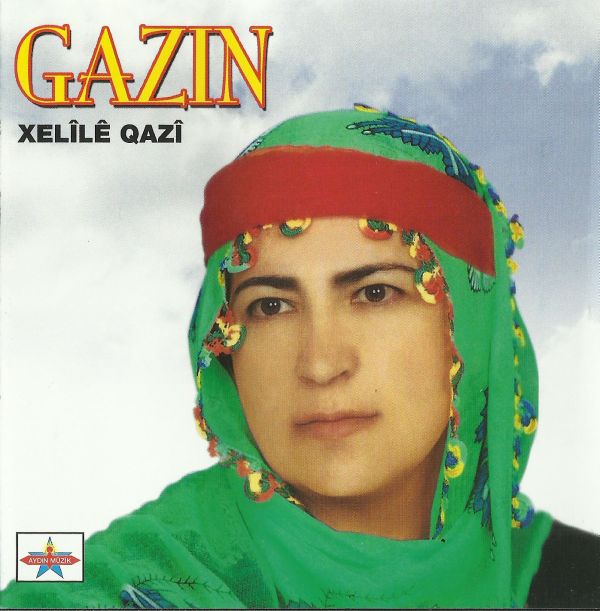
Dengbej Gazin

 Dengbej Gazin was a singer from Van in eastern Anatolia, she belongs to a tradition of storytelling through chanting. 

 Consider for example the case of Dengbêj Gazin. She was sentenced to one year in prison for singing two Kurdish songs in 2010 in Tatvan that were deemed by the state prosecution to constitute “propaganda for an illegal organization” (i.e. the PKK). She has moreover been tried for supposedly singing songs “with separatist content” at Newroz celebrations in the same year. After a series of appeals she was acquitted in both cases in 2013.

quoted from here.

and read some more here with the help google translate.

 Dengbej Gazin, who was considered to be Van's first female dengbegi, died this year.

Even without understanding a word you get a message : )

She won't be forgotten. 

 Gazın - Xelîlê Qazî
2007 

 
Tracks:

01. Ze Mende
02. Mendo
03. Avek Rabu
04. Hespe Me
05. Dilemin Loy Loy
06. Jı Me Weda
07. Siltane
08. Gul Sor Bune
09. Nabıri
10. Wele Nabe
11. Hey Bori
12. Xelile Qazi

 ♫☆`*♥¸¸.•*¨*•♫☆`*♥¸¸.•*¨*•☆♫

.·.ღ•:*´♥`*:•ღ.·.

♫☆`*♥¸¸.•*¨*•☆♫`*♥¸¸.•*¨*•☆♫

 Gülizar’s story brings people together

...

Güle’s continuing story

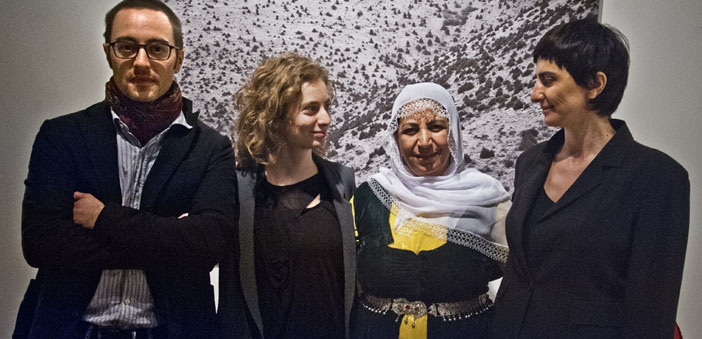
Barsaghian says that the lament brings women closer together, and creates a shared zone of resistance. It was also through this lament that she came to meet Dengbej Gazin. Gülizar plays a highly significant role in Dengbej Gazin’s life, and she performs Gülizar’s lament live during the performance titled ‘Güle Is Very Beautiful’ that was staged during the opening. Gazin says: “When I was little, my grandmother always used to sing Gülizar’s song. So for a very long time, I thought Güle was my grandmother’s name. And I thought Güle wrote it, about how she fell in love with a man. Only when I eventually asked her, ‘Grandmother, are you in love, why are you singing this song?’ did my grandmother tell me Güle’s story. I felt so bad and offended about it. I was so touched by it, that the first dengbej song I learned was Güle’s lament. I also named my daughter Güle.”

  
Because Gazin’s grandmother did not know the true ending of the story, Gazin did not know Gülizar managed to escape, and believed she had died of grief. So Gazin was shocked when she saw Meliné Ter Minassian, Gülizar’s granddaughter, before her. Gazin finally adds that male dengbejs add “all sorts of falsehoods” when reciting Güle’s lament: “Male dengbejs say that Güle went to Musa by her own will. So if you want the true story, listen to it from female dengbejs.”

‘I thought Gülizar was a much-loved woman’

At the opening, Arménouhie Kévonian’s granddaughter Meliné Ter Minassian, staged a performance titled ‘Güle is very Beautiful’ with Anna Barseghian and Dengbej Gazin. Ter Minassian stated that the performance represented not only her personal ties with Gülizar or Arménouhie Kévonian, but also the social memory related to them, and I asked her how Gülizar’s legendary story was known in the family: “Only one side of our family is Armenian. I was closer to that side of the family as a child, so my story is strongly connected to my grandmother Arménouhie, Gülizar’s daughter. We had a very close relationship. Arménouhie was a very happy woman, she was full of life, and she loved to dance, sang, and constantly made jokes… Other than that, everyone in the family was involved in politics, and that is why everything about Armenian identity seemed very heavy and serious to me when I was a child. Of course, back then I did not know what had happened to the Armenians, you are not told when you are a child. Even after I learned, Armenouhi always seemed a woman dancing with joy to me. She created the same impression when she talked about her mother Gülizar. Until I read ‘Gülizar’s Black Wedding’ I thought Gülizar was a much-loved woman; I had no idea about the stories of abduction, violence and rape. I read the book when I was 14, in a single night. I was shocked.


*
*
*

23.6.18

A House of living history...

  
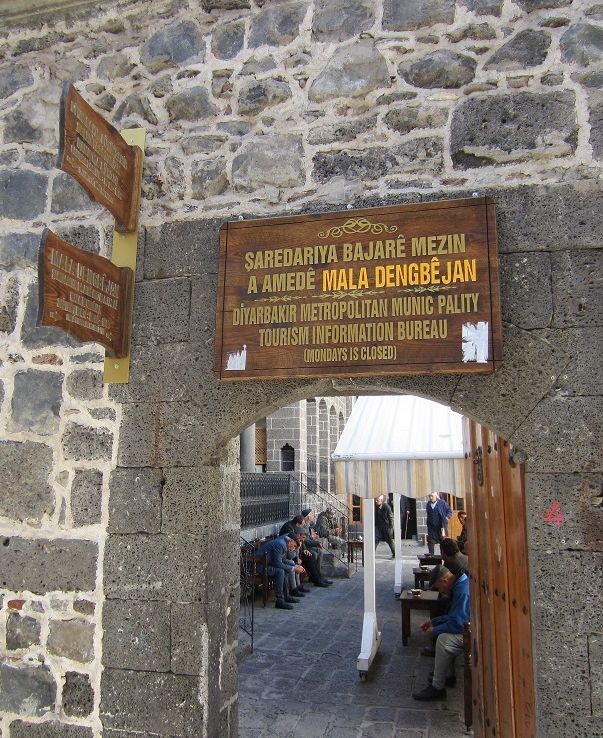
Mala Dengbêjan
Dengbêj House

   
Mala Dengbêjan 
Gewgewe

 Tracks:

01. Şex Mihemed Emin - Bira Rindo
02. Behiye - Dibe Mih
03. Dengbej Rostem - Dilbere
04. Şah İsmaile Milani - Lo Miro
05. Aşiq Memet - Gede Nezano
06. Dengbej Yusif - Gewgewe
07. Dengbej Silhedin - Xozan
08. Dengbej Tewfiq - Mete
09. Dengbej İzzet - Rizake Xelit

 ♫☆`*♥¸¸.•*¨*•♫☆`*♥¸¸.•*¨*•☆♫

.·.ღ•:*´♥`*:•ღ.·.

♫☆`*♥¸¸.•*¨*•☆♫`*♥¸¸.•*¨*•☆♫

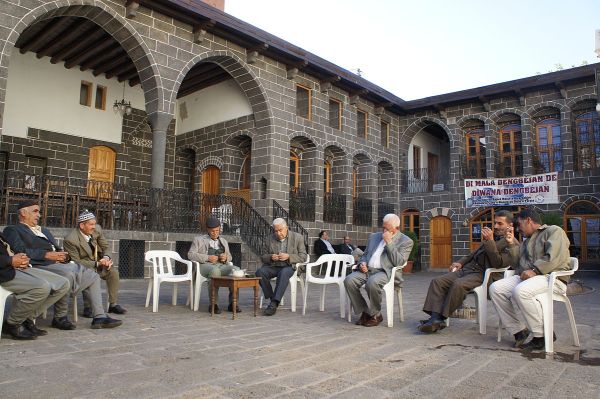
The house which is being using as Dengbêj House is an 100 years old historical Diyarbakir house. Two large rooms and a large courtyard of the house belongs to Dengbêj House. Because courtyard is cooler in summer, Dengbêjs use this site in the summer. Every day about 10-15 Dengbêjs visit Dengbêj House and sing; but some special times such as festivals number of Dengbêjs becomes over 30.

Dengbêj and Dengbêj Tradition

The word Dengbej actually a Kurdish word unifed deng (voice) and bêj-tin (say). Dengbej means the person who tells tragedy, grief, happiness, etc. with rhythm and melody that decorate the music. Dengbêjî (Story Teller) is a Kurdish tradition. People who transmit Kurdish language, literature, culture, history and music are called Dengbêj.

Dengbêjs not only tell stories or sing, they are also transmitters of Kurdish culture and oral literature. They are witnesses of history, memory and poets of Kurdish people, with their powerful voices.

They are not only singers; they are also story and legend tellers, poets, composers and musical genius...

They are the Kurdish 'Homer's...


-♥-

2.4.18

Linđo


"Moj je dragi najbolji, njega svaka cura voli, jer on plese Lindjo"
...or in rough translation - My beloved is the best, every girl likes him because he dances Lindjo
- is a 1994 song by a Croatian pop-rock band called Gracia. - even today it truly is so!

Linđo

Linđo is a popular dance of Dubrovnik and the Dubrovnik region. It is danced to the accompaniment of lijerica (an old Southern Dalmatian instrument with three strings), which came from the Eastern Mediterranean in the late 18th century and spread on the Adriatic coast in the 19th century.


**
 **
 *

9.2.18

Moj je dragi najbolji, njega svaka cura voli, jer on plese Linđo...

   
Hrvatska Tradicijska Glazba
Gorska I Primorska Hrvatska
Croatian Traditional Music
Mountanious and Littoral Croatia


Tracks:

Mountanious Croatia

01. KUD "Izvor" - Igrali Se Konji Vrani - 2:07
02. KUD "Izvor" - Svirka Na Povrate - 1:01
03. KUD "Gacka" - Oj, Oj Medvjede, Gorska Životinjo - 2:35
04. KUD "Zrmanja" - Bukovička Svirka - 2:47
05. KUD "Sv. Duh" - Kad Zapjevam Ovako Malena - 1:29
06. Unknown Artist - Oj, Ljubilo Se Dvoje Djece Male - 1:50
07. KUD "Sv. Ivan" - Svet Ivane, Čukaj Virsko Ime - 2:23
08. KUD "Iška Fešta" - Divojka Je Garoful Gojila - 0:48
09. FS "Kualjske Posestrine I Pobratini" - Jedno Jutro U Nedilju Mladu - 2:45
10. Unknown Artist - Čobanska Svirka - 1:02
11. Unknown Artist - Oj, Oj, Ne Vij Vuče, Ne Grči Gavrane - 1:02
12. KUD "Spužvar" - Varila Se Varenika - 1:40
13. Unknown Artist - Oj Divojko Materina, Napirđana - 0:55
14. Unknown Artist - Oj, Nećeš Mala, Pa Da Si I Bolja - 0:35
15. Unknown Artist - Bijela Vilo, Što Si Na Mosoru (Ulomak / Fragment) - 3:36
16. KUD "Srijane" - Izvir Voda Izvirala - 2:18
17. KU "Žutopas" - Oj, Koj' Mi Junak Napio Zdravicu - 2:05
18. KU "Žutopas" - Kolendari Kuće Grade - 1:22

Littoral Croatia

19. Unknown Artist - Linđo - 2:20
20. KUD "Čilipi" - Konavosko Potkolo - 1:56
21. KUD "Natko Nodilo" - Sivi Soko K Vili Doletio - 2:14
22. Unknown Artist - Svirka / Playing - 0:35
23. Viteško Udruženje "Kumpanjija" - Kumpanija (Ulomak / Fragment) - 1:13
24. Ženska Klapa "Blajke" - Da Mi Je Znati, Bože Moj - 1:31
25. Unknown Artist - Mafrina - 2:19
26. Klapa "Jelsa" - Jabuka Je Moja - 1:58
27. Kantaduri Župe Sv. Duha - Za Križem (Ulomak / Fragment) - 3:38
28. KUD "Kvadrilja" - Trogirska Kvadrilja (Ulomak / Fragment) - 1:05
29. Udruga "Ivan Duknović" - Stopro Nam Se Kolo Zametnulo - 1:00
30. Ženska Pjevačka Skupina "Sv. Nikola" - Igra Kolo Kraj Svetog Ivana - 1:14
31. FD "Studenac" - Lipa Svatja Preko Poja Grede - 2:37
32. FS "Rapski Tanac" - Rapski Tanac - 1:32
33. KUD "Frankopan" - Mantinjada - 1:56
34. KUD "Orlec" - Cviće Moje, Ja Bi Tebe Brala - 1:27
35. Unknown Artist - Cviće Moje, Ja Bi Tebe Brala - 1:46
36. KUD "Barban" - Barbanski Balun - 1:06
37. KUD "Barban" - Svirka / Playing - 1:08
38. Unknown Artist - Moja Mala Pošla J' Priko Mora - 1:23
39. Unknown Artist - Valcer - 1:06
40. Unknown Artist - Polka Fiorinesa - 1:02
Recorded between 1997 and 2000 in the field, in Zagreb and in Metković.
  
♫☆`*♥¸¸.•*¨*•♫☆`*♥¸¸.•*¨*•☆♫

.·.ღ•:*´♥`*:•ღ.·.

♫☆`*♥¸¸.•*¨*•☆♫`*♥¸¸.•*¨*•☆♫

Vocal and instrumental Croatian traditional music.

Program notes by Naila Ceribašić in Croatian and English and notes on individual tracks (150 p. : ill.) bound in container.

Project editor Zorica Vitez ; support from the Ministry of Culture of the Republic of Croatia.

  **
  **
  **


Old Voice, Babina Greda...

 
Hrvatska tradicijska glazba
Nizinska i središnja hrvatska
Croatian traditional music
Lowland and central Croatia
   

Tracks:

Lowland Croatia


01. Stari glas, Babina Greda (Županja)
02. Ceranac, Drenovci (Županja)
03. Drumarac, Drenovci
04. Svatovac, Tovarnik (Vukovar)
05. Zeleni se livada, Rokovci (Vinkovci)
06. Šokačko kolo, Rokovci
07. Todore, Baranjsko Petrovo Selo (Beli Manastir)
08. Pjesma s prela, Ladimirevci (Valpovo)
09. Drmendaš, Rakitovica (Donji Miholjac)
10. Zavrzana, Rakitovica
11. Voljeli se Ivica i Mara, Donja Motičina (Našice)
12. Becarac, Forkuševci (Đakovo)
13. Ljelje (ulomak), Stari Perkovci (Slavonski Brod)
14. Povracanac, Donji Andrijevci (Slavonski Brod)
15. S onu stranu Save vode, Donja Bebrina (Slavonski Brod)
16. Svinjarsko kolo, Donja Bebrina
17. Svatovac, Vranovci i Bukovlje (Slavonski Brod)
18. Pjesma s pripjevima, Vranovci i Bukovlje
19. Gospin plac, Klakar (Slavonski Brod)
20. Drumarac, Prekopakra (Pakrac)

Central Croatia

21. Maro, Maro, Marica, Sv. Marija (Čakovec)
22. Pismo nam je došlo od svetlog cesara, Vratisinec (Čakovec)
23. Pet je kumi v jedni kleti, Donji Vidovec (Čakovec)
24. Raspa, Prugovac (Djurdjevac)
25. Črleno cvetje i modro, Pitomača i Prugovac (Đurđevac)
26. Prolistala bukovina, Veliko Trojstvo (Bjelovar)
27. Trojke (drmeš), Miklouš (Čazma)
28. Medna roso, gdje si zimovala, Kutinsko Selo - Kutina
29. Svirka (Još Hrvatska ni propala), Pregrada (Krapina)
30. Anđelek poje, Kupljenovo (Zaprešić)
31. Fletna polka, Kupljenovo
32. Polka, Jesenovec i Adamovec (Sesvete)
33. Lepo ti je rano uraniti, Siljakovina (Velika Gorica)
34. Drmeš (šestica), Glina
35. Rozganje, Velika Jelsa (Karlovac)
36. Majka Maru preko vode zvala, Vučjak (Karlovac)
37. Đikalica, Vučjak
38. Škrinjar drmeš uz rozganje, Turanj (Karlovac)
39. Potresujka, setepas, tanac po hrvacki, Jelenje (Rijeka)

Recorded in the field, in Zagreb, and in Metkovic during 1997-2000.

 ♫☆`*♥¸¸.•*¨*•♫☆`*♥¸¸.•*¨*•☆♫

.·.ღ•:*´♥`*:•ღ.·.

♫☆`*♥¸¸.•*¨*•☆♫`*♥¸¸.•*¨*•☆♫

Vocal and instrumental Croatian traditional music.

Program notes by Naila Ceribašić in Croatian and English and notes on individual tracks (150 p. : ill.) bound in container.

Project editor Zorica Vitez ; support from the Ministry of Culture of the Republic of Croatia.

*

Zvučni su zapisi na ovim kompaktnim diskovima nastali u okviru širega projekta dokumentiranja suvremenog stanja hrvatske tradicijske kulture. Pozornost je bila usmjerena na stvaranje fonda tehnički vrsnih snimki starinskog, lokalno specifičnoga repertoara, koji još uvijek čini dio glazbene i plesne prakse lokalnih - mahom seoskih - zajednica u svim dijelovima Hrvatske. Glavni su nositelji takvih sadržaja folklorne skupine koje djeluju u okviru kulturno-umjetničkih društava. Odabrane su skupine i pojedinačni glazbenici koji nastoje očuvati i/ili vjerodostojno obnoviti starinski repertoar i stilove izvođenja tipične za svoju užu sredinu, koji se ističu glazbenotehničkom vrsnoćom svojih izvedbi, skupine i pojedinci koji njeguju, individualno i/ili grupno, specifičan odnos prema predlošcima iz prošlosti, te time donekle napuštaju uhodane okvire javnoga predstavljanja.

 *

this is the real thing!
get it while you can!


**
 **
**

8.1.18

Happy New Year... : )

    
Mohsen Sharifian
Lian Music Band
Homely Parish


Tracks:

01. Mahaleh-ye Khomuni - 3:33
02. Faez o Maftoon - 5:01
03. Panjeh Banki - 3:12
04. Neymeh - 3:19
05. Ghale - 5:31
06. Kuwait Ghulum - 5:18
07. Delshureh - 3:19
08. Khayyami - 6:39
09. Telebooni - 4:24
10. Jostojoo - 5:53
11. Verar - 3:36

♫☆`*♥¸¸.•*¨*•♫☆`*♥¸¸.•*¨*•☆♫

.·.ღ•:*´♥`*:•ღ.·.

♫☆`*♥¸¸.•*¨*•☆♫`*♥¸¸.•*¨*•☆♫

Mohsen Sharifian: 

 Regional Music of Iran: Bushehr
Taking traditional music from Iran to new collaborative heights

Interview by Madanmohan Rao

Mohsen Sharifian is a musician and composer from Iran, and heads the troupe Lian Band. He has spent the last two decades immersing himself in the musical traditions of the Bushehr region, writing several books and collecting songs and dance-tunes and composing new works inspired by them. He is a virtuoso performer on the two ancient, emblematic instruments of the Persian Gulf region, the Nay-Anban (bagpipe) and the Nay-Jofti (double-pipe reed flute). The Lian Band, formed in 1993, has released nine albums and performed around the world. Mohsen joins us in this exclusive interview on the highlights and challenges of his musical journey.

Q: How was your band formed?

My goal is to preserve and promote the folklore music of my region inside and outside of Iran. The band’s name is Lian and this is the ancient name of my city Boushehr. This name is about 3,000 years old and the meaning is ‘shining sun.’ The history of ancient Boushehr and its culture are deep and continuous sources of learning for us.

Q: Who would you say are the leading influences in your music, in terms of culture and family?

Music is in our family but remember however they were not willing for me to play music, because of the humiliating views by many in our society to folk musicians. But now I am happy, it’s honourable for the family, and they have never forbidden me.

Music across the world has been a part of society, and you can easily see the footprint of Indian music and songs, which I have seen in my trips to India and among the Indian workers in Boushehr. It’s amazing to see that the name of one of Boushehr’s parishes is Kuti; this is an Indian name meaning mansion. The spices in our food and the hotness in them is also because of Indians!

Q: Tell us about the more unusual instruments you have in your ensemble.

The bagpipe by the native name Ney-Anban is a special one, which has the identity of boushehri music. But we can see it all over the world. Even in India, but the bagpipes have their own accent.

This instrument is very unique and one of the aspects that makes it special is that the playing of this instrument at Bushehr is facing opposition, and this is unnecessarily radical and goes under a supposed religious facade.

Q: What is the profile of some of the artists in your band?

This band has working for about 20 years, and our relations began with activities during our student years, which eventually became a solid band going by the name of Lian.

Q: How would you describe your musical journey and its messages?
  
I believe that our work shows our birthplace of music and highlights our role as representatives for our music. The message that I want the world to hear is joy and peace, I’m glad that I did it with art and out of politics. Our albums like other artists of the world will change over the years, and sometimes may have effects on the world!

In my new album (to be released by Taraneh Sharghi), I have performed fusion music and tried a music speech to tell that our people were shaped by interaction and dialogue. So I composed a mixture of boushehri music with flamenco, Indian and modern music. It’s good to know I used an Indian musician by the name of Darchen Anand. He played tabla and sings a song with me. I would really love Indians to hear this album and explore opportunities to collaborate!

Q: How would you describe your composition process?

Most of the songs are composed by me; however I also get comments from musician of the band and audience reactions. Our folk music itself is composed from the combination of different music, including African, India and Arab. So essentially I believe in the combination forces of music, and over the years music of the world has intentionally or unintentionally absorbed other influences. How and to what extent it can be incorporated to introduce original music deserves reflection.


 The music of Bouchehr draws its distinct sounds from the diverse communities that settled in the region over many generations. This includes: the traditional music of several eras of Iranian history; the religious music of the Islamic, Zoroastrian and Christian communities of the region; fishing songs from coastal communities; influences from Chinese, Indian, Somali and Tanzanian merchants; and perhaps most importantly, the musical traditions of east African slaves who escaped and settled in Bouchehr.
 
**

28.11.17

Bandari, Bandari : )

 
Mahmoud Jahan 
Bandar Neshinan
Sabz-E Ghaba
Instrumental


Tracks:

01. Joome Narenji - 5:07
02. Kaj Kola Khan - 4:36
03. Kam Bia Donbale Man - 5:35
04. Goli Joon - 6:35
05. Bide Majnoon - 6:45
06. Bandari - 6:35
07. Mano Davat Kon - 5:31
08. Ghasedak Bandar - 4:50
09. Dokhtar Siah - 4:40
10. Kako Soleimani - 5:30
11. Bandari, Pt. 2 - 6:16

Arrangement: Mahmoud Jahan

♫☆`*♥¸¸.•*¨*•♫☆`*♥¸¸.•*¨*•☆♫

.·.ღ•:*´♥`*:•ღ.·.

♫☆`*♥¸¸.•*¨*•☆♫`*♥¸¸.•*¨*•☆♫

 Bandari music of southern Iran was first made famous by Aghassi some three decades ago with his now classic song "Ameneh". These days we often hear of the group "Sandy" and their hit "Dokhtar Ahvazi" which is probably played more often at parties than any other dance tune.

But the Bandari tunes played in the small towns and villages of Khuzestan, Bushehr and Hormozgan sound very different. What the locals sing is not as polished and not always easy to dance to if you are, say, at a wedding in Tehran or Tehrangeles.

Nevertheless Bandari is one of the most upbeat Iranian musical styles. 


Bagpipes - Bahram Mehrbakhsh (?)

Bandari Dance

Bandari is often referred to as "Persian Bellydance". Bandari dance is a chain dance that often involves multiple people dancing and often perform this at parties, traveling around in a circle and sometimes stepping into the center for a solo with encouragement from other dancers, the only variations are in the arm movements. It's a Persian dance that prevails in the South of Iran next to Persian Gulf and has been influenced by the African and Arabic music and dance. It is a combination of rhythmic movements in various directions according to the beat of the song. The distinct feature of this dance is the way performers wave their hands in a unique manner that resembles the cooperation of a group of fishermen at the sea...


*** 
 

25.10.17

Bonjour Mon Ami : )


Mehrdad Lajevardi
Arash Farhangfar
Spring of Kindness 
Bahar-e-Mehr
2011


Tracks:

01. Daramad Afshari - 3:45
02. Bahar - 3:09
03. Gharai - 6:24
04. Chaharmezrab - 3:52
05. Forood - 3:08
06. Reng e Afshari - 4:19
07. Daramad Rast Panjgah - 1:59
08. Naghmeh - 5:00
09. Raha - 3:20
10. Hejaz - 6:56
11. Mehr - 4:34

Mehrdad Lajevardi - Setar
Arash Farhangfar - Tonbak

♫☆`*♥¸¸.•*¨*•♫☆`*♥¸¸.•*¨*•☆♫

.·.ღ•:*´♥`*:•ღ.·.

♫☆`*♥¸¸.•*¨*•☆♫`*♥¸¸.•*¨*•☆♫

Mehrdad Lajevardi was born in 1978
in Tehran.


from the booklet:

One of Setar's specialities, since old days till present, is its potential to comply the expectation of its own audience and of the one who plays it. Various tunes of sound and the sufficiency of being played with different techniques bring novelty and grace to both players and listeners with various tastes and desires, this is, one might say, why Setar's of different players have not much in common; a quality which is not found in every musical instrument.

The tranquillity, delicacy and peace which lie in the sound of the Setar quench the needs of the contemporary human in this high tension style of life nowadays.


22.10.17

Walk like a Bakhtiari ...


Ali Hafezi
Ney Nal
2007 
 
  
Tracks:

 01. Rags-e-Dastmal - 5:35
02. Balal - 5:34
03. Maqam Bargardoon - 1:20
04. Pa Goshun Natay - 3:45
05. Yar Yar - 6:11
06. Choob Bazi - 3:29
07. Abolghasem Khan - 3:09
08. Dovalali - 4:07

Ali Hafezi - ney

 ♫☆`*♥¸¸.•*¨*•♫☆`*♥¸¸.•*¨*•☆♫

.·.ღ•:*´♥`*:•ღ.·.

♫☆`*♥¸¸.•*¨*•☆♫`*♥¸¸.•*¨*•☆♫
  
Ali Hafezi, a Bakhtiyari ney player who uses the teeth style of playing the ney.

He has been playing with Masoud Bakhtyari (Bahman Alaeedin). 
Now he only plays Bakhtiyari music.
 
  
The ney is the most common instrument in traditional societies. It is a very ancient instrument which has been played for several thousands of years. Due to the existence of various ethnicities in Iran, there are more than 30 kinds of ney in Iran with their own specific characteristic. Most regional neys are played by lip. The player puts his lip on the edge of the ney and blows into the pipe. But, in the urban style of playing the ney, the instrument is hold between the teeth of the player. Since the old times, the ney-e labi has been played by shepherds and because of this it is sometimes called the shepherd ney. Sometimes, the ney player inserts his voice into the pipe as well; therefore the ney produces a kind of mixed sound. The ney-e labi is played almost in all parts of Iran. In the recent years, some of the folk musicians have tried to use the urban musical techniques to present a new musical utterance for their old traditions. For example, a new kind of the ney playing style has emerged among the Bakhtiyari ethnicity which is influenced by the urban techniques of playing of the ney, which keeps the ney between the teeth. As a result, the new produced sound has both the folk and Persian urban music flavors. 


~♥~

9.10.17

Freedom's just another word ...

    
Tali'eh Kamran
Yadgar-e Habib

 
 Tracks:

01.Dastgah-e Homayoun — Talieh Kamran, Hoseyn Tehrani - 9:20
02.Zarbi-Khani In Bayat-e Esfahan, Dashti & Shushtari — Talieh Kamran, Hoseyn Tehrani - 9:41
03.Avaz-e Abou'ata — Talieh Kamran - 10:36
04.Zarbi-e Abou'ata — Talieh Kamran - 2:34
05.Chaharmezrab-e Dashti — Talieh Kamran - 2:37
06.Avaz-e Dashti — Talieh Kamran - 1:38
07.Dastgah-e Segah — Talieh Kamran - 8:48
08.Dastgah-e Homayoun — Talieh Kamran - 9:36
 
 ♫☆`*♥¸¸.•*¨*•♫☆`*♥¸¸.•*¨*•☆♫

.·.ღ•:*´♥`*:•ღ.·.

♫☆`*♥¸¸.•*¨*•☆♫`*♥¸¸.•*¨*•☆♫
 
 Talieh Kamran (1930-2017), prominent Iranian female artist, poet and one of the first academic female musicians.
 
 Talieh Kamran & Maestro Hoseyn Tehrani
 
There is no Wiki about Talieh Kamran yet.
If you come across a page about her and her art
please let us know...
 
 *♥*
  *♥*
  *♥*
  

3.8.17

Beauty comes from the heart...


Jarzębina
Łoj dolo moja dolo

 
Tracks:

01. Dziewcyno nadobna - 4:14
02. Po boru chodziła - 1:55
03. Dobro ja meme miała - 4:45
04. Wisienki - 2:53
05. Podróżniak - 2:25
06. Dołem dołem - 3:20
07. Tem pod borem - 4:46
08. Wysła Meniusia - 2:35
09. Polka weselna - 3:11
10. Oczepiny - 6:50
11. Łoj chmilu - 2:49
12. Przyśpiewki weselne - 8:54
13. Piosenka żydowska - 3:21
14. Cegoś mie memo za muż wydała - 2:34
15. Cieszcie się dziewczęta - 3:02
16. Jechoł pen gajowy - 2:01
17. Łoj dolo moja dolo - 2:16
18. Kołysanka Janiny Oleszek - 3:07

Irena Krawiec (vocals)
Lucyna Jargiło (vocals)
Monika Jargiło (vocals)
Janina Dyjach (vocals)
Beata Oleszek (vocals)
Janina Oleszek (vocals)
Bogumiła Smagała (vocals)
Władysława Dycha (vocals)

Accordion, Hurdy Gurdy, Vocals, Jew's Harp, Arranged By – Jacek Hałas (tracks: 3, 7, 12-17)
Drum – Alicja Choromańska-Hałas
Edited By, Accordion, Mastered By – Witold Roy Zalewski
Fiddle, suka – Krzysztof Butryn (tracks: 1, 5, 12)
Fiddle, Text By – Ewa Grochowska (tracks: 3, 7, 12, 14-15)
Graphics, Typography – Joanna Jarco
Photography – Mateusz Borny
Recorded By, Mixed By – Michał Kowalski
Text By – Remigiusz Hanaj
Vocals – zespół dziecięcy Wisienki

Guests:

Zbigniew Butryn (bas)
Mateusz Borny (suka, kornet)
Edward Pachuta (kornet)
Iza Gąbka (saksofon)
Jakub Dycha (trumpet)
Olena Yeremenko (violin)
Piotr Deptuła (fiddle)
  
♫☆`*♥¸¸.•*¨*•♫☆`*♥¸¸.•*¨*•☆♫

·.ღ•:*´♥`*:•ღ.·

♫☆`*♥¸¸.•*¨*•☆♫`*♥¸¸.•*¨*•☆♫
 
 Prezentujemy Państwu najnowszą płytę zespołu "Jarzębina". Płyta została wydana przez Starostwo Powiatowe. Jak pisała szefowa zespołu, Irena Krawiec na płycie zostały umieszczone pieśni tradycyjne, zaśpiewane w tradycyjnej kocudzkiej gwarze. Płyta prezentuje 18 utworów i piosenek wykonanych przez "Jarzębinę" z towarzyszeniem muzyków grających na skrzypcach, drumli, basach suce biłgorajskiej, harmonii i bębnach. W nagraniach usłyszymy orkiestrę dętą, zespół wspomogły też dzieci z zespołu "Wisienki".

Zapraszamy do posłuchania


 JARZĘBINA Ensemble

The music ensemble Jarzębina is amongst the most known singing groups in Poland. It was established in 1990, in the Community Culture Center in Kocudza, a village in the Janowski district, on the Roztocze hill range, one of the most interesting ethnographic regions in the Lublin area.

Jarzębina is a traditional, multi-generational female group led by Irena Krawiec. It is one of the most active in the Janowski area, recognized with many awards and honorary mentions. It consists of a singing group and ceremonial group. The music ensemble represents a rich and diverse genre repertoire of monophonic ceremonial and common songs. The repertoire is rooted in the oral tradition, based mainly on songs handed down from generation to generation in the families as well as numerous songbooks: folk carols, pastorals, Advent, Lenten and Easter psalms. The psalms and dialogues are performed in the Kocudzki dialect, with great attention to detail, such as the original tempo, volume and artistic style.

It is important to point out the unique funeral and Lenten psalms that brought Jarzębina its place amongst the leading music ensembles. Within its numerous activities, the group pays special attention to devising and preparing shows. They remind us of the life once led in the villages, according to the natural calendar and also cultivate old customs and traditions. In Jarzebina’s repertoire there is: Wesele kocudzkie (A Kocudza Wedding), Ocepiny (Capping ceremony), Prasowocki (Ironers), Miedlorki i pocirocki (Linen-Working), Łostatni rózeniec (The Last Rosary), Świecok (Food-Blessing), Mielenie w żarnach (Quern-Stone Grinding), Pośnik kocudzki (Kocudza Christmas Celebrations) and Herody kocudzkie (The Kocudza Christmas Pageant).

The group finds fulfillment playing concerts and theatrical productions of old ceremonies and traditions, performing abroad, in addition to touring the whole country, as well as being an active participant in the social and cultural life of their village, community, district and region. In 2012, Jarzębina gained popularity due to the song “Ko-ko Euro spoko”, although it has been appreciated for many years before that for its stylish and very expressive way of performing traditional repertoire. The constant invitations to festivals, solo concerts as well as a group of followers all across the country is more than enough proof of that.

Jarzębina has performed at musical reviews and festivals in: Kazimierz (an honorary mention in 1991, a guest performance with the show Linen-Working in 1993, the first prize - 2001, 2007, 2011); in Tarnogród (1991-1995); in Baranów Sandomierski (The Polish Festival of Orphan Tales and Songs 1992-1999); in Tychy (Theatrical Meetings 1996-1998); in Nadrzecze (The House Serving the Polish Art of Word, Music and Image 1997-2000); in Jarosław (The International Festival Early Music 1998-2000); in Kawkowo (The International Meetings Drama and Liturgy 1995-2002); in Zebrzydowice (The International Musical Review of Regional Groups 2002); in Modliborzyce (The Interdistrict Musical Review of Traditional Carols and Pastorals 1999-2003).

The group devotes much attention to ensuring the continuity of traditional culture in the local community. Jarzębina learns songs and gives concerts together with their “younger daughters” – the children’s group Wisienki. Jarzebina’s members have been teaching the Kocudzki style of singing for years, also outside of their community, for example in the Węgajty Theatre Schola, Gregoriana Silesiensis Schola or occasionally at special workshops (mainly led by Beata Oleszek). In 2006, the group was the co-organizer of the Tabor in Kocudza – a weekend summer camp that teaches the Lubelski school musical tradition.


   The musical ensemble Jarzębina with all its members: the back row from the left Lucyna Jargiło, Bronisława Dyjach, Janina Oleszek, Władysława Dycha i Genowefa Góra, in the front row from the left Monika Jargiło, Beata Oleszek, Irena Krawiec, photograph by Remek Mazur-Hanaj, Kocudza in 1999.

A turning point for Jarzebina turned out to be the show “The Last Rosary” (łOstatni rózeniec), that had its premiere in 1995 and gained a prominent place in the history of folk ceremonial theatre. At that time, the group began their collaboration with in crudo music centers, especially the Warsaw Dance House Association (concerts as part of the Stage Roots as well as the series Let me sing Your Passion and There is a Ladder to Heaven 1995-2003). Since 1998 with the Węgajty Theatre Schola, the group participated in international theatrical and musical projects and a young singer from Kocudza Beata Oleszek, became an actress and a singer in the Schola for many many years. At the Songs of Our Roots Festival in Jarosław, Jarzębina sang at a memorable concert along with the Italian Micrologus. They also participated in a series of Lenten concerts, mainly the Dominican Order Lenten Singing in Lublin, Lenten concerts at the Poznań School of Dance or the Wrocław Gregorian Silesiensis Schola. Henryk Mikołaj Górecki highly valued Jarzebina’s singing. The group’s performance can be found in the most important archives; academic, radio and many private archives. Some of which have been published in anthologies of traditional music – publishers In Crudo (three CDs) and Muzyka Odnaleziona. The group has taken part in numerous radio and television programmes, there are three documentaries dedicated to the musical ensemble done by TVP 2; the singers were also capable of finding their way so to speak in modern art (a project by Anna Molska, “The Weepers”). Finally, there have been several Bachelor and Master’s thesis’s written about Jarzebina.


 *♥*

1.8.17

The Last Village Musicians...

 
Andrzej Bieńkowski
Ostatni wiejscy muzykanci


Tracks:

01. Mazurek. Mikroregion Rzeczycy 1980/Kazimierz Meto (ur. 1922) skrzypce, Józef Meto (ur. 1939) basy, śpiew
02. Oberek. Mikroregion Rzeczycy 1987/Jan Lewandowski (ur. 1919) skrzypce, Stanisław Lewandowski (ur. 1927) basy, Stanisław Kaczmarek (ur. 1924) bębenek
03. Oberek. Mikroregion Rzeczycy 1987/Michał Rydz (ur. 1924) skrzypce, Stanisław Goska (ur. 1925) basy, Władysław Piątkowski (ur. 1932) bębenek
04. Oberek Śpiewak. Mikroregion Rzeczycy 1987/Stanisław Skiba (ur. 1932) skrzypce, Jan Osiński (ur. 1927) basy trzystrunowe, Stefan Chudy (ur. 1938) bębenek
05. Oberek. Rawskie 1987/Aleksander Nowakowski (ur. 1905) skrzypce, Władysław Kośka (ur. 1935) basy, Stefan Nowakowski (ur. 1930) baraban
06. Oberek Śpiewak. Radomskie 1981/Bolesław Zarębski (ur. 1913) skrzypce, Edward Fogt (ur. 1930) śpiew
07. Oberek Ciągły. Radomskie 1987/Jan Rogoliński (ur. 1907) skrzypce, Józef Lament (ur. 1911) bębenek
08. Oberek Ciągły. Radomskie 1981/Marian Lipiec (ur. 1937) harmonia, Piotr Strzałkowski (ur. 1926) skrzypce, Marian Lipiec (ur. 1958) werbel
09. Oberek Rdzuchowiak. Mikroregion Kajoków 1983/Józef Kędzierski (ur. 1913) skrzypce, Stefan Kędzierski (ur. 1921) basy, śpiew, Józef Kędzierski (ur. 1939) bębenek
10. Oberek Śpiewak. Mikroregion Kajoków 1988/Józef Piecyk (ur. 1932) skrzypce, Jan Kietla (ur. 1913) bębenek, śpiew
11. Oberek Śpiewak. Mikroregion Kajoków 1983/Walenty Mirecki (ur. 1911) skrzypce, Józef Janowiecki (ur. 1910) basy, Jan Sadowski (ur. 1925) bębenek, śpiew, Helena Wojtunik śpiew
12. Oberek Kazimierkowy. Mikroregion Kajoków 1997/Stanisław Ciarkowski (ur 1931) skrzypce, Józef Ciarkowski (ur. 1926) bębenek, Leokadia Ciarkowska śpiew
13. Oberek Pobiedziński. Dolina Pilicy 1988/Jan Michalski (ur. 1916) harmonia, Wacław Rek (ur. 1928) skrzypce, Józef Michalski (ur. 1939) baraban
14. Oberek Rytka. Mikroregion Kraśnicy 1984/Józef Fiderek (ur. 1909) skrzypce, Franciszek Wolowski (ur. 1919) basy, Tadeusz Fiderek (ur. 1940) baraban
15. Oberek. Mikroregion Kraśnicy 1984/Michał Wijata (ur. 1920) skrzypce, Adam Goska (ur. 1909) basy, Stefan Tomasik (ur. 1910) bębenek
16. Oberek. Opoczyńskie 1984/Tadeusz Podwysocki (ur. 1926) skrzypce, Stanisław Wilk (ur. 1914) bębenek
17. Oberek. Łowickie 1981/Leopold Talarowski (ur. 1904) harmonia dwurzędowa, Stanisław Domański (ur. 1926) baraban
18. Mazur. Mikroregion Księżaków 1992/Jan Szewczyk (ur. 1925) skrzypce, Józef Szewczyk (ur. 1966) baraban
19. Mazurek. Rawskie 1990/Jan Dziąg (ur. 1922) skrzypce, Jan Dziąg (ur. 1950) baraban
20. Oberek. Pogranicze Rawsko-Księżackie 1994/Stanisław Lewandowski (ur. 1934) skrzypce, Józef Szymczak (ur. 1927) baraban
21. Mazurek. Radomskie 1986/Władysław Cieślik (ur. 1919) skrzypce, Józef Bębenek (ur. 1919) harmonia pedałowa, Stanisław Cieloch (ur. 1924) bębenek, śpiew
22. Światówka. Radomskie 1981/Antoni Wyrwiński (ur. 1921) harmonia pedałowa, Adam Wyrwiński (ur. 1924) skrzypce, Jan Karczewski (ur. 1944) baraban
23. Mazurek Lesiacki. Radomskie 1992/Antoni Wrzesień (ur. 1914) skrzypce, Józef Wrzesień (ur. 1911) skrzypce, Stefan Kaczmarek (ur. 1922) bębenek
24. Oberek Kajocki Bąk. Radomskie 1984/Franciszek Reguła (ur. 1916) organki
25. Oberek ciągły. Radomskie 1982/Stanisław Motyl (ur. 1904) skrzypce, Jan Przybyszewski (ur. 1917) skrzypce, Stanisław Przybyszewski (ur. 1951) akordeon, Stanisław Wiatkowski (ur. 1941) bębenek
26. Oberek Bielińskie olszynki. Radomskie 1986/Jan Karaś (ur. 1917) skrzypce, Jan Babis (ur. 1914) basy, Stanisław Rogulski (ur. 1919) bębenek, śpiew 
  
♫☆`*♥¸¸.•*¨*•♫☆`*♥¸¸.•*¨*•☆♫

·.ღ•:*´♥`*:•ღ.·

♫☆`*♥¸¸.•*¨*•☆♫`*♥¸¸.•*¨*•☆♫
   
 This recording is an extraordinary document. It was recorded in Central Poland between 1980 and 2000 in the homes of rural musicians who had not played together in years. The emotions which ensued are clearly audible in the recording ? this atmosphere is impossible to replicate in a recording studio.

As time passes, it will become increasingly impossible to produce a recording like this. A chance to listen to rural folk bands playing in the same style as their predecessors of over 150 years before, and to hear the basses and accordions of village musicians at weddings in the 1980s.

 Andrzej Bieńkowski

 Andrzej Bieńkowski recording.

*

 About Music Lost/Found Series
 

Poland, 1980, and Communism is facing collapse. Petrol is being rationed, the shops are empty. I begin my journey through the countryside to record music. It’s strange, because there are a great many folk bands, but their services are no longer required in the villages or towns. Musicians stop playing and sell off their instruments; slowly but surely they are forgotten. The first difficulty we faced was finding them replacement instruments. I met musicians who hadn’t seen each other in years, having once played weddings together regularly; this was the last generation of village musicians. Then came the dawn of the pop era. We filmed and made unique music recordings in the musicians’ homes, which were natural, stress-free environments. We searched throughout Poland, Ukraine and Belarus and found 1500 musicians, as well as singers, and from this number we reconstructed eighty bands. Our archive contains recordings of some of the oldest village bands, as well as contemporary wedding music. We have thousands of field photographs. However, the real jewels in our collection are undoubtedly the photographs taken by the original village photographers, who faithfully captured weddings, parties, funerals and daily life.

Małgorzata Bieńkowska

Małgorzata Bieńkowska is a graphic designer, and book illustrator. Since 1986, she and her husband Andrzej Bieńkowski, worked on documenting Polish and Ukrainian village life. In November of 2007 she opened "Muzyka Odnaleziona" - a publishing firm devoted to documenting ethnic music and photo archives from Eastern Europe. She is engaged in publishing, graphic books development, concert productions, exhibitions and public relations.

Andrzej Bienkowski

Andrzej Bienkowski is a painter, ethnographer, writer and professor at the Warsaw Academy of Fine Arts. For the last thirty years he has traversed rural Poland to document and record the music of village fiddlers, accordionists and singers. He has produced many books and films about rural Polish music, including the Music Lost & Found series. He owns the largest private collection of rural music in Poland. 


There is not a single bad track on their CD's...

a serious treasure...

lovingly published...

Lucky Poland!


*♥*